





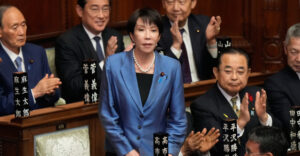
Sanae Takaichi has secured the confidence vote of Japan’s lower house, making history as the first woman to assume the country’s premiership.
The 64-year-old head of the Liberal Democratic Party (LDP) is a passionate heavy metal fan, having played drums in a band, and she does not come from a political family. Takaichi admires Margaret Thatcher and has pledged to revive Shinzo Abe’s economic vision, known as “Abenomics,” which relies on public spending and low interest rates.
Who is Sanae Takaichi
Born in 1961 in the city of Nara, Sanae Takaichi grew up in a family far removed from politics – her father was an office worker and her mother a police officer. As a young woman, she was a devoted heavy metal fan and played drums in a band, always carrying many drumsticks, as she often broke them due to the intensity with which she played. She was also interested in diving and cars, with her favorite Toyota Supra now displayed in a Nara museum.
Before entering politics, she worked as a television presenter. Her interest in public affairs began in the 1980s when, at the height of U.S.–Japan trade tensions, she worked in the office of Democratic representative Patricia Schroeder in the United States. From that experience, she realized, as she has stated, that “if Japan cannot defend itself, its fate will always depend on the superficial opinions of others.”
Political Career and Ideological Identity
Her first attempt to be elected as a member of parliament in 1992 failed, but a year later she won a seat and in 1996 joined the Liberal Democratic Party. Since then, she has been elected ten times and has held ministerial roles in key portfolios, including Internal Affairs, Industry, and Economic Security. She unsuccessfully ran for the LDP leadership in 2021 and 2024, but this year, on her third attempt, she succeeded.
Takaichi is considered one of the most conservative voices in the party. She opposes the legalization of same-sex marriage and legislation that would allow married women to keep their maiden names.
However, recently she has adopted a milder rhetoric, proposing measures to support working women, such as tax breaks for businesses providing childcare services and partial tax deductions for babysitting expenses.
Japan’s “Iron Lady”
She has openly expressed her admiration for Margaret Thatcher, repeatedly stating her ambition to become Japan’s “Iron Lady.” A political heir to Shinzo Abe, she has pledged to revive his economic vision, known as “Abenomics,” based on public spending and low interest rates.
She has visited the controversial Yasukuni Shrine, which honors Japan’s war dead, including convicted war criminals, and supports revising the Constitution so that Japan’s Self-Defense Forces can conduct offensive operations.
Challenges and Goals
The new prime minister assumes leadership during a period of deep social and political crisis. The LDP, which has dominated Japanese politics since 1955, has lost its majority and faces intense scrutiny, as many conservative voters turn to the far-right Sanseito party.
“The party must change for the good of Japan,” she said after her victory, adding that she will govern “with a sense of balance and always with the national interest in mind.”
Ask me anything
Explore related questions




