





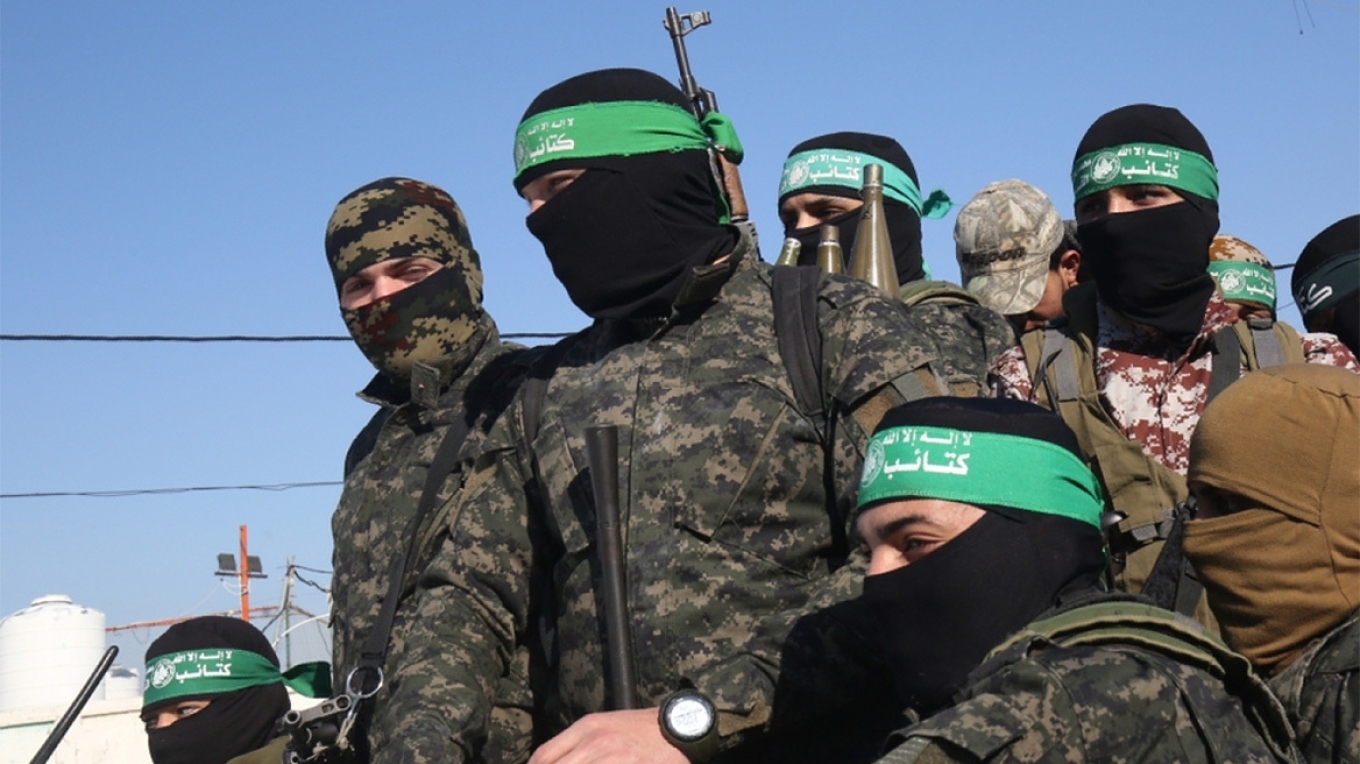
From regulating the price of chicken to taxing cigarettes, Hamas is seeking to expand its control in Gaza at a time when U.S. plans for the enclave’s future are slowly taking shape—bolstering the arguments of those who believe it has no intention of relinquishing power as it has promised.
After the ceasefire of October 10 took effect, Hamas swiftly restored control over areas vacated by Israeli forces, killing dozens of Palestinians it accused of collaborating with Israel, theft, or other crimes—under the gaze of an international community that is supposedly calling on the group to disarm and withdraw from governance. However, there is still no agreement on who will replace it.
Residents now say they increasingly feel Hamas’ grip on the affairs of the Palestinian enclave. The authorities control what enters areas under Hamas control, impose taxes on certain privately imported items such as fuel and cigarettes, and fine traders who overcharge for goods.
These accounts come from ten Gaza residents, three of whom are merchants with direct knowledge of the situation.
Ismail Al-Thawabta, head of Hamas’ media office, said claims that the organization taxes cigarettes and fuel are inaccurate and denied that the government imposes taxes.
The longer the international community delays, the more Hamas entrenches itself
The official insists the authorities are carrying out urgent humanitarian and administrative tasks while making persistent efforts to control prices, reiterating that Hamas is ready to hand over governance to a “new technocratic administration” and is trying to prevent chaos in Gaza: “Our goal is for the transition to proceed smoothly.”
Hatem Abu Dalaal, owner of a mall in Gaza, says prices are high because not enough goods are being brought in. Government representatives are trying to bring order to the economy by conducting inspections, checking products, and setting prices, he says.
Mohammed Khalifa, shopping in the Nuseirat area in central Gaza, says prices are constantly changing despite attempts at regulation. “It’s like a stock market… Prices are high. There is no income, conditions are difficult, life is hard, and winter is coming.”
While the formation of a transitional governing authority, the deployment of a multinational security force, the disarmament of Hamas, and the start of reconstruction—elements of the Trump plan—remain at square one, a Reuters report citing numerous sources raises the prospect of a de facto division of the Gaza Strip, as Israeli forces control more than half of the enclave’s territory and efforts to implement the next phases of the peace plan are failing.
Almost the entire population of the Gaza Strip lives in areas controlled by Hamas, which seized control of the enclave from Palestinian Authority President Mahmoud Abbas and the Fatah movement in 2007.
According to Ghaith al-Omari of the Washington Institute, at this stage Hamas’ actions aim to show the population of Gaza and foreign powers that it cannot be bypassed. “The longer the international community delays, the more Hamas will entrench itself.”
State Department: Hamas will not govern
Asked about residents’ accounts of Hamas’ current actions to control prices, impose taxes, etc., a State Department spokesperson said: “This is why Hamas cannot and will not govern Gaza.”
A new government for Gaza can be formed once the UN approves the Trump plan, the spokesperson said, adding that progress has been made toward forming a multinational security force.
The Palestinian Authority is pushing to have a say in Gaza’s new government, while Israel rejects the idea of the enclave being governed by the Palestinian Authority.
Fatah’s spokesperson in Gaza, Munther al-Hayek, said Hamas’ actions “are clear evidence that Hamas wants to continue governing.”
In areas under Israeli military control, Palestinian groups opposed to Hamas have established a presence, attempting to gain some influence as a counterweight.
“They record everything”
Meanwhile, Gaza’s residents continue to face horrific living conditions, despite the entry of greater amounts of humanitarian aid since the ceasefire.
A major food importer in Gaza says Hamas has not imposed a universal tax policy, but “they see and record everything.”
They check everything that comes in, have checkpoints on the roads, stop trucks and question drivers, he says, avoiding disclosing his name. Opportunistic traders are punished with fines, which helps reduce some prices, but they remain far higher than before the war, and people complain they have no money.
Hamas’ government in Gaza employed about 50,000 people, including police, before the war. The head of the Hamas government media office says thousands of them have been killed and those who remain are ready to continue working under the orders of a new government.
During the war, Hamas continued paying their salaries, though it cut higher salaries and capped payments at 1,500 shekels (470 dollars) per month, according to sources within the organization and economists familiar with the matter. It is believed Hamas tapped financial reserves to pay salaries, according to a diplomatic source.
Hamas’ government has replaced four local governors who were killed, Hamas sources said. A Hamas official stated the organization has also replaced 11 members of its political bureau who died.
Mustafa Ibrahim, an activist and commentator from Gaza City, says Hamas is exploiting delays in the Trump plan “to consolidate its control.” “It will be allowed to continue doing the same until an alternative government is put in place,” he says.
Ask me anything
Explore related questions




