





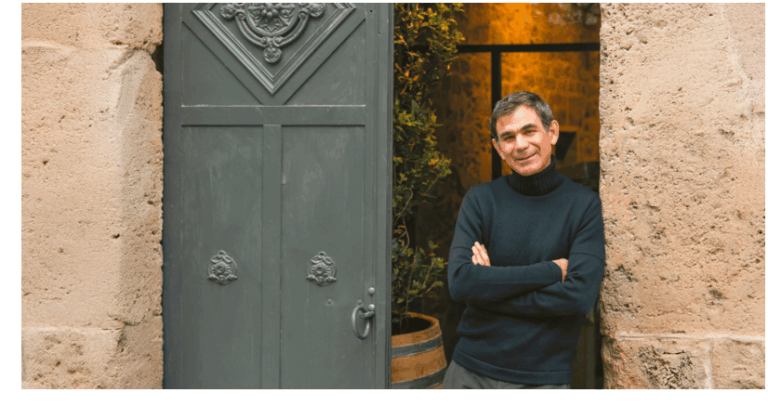
Everything was organized to fulfill the vision of Yiannis Boutaris, just a year after his passing: the first official Wine Library in Greece, located in Naoussa, the place where his dreams were born. Surrounded by family, friends, and a moving atmosphere honoring those who spread and received love.

This initiative led to the creation of BIBON, the first Wine Library in Naoussa, marking the restart of the Boutari Foundation. It also fulfills Boutaris’s vision of uniting wine forces, following the acquisition of Sigalas Winery in Santorini — the blessed land of Assyrtiko grapes, a variety Boutaris popularized worldwide.
The First Bottle
Arriving in Naoussa, shrouded in a mist befitting a land blessed by Dionysus, closely connected with wine, one feels the weight of history. This honored land of the Macedonians, a reference point for Alexander the Great — who was taught philosophy by Aristotle in ancient Mieza — remains one of Greece’s most productive wine regions.
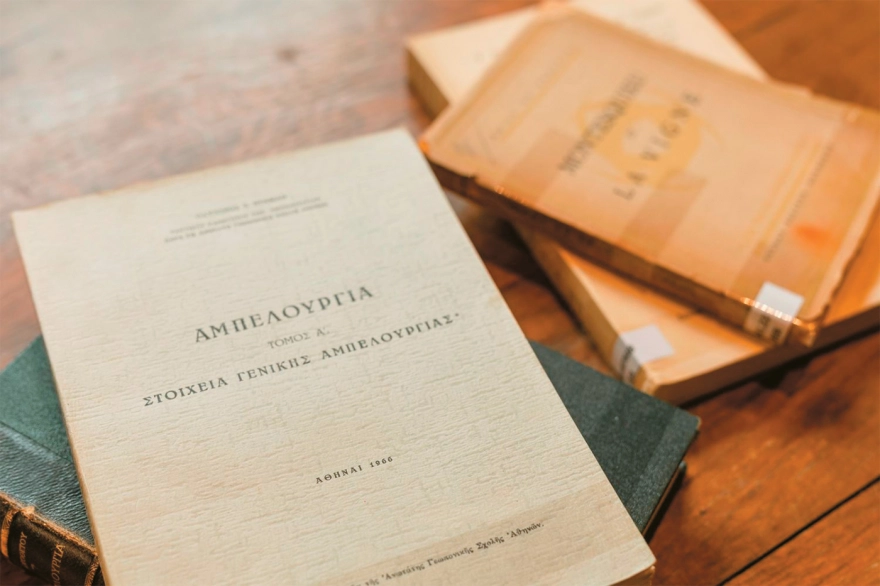
This sacred place, known as the city of peaches and wine, now hosts the country’s first wine museum, bearing the name of a man who believed deeply in the future of wine. For the first time, a library dedicated exclusively to wine exists both physically and digitally, serving as a hive of discovery, knowledge, and collaboration. This vision is now a reality thanks to the Boutari Foundation, with support from the Veria Public Library and Future Library.
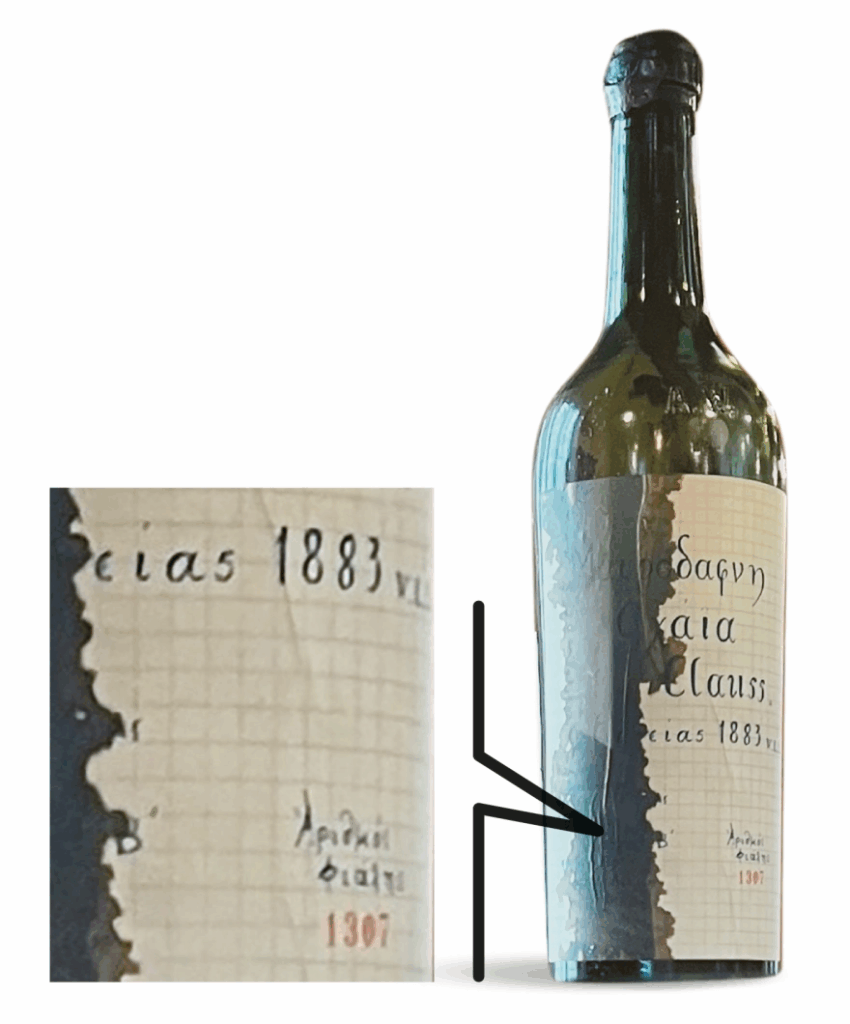
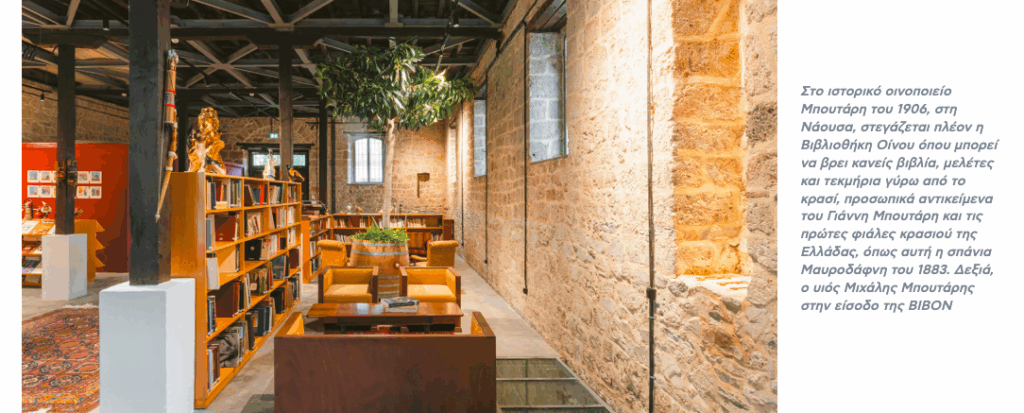
Housed in the historic Boutari Winery of 1906 in Naoussa, the Wine Library contains books, studies, and artifacts about wine, along with personal items of Yiannis Boutaris and some of Greece’s earliest bottles of wine, including a rare Mavrodaphne from 1883.
Yiannis Boutaris himself had once emailed the then-director of the Veria Library and founder of Future Library, Yiannis Trochopoulos, to share the idea of creating the first Wine Library. Though initially starting as Naoussa’s Wine Library, it expanded into a broader institution, becoming a key reference point for those who see wine as a living part of history and culture.
BIBON not only follows the standards of prestigious international libraries but also functions as a research hub, reading room (non-lending), educational center, and interactive space, offering electronic databases related to wine. Its collections include various archives, notably donations from Dr. Stavroula Kourakou-Dragona, a renowned figure in wine history, along with Boutaris’s archive.
Boutari’s great-grandfather, Ioannis Boutaris, was the first in Greece to innovate in 1879 — during Ottoman rule — by using glass bottles to market wine that was then sold in large demijohns and sacks. This legacy partly explains Yiannis Boutaris’s disdain for bulk wine and his special care in bottling philosophy.
The Boutari winery survived until after World War II, with a second winery operating until the late 1950s. Yiannis and his family protected vineyards from phylloxera and helped locals cherish local varieties like Xinomavro.
Alexander the Great’s image was even used on wine labels since Ottoman times, symbolizing the unified history of the region, intertwined with battles, heroes, and everyday laborers—echoing the heartfelt stories told by winegrowers during harvest nights.
At the library’s opening, Boutaris’s sons, Michalis and Stelios, spoke about their father’s great vision, made possible through donations and sponsorships. Michalis, despite studying Philosophy at Harvard, devoted his life to wine, understanding its cultural significance deeply.
Today, Michalis and Stelios run the Kyr-Yiannis Estate with optimism, despite environmental challenges. Michalis also champions Greek wine internationally and supports sustainable entrepreneurship, starting from the BIBON spaces, which host a “Climate Change and Resilience Observatory” — the library’s second major focus — housed in the renovated 1906 winery building.
A Vision Shared by Many
As Yiannis wrote in his autobiography, “Wine, like all living organisms, is shaped by organic compounds. The best are esters, born from the union of alcohol and acids, creating its aromatic allure. The same happens with people: when conditions are right and chemistry matches, beautiful things happen.”
Instead of a formal ceremony with politicians, the family held a private event with friends and notable figures in the worlds of wine and books, emphasizing wine’s role as a cultural pillar. The library stands as a symbol of maturity and a step forward for Greek wine.
Ask me anything
Explore related questions




