





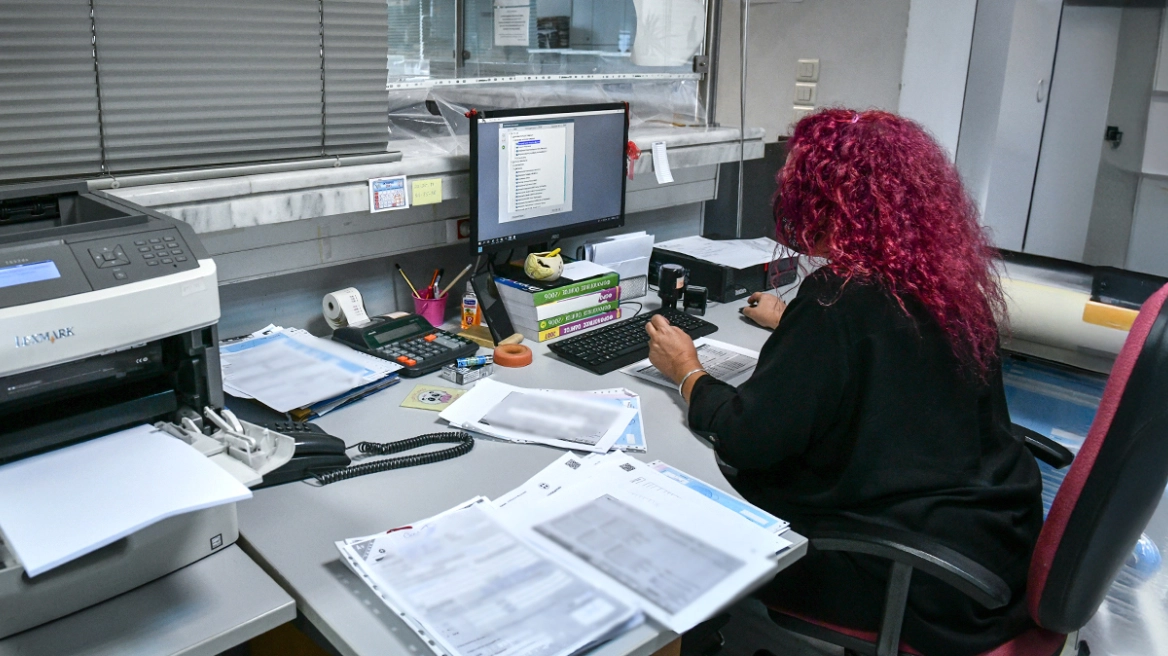
Where files usually contain the names of taxpayers, they now bear the names of…tax officers! With a new decision by the Governor of the Independent Authority for Public Revenue (AADE), Giorgos Pitsilis, an extensive “internal source-of-wealth check” is activated. Financial inspectors of the Internal Affairs Directorate are tasked with scrutinizing the movable and immovable assets of AADE employees and their families. It’s as if a camera that always recorded others is now turning around to film its own operators.
How does it work?
Inspectors have full access to every banking transaction: savings accounts, term deposits, cards, loans, digital wallets, and even information from foreign tax authorities through automatic data exchange. Anything involving money that entered, exited, moved, or “appeared” in the account of an AADE employee, spouse, or minor child is opened and examined minute by minute.
The source-of-wealth check doesn’t stop there: shares, bonds, stock market transactions, precious metal dealings, insurance contracts, records from the Deposits and Loans Fund, and even information from the Hellenic Association of Insurance Companies are examined. Files that typically concern taxpayers are now used to determine whether the auditors themselves live within their means — or whether something is left unexplained.
The new “X-Ray” excludes nothing: salaries, tax-free and taxed income, compensation, gambling winnings, cash gifts, loans, sales of real estate and movable assets — all are logged and included in the balance. On the other side, every living expense — from private school tuition and car insurance to mobile phone bills and health or life insurance plans — is cross-checked with equal rigor. Anything recorded as an expense must align with the available income.
If the employee or spouse has a business activity that shows continuous losses, the inspector checks whether those losses are funded by real available resources or whether there is a hidden “cushion” not reflected in the tax returns. If transfers abroad, large deposits, or anonymous credits are detected, explanations are requested immediately: prove where you found the money, when you acquired it, and why it does not appear in your tax filings. Even a simple redeposit of cash must be accompanied by a history showing from which earlier withdrawal it originated.
The procedure follows a set flow: an audit order is issued, the employee receives forms to fill in all personal, family, and asset details, and then has twenty working days to provide answers and evidence. Inspectors may request additional documents or clarifications at any time. All material is collected to form a complete picture of the employee’s asset changes from December 31 of the previous year onward.
The audit may begin in a targeted manner, randomly, or following a complaint. Retired AADE employees are not exempt: they are checked for the period up to the termination of their employment. Using the “asset-position change” methodology, inspectors compare all lawful income with actual expenses and asset purchases. If the numbers don’t match, the findings report is only the beginning.
If the audit reveals an increase in wealth that cannot be justified by legal income, disciplinary — or even criminal — proceedings may be initiated. If there is a matter of financial liability, the relevant file is forwarded to the Court of Audit.
Ask me anything
Explore related questions




