





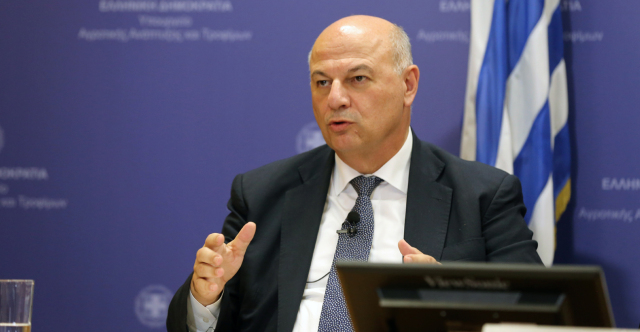
As 2025 comes to a close, Minister of Rural Development and Food Kostas Tsiaras highlighted the completion of critical payments totaling €3.8 billion to farmers, achieved despite significant challenges including longstanding sector weaknesses, the climate crisis, and global market turbulence.
In his statement, Minister Tsiaras said:
“Today marks the end of a difficult year — one full of challenges, tensions, and undeniable difficulties. Yet, through hard work and determination, we are closing this year on a positive note by successfully implementing all payments to the agricultural community.
The primary sector faced severe tests in 2025. Persistent systemic issues — particularly in the payment systems — collided with the harsh realities of the climate crisis and disruptions in international agricultural markets. This created a highly complex and demanding environment for producers across the country.
Throughout these challenges, the government stood firmly by the side of all farmers. Through cooperation, dialogue, and pragmatic solutions, we addressed problems both large and small, while also focusing on future challenges by leveraging every available national and European resource.
This year, a total of €3.8 billion was paid to the primary sector, reaching hundreds of thousands of beneficiaries — an increase of approximately €600 million over the previous year. Specifically:
-
Over €1.65 billion in direct payments
-
More than €1.45 billion dedicated to rural development measures
-
Around €650 million from the State Budget allocated to exceptional and targeted aid for affected regions and products
-
€76 million exclusively reserved for Fisheries and Aquaculture
These figures are undisputed and demonstrate our commitment. While we acknowledge there have been shortcomings and failures, corrective actions are underway to address them and to restore justice where it was lacking.
Today, the consolidation of OPEKEPE (the Payment and Control Agency for Guidance and Guarantee Community Aid) is becoming a reality, laying the foundation for a new era of transparency and fairness in aid distribution. For the first time, payments are being made only after thorough audits — a practice that will continue going forward.
At the same time, we are responding directly to the pressing demands of the farming community by:
-
Further reducing energy costs
-
Advancing the exemption of excise tax on agricultural fuel at the pump
-
Committing to compensation from ELGA (the Agricultural Insurance Organization) at 100% of the insured value
Out of 27 requests submitted by producers, 20 have already been implemented or are in progress. Additional measures, including Measure 23 (€170 million) and targeted aid for specific products such as cotton, wheat, and alfalfa — funded by savings — show our firm commitment to supporting rural incomes.
However, a meaningful and lasting revival of the primary sector requires active participation from the producers themselves. This is a joint effort that the State and farmers must solve together.
The interests of a few should never undermine the aspirations of the many. Those unwilling to engage in dialogue cannot halt the development of a National Strategy for the primary sector and comprehensive planning for the future.
Ahead lie major battles:
-
The new Common Agricultural Policy (CAP)
-
New European Union trade agreements
-
The ongoing climate crisis
-
Above all, the sustainability of the primary sector
These challenges demand that we act together with responsibility, transparency, and determination. The government will continue its work without exceptions or exclusions, safeguarding the interests of the majority.
Now is the time for all of us to take responsibility. The government is fulfilling its duties, and society expects farmers to do the same.
I hope the coming year marks the beginning of a new, creative chapter of substantial recovery for the primary sector — one that generates fair income, rewards the hard work of Greek farmers, attracts young people to agriculture, and strengthens the competitiveness of Greece’s agricultural economy.
Happy New Year to all.”
Ask me anything
Explore related questions




