





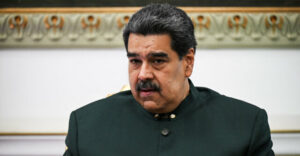
Today’s US operation in Venezuela and Donald Trump’s announcement that Nicolas Maduro was “arrested and transferred out of the country” is not merely a change of regime by force. It is a move that strikes—indirectly but very deliberately—at the economic core of China: energy security, refining costs, and the credibility of Chinese trade networks operating on the edge of sanctions.
Why Venezuela is a “Chinese corridor”
From 2020 onward, Venezuelan crude became a frontline supplier to Asia, and especially to China—not because Beijing “fell in love” with Caracas, but because sanctions and exclusion from Western markets pushed Venezuela toward the only buyer willing to tolerate risk and capable of absorbing heavy crude. The result was a model in which part of the flows functioned as trade and part as “oil-for-payment” for services, purchases, and—crucially—debt servicing to China.
Today’s US move in Caracas shows that, for Washington and President Trump, the enemy is singular and obstacles must be removed—at a high cost to the rival.
The key to understanding the broader implications of the American intervention on foreign soil is not only what is formally prohibited, but what can still move by sea. In recent days, the US Treasury “raised the stakes” by targeting networks accused of helping Venezuela bypass sanctions. This move unmistakably brings China into focus in a “surgical” way.
Reuters describes tankers used on Venezuela–China routes for repayments and swap arrangements—meaning not just trade, but financial oxygen. With Maduro out, any agreement bearing his signature already lacks validity.
The “arrest” as a credibility shock—not just a power shock
Today’s operation adds a new factor: the risk is no longer only legal (sanctions) or commercial (insurance/banking). It is political and operational—“the source country can be destabilized overnight.”
For Beijing, this translates into three tangible costs:
- Risk premiums in transport (insurance, freight rates, rerouting).
- Loss of predictability in heavy crude blends tailored to specific refineries.
- Forced substitution with other heavy-crude suppliers, usually more expensive or politically more “charged.”
The essence of Trump’s move
If Trump merely wanted to punish the Maduro regime, continued traditional pressure would have sufficed. Escalation to an operation leading to an “arrest” sends a different message:
- To Venezuela: “No normalization.”
- To China: “No safe channel.”
- To Tehran: “You’re next…”
Reuters notes that US actions against Venezuelan oil and its transport have already had severe effects on exports. Today’s operation is therefore not detached from the energy dimension—it is the politico-military culmination of a strategy tightening the noose where China hurts most: supply, costs, and an economy that has not been shaken by massive US tariffs.
Venezuela holds the world’s largest proven oil reserves. Based on official energy data, these reserves are estimated at around 303 billion barrels of crude—more than any other country globally. They account for a significant share (about 17–20%) of global oil reserves and are located mainly in the Orinoco Belt, one of the largest concentrations of heavy and extra-heavy crude on the planet.
Despite the size and strategic importance of these resources, production and exports have been severely affected by years of underinvestment, management problems, and international sanctions, leaving actual economic exploitation far below the theoretical potential of the reserves.
Ask me anything
Explore related questions




