





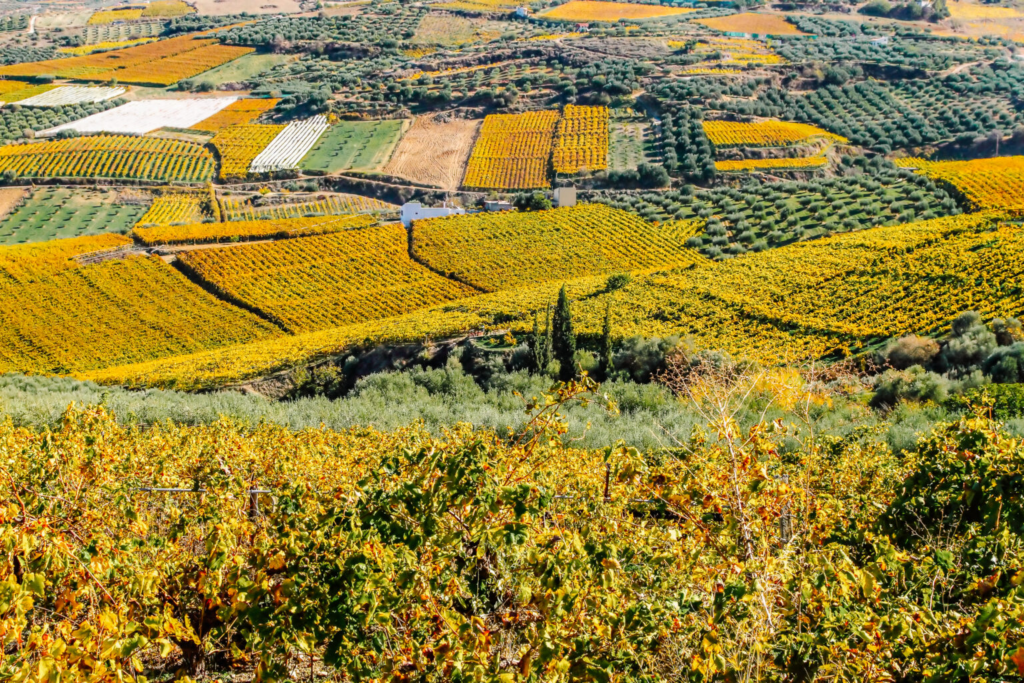
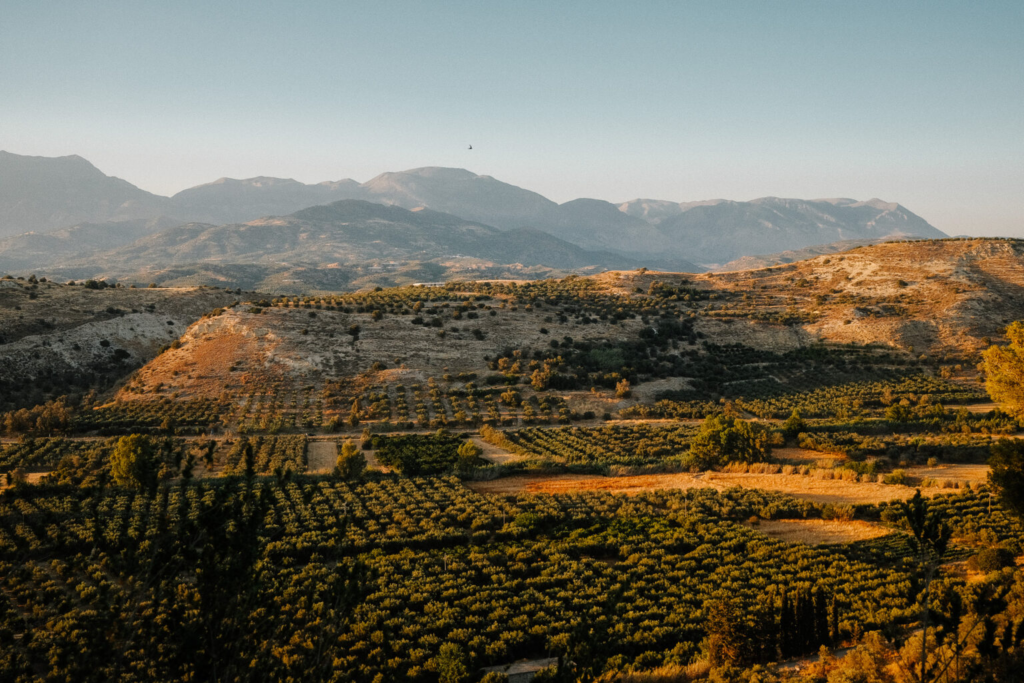
In the vast plains of Mesara, bounded by Mount Psiloritis to the north and the Asterousia Mountains to the south, as well as the plains of Heraklion and Kastelli, endless olive groves and vineyards flourish. Citrus fruits, a wide variety of field and greenhouse vegetables supplying all of Greece year-round, and cereals are also cultivated. PDO (Protected Designation of Origin) zones for olive oil, wine, and raisins dominate, while exotic crops in the south, such as avocados and bananas, are increasingly established. The region’s microclimate—shaped by the constant interplay between mountains and sea—creates a unique biodiversity ideal for the growth of wild aromatic herbs, some of which exist only on Crete.
Herbs like malotira, dittany, oregano, and sage are now cultivated systematically for their exceptional medicinal properties and are widely used in Cretan cuisine. Some traditional dishes, more elaborate than the typically simple Cretan fare, stand out, such as Tsoulamas Messaras, the Carnival sweet-and-sour rice pie with meat and sugar (likely influenced by the Venetians), and recipes brought by Greek refugees from Asia Minor, including soutzoukakia.
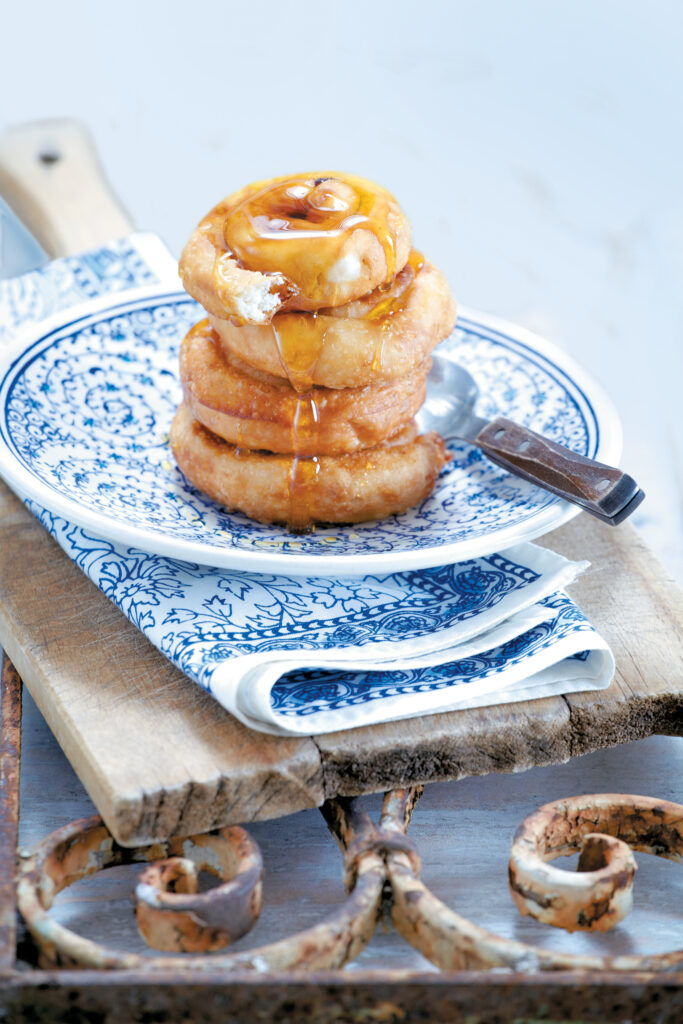
Local staples include chondros, coarsely cracked wheat, and xinoxondros, a sumptuous “pasta” made with cracked wheat and soured sheep, goat, or mixed milk, cooked with snails, eggplants, or meat broth, creating unforgettable dishes. Another specialty is koukofava, a fava dish made from broad beans, while lamb and goat are central to the cuisine. Cheese-making has deep roots, producing fresh cheeses like xinomyzithra or dried athotiro, as well as PDO Cretan graviera across the island. Sweet fried pastries like sarikopites and agnopites, flavored with honey, remain integral to the island’s culinary tradition.
Local Products
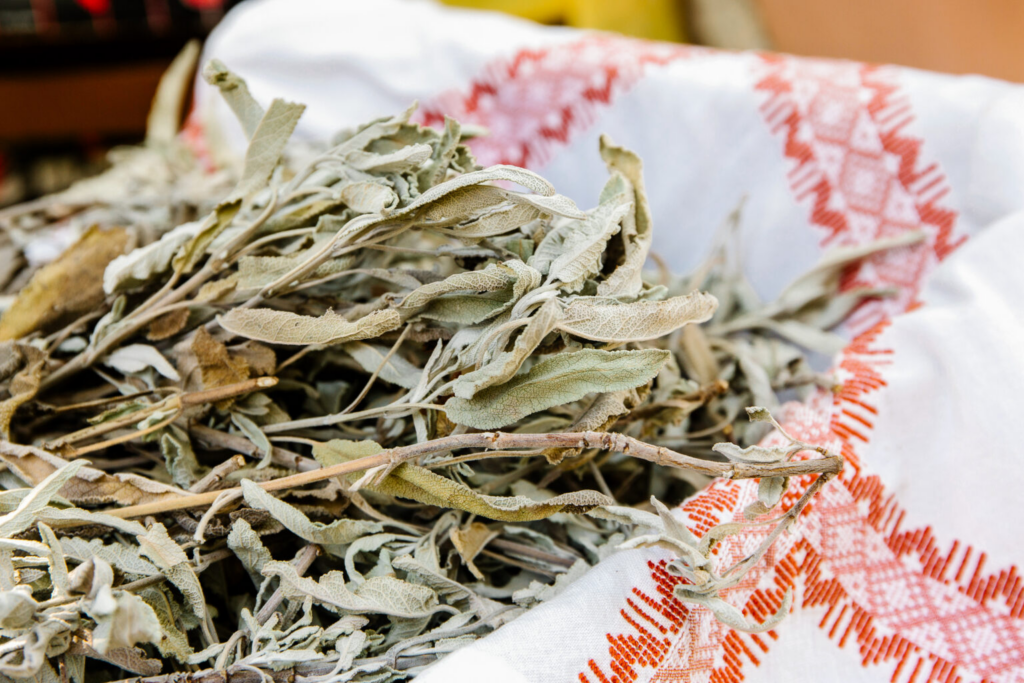
Malotira – Known as Cretan mountain tea (Sideritis syriaca), malotira grows in the majestic White Mountains at 800–2,000 meters altitude. Consumed since antiquity, it is valued as a remedy for digestive issues, sore throats, coughs, respiratory problems, infections, weakness, nervousness, and sleep disorders due to its anti-inflammatory, antibacterial, and antioxidant properties. Overharvesting has made wild malotira rare, leading to organized organic cultivation.
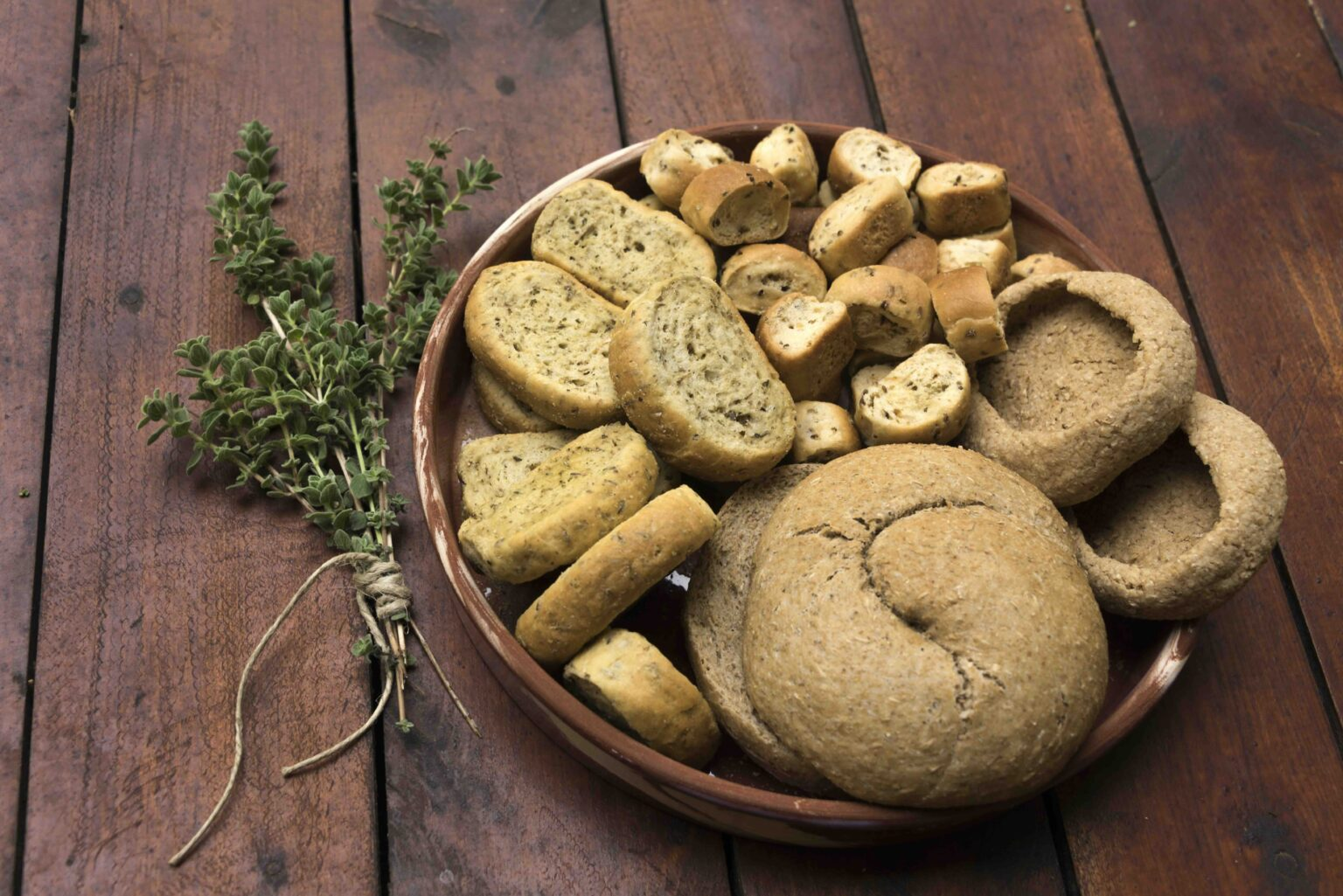
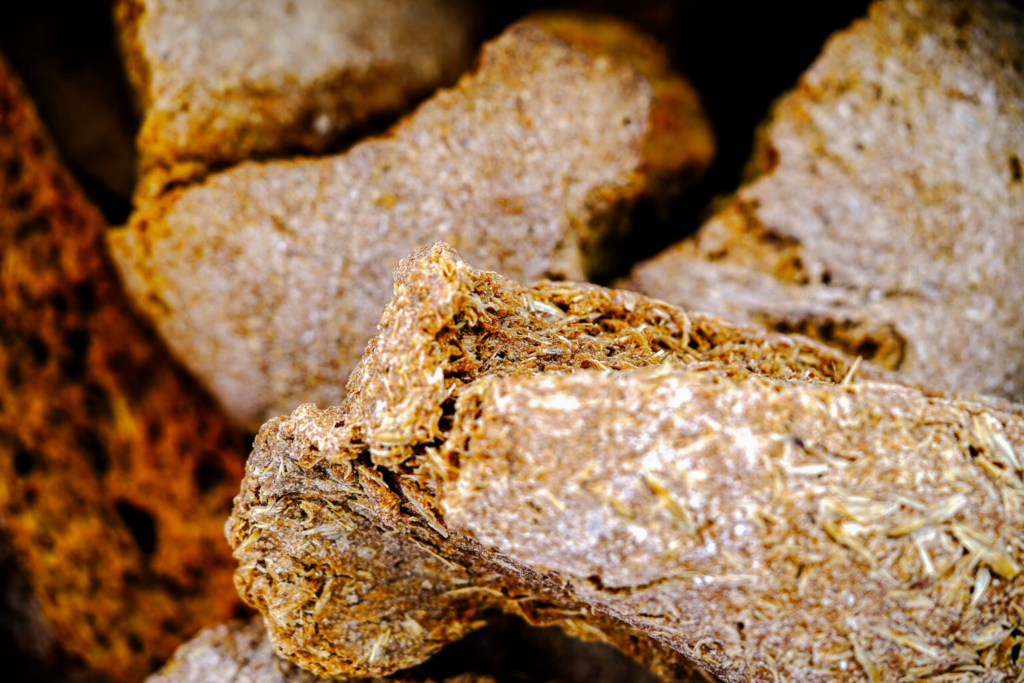
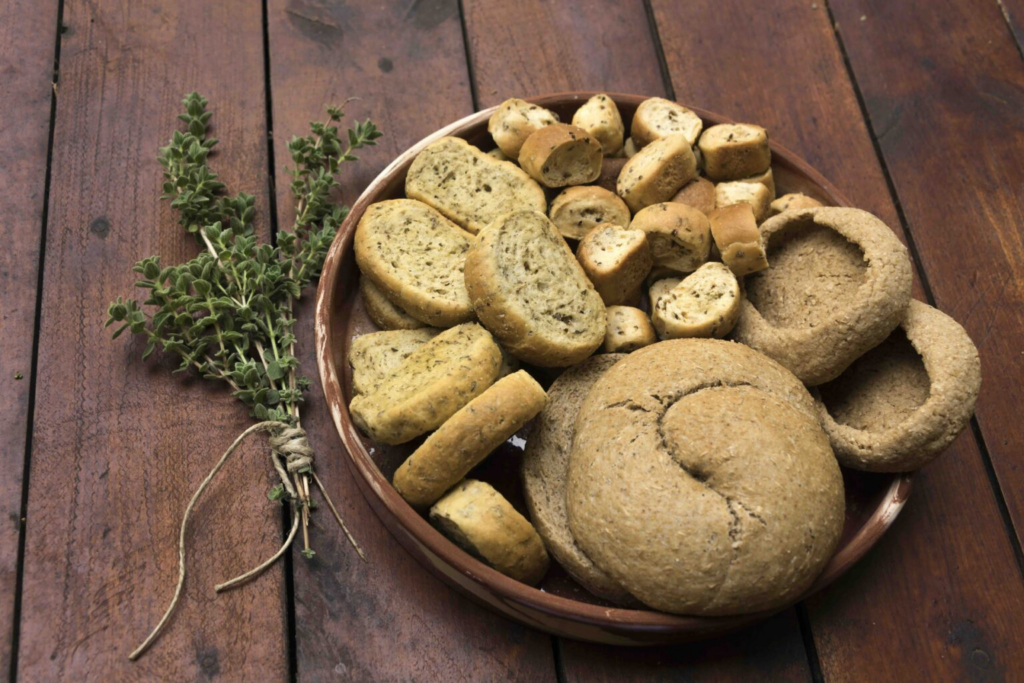
Seven-Fold Rusk (Kastamonitsa, Kroustas) – A prized rusk made from naturally leavened dough using chickpea foam (“kounenos”). Its preparation is delicate, often surrounded by customs and superstitions, and the name reflects the ancient method of “self-leavening” rather than literal seven kneads. Eastern Crete, especially Kastamonitsa in Minoa Pediados (Heraklion) and Kroustas (Agios Nikolaos, Lasithi), is famous for this rusk, celebrated annually in August festivals.
Skioufikta – Hand-rolled traditional pasta made from flour, olive oil, and water. Each piece is twisted by hand (“skioufizo”) to create a small groove in the center. Served with hot fresh butter or stakobutter, and sprinkled with dried athotiro.
Olives – Heraklion’s olive groves span over 46 million acres (2018 data), producing excellent extra virgin olive oil and flavorful Koroneiki table olives. PDO areas include Viannos, Peza, and Archanes, with centuries-old trees in Gortyna’s monumental olive grove.
Wine – Heraklion hosts Crete’s most developed vineyards, with two-thirds of wines bearing PDO status across five zones: Archanes, Dafnes, Peza, Handakas, and Malvasia Handakas. White varieties include Vilana, Dafni, Plyto, Moschato Spinas, Athiri, Thrapsathiri, Malvasia Aromatica, while reds include Kotsifali, Mandilaria, Liatiko, and international varieties like Cabernet Sauvignon, Merlot, Syrah, Grenache Rouge, Mourvèdre, and Carignan.
Graviera – The famous PDO Cretan Graviera, one of Greece’s finest cheeses, is a hard yellow cheese made from sheep’s milk (up to 20% goat milk) and aged for at least three months.
Local Recipes
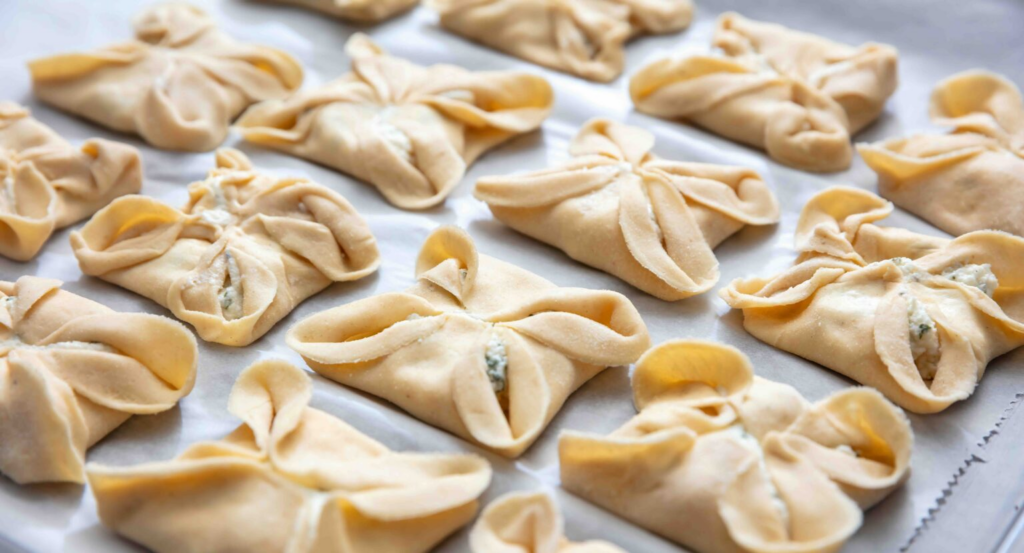
- Kalitsounia – Fried pastries filled with aromatic fennel, sometimes mixed with other greens like spinach or beet leaves, or cheese (xinomyzithra).
- Ofto/Antikristo Meat – A traditional ritual for roasting large meat pieces, usually lamb, slowly over an open fire or in a pit.
- Macaroni with Athotiro – Pasta cooked in meat broth and generously topped with athotiro, an essential dish for weddings and festive occasions.
- Kapriko – Slow-roasted wild boar salted and cooked in a wood-fired oven, typical in Heraklion’s inland villages.
- Lychnaraki (Quick Kalitsounia) – Sweet pastries filled with sweetened myzithra, flavored with cinnamon, mastic, mint, and lemon zest, traditionally for Easter but now enjoyed year-round.
- Tsoulamas – A unique sweet rice pie containing meat and raisins or nuts, served during Carnival in Mesara.
- Sarikopites – Fried, braided pies with eggplant, potatoes, tomato sauce, and a mix of cheeses, often drizzled with honey.
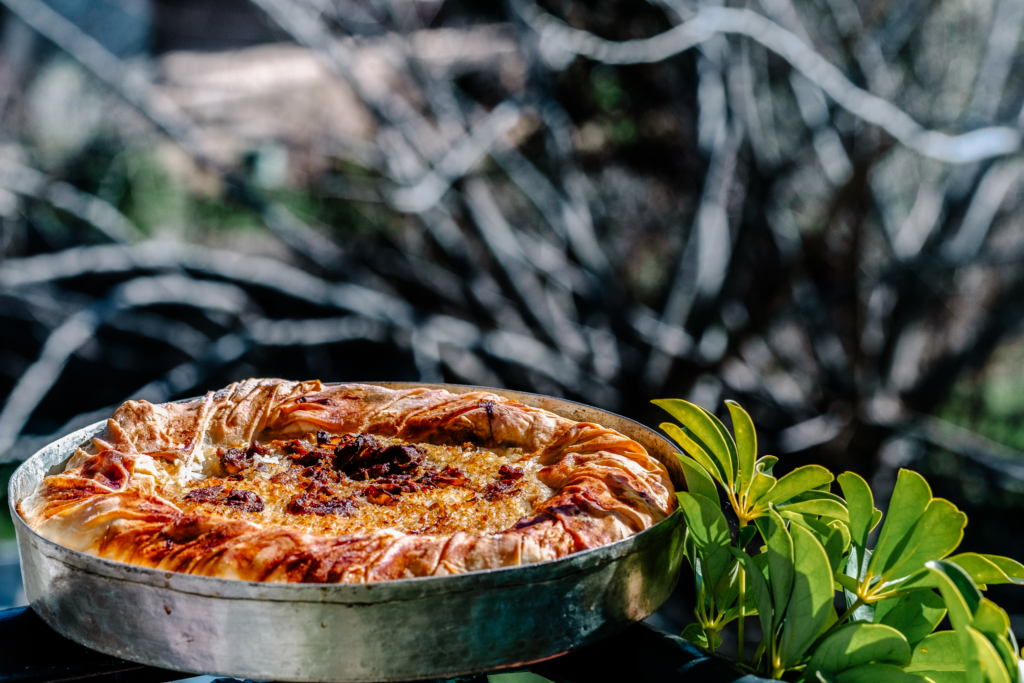
Heraklion’s cuisine reflects a rich blend of local biodiversity, centuries-old traditions, and culinary influences from Venetian and Asia Minor heritage, making it a true gastronomic treasure.
Ask me anything
Explore related questions




