





Geopolitical developments in the Middle East are reigniting strong shocks in international energy markets, with oil and gas prices registering sharp fluctuations in recent days.
Uncertainty surrounding the course of the conflict in the region has led to sharp price swings, with markets closely monitoring any developments that could affect the security of energy flows.
Fuel pressures
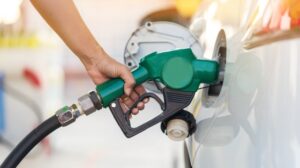
The rise in international prices has already begun to be reflected in the Greek fuel market. The average price of unleaded is now at 1.83 euros a litre nationwide, after an increase of about 10 cents in the first week, while diesel is moving in parallel at 1.77 euros a litre, having increased by about 22.5 cents. Fuel prices are expected to be higher today, with petrol in Attica at around 1.87 euros per litre, while diesel is expected to move to 1.80 euros per litre.
The price of fuel will be around 1.80 € per litre, while the price will be around 1.80 € per litre.
Market players expect fuel prices to approach 2 euros a litre by the end of the week, levels the market has not seen since the energy crisis. Already in the Cyclades, the price of unleaded has exceeded the psychological threshold of 2 euros a liter, while in most prefectures of the country it is now approaching 1.90 euros. The price of unleaded is also a breath away from 2 euros in the Dodecanese.
Resilience in the electricity market
At the same time, the electricity market is currently showing resistance, thanks to high production from renewable energy sources and increased water reserves at hydroelectric power plants.
The average price of a megawatt hour was 83 euros yesterday and 84.9 euros today, ranking Greece today as one of the cheapest electricity markets in Europe. For comparison, in Germany the megawatt hour is over 139 euros, in Belgium 146 euros and in France 125 euros, while prices in the Iberian Peninsula are also in the three-digit range.
De-escalation effort from the White House
Depressing international markets last night were statements by the President of the United States, who said in an interview that he plans to lift oil-related sanctions, task the US Navy with escorting tankers through the Strait of Hormuz and estimated that the war with Iran will end “very soon”, though not within the week.
These interventions are interpreted as an apparent attempt by the White House to “turn the tide” in the energy markets and curb the strong upward momentum recorded in previous days. Despite the temporary de-escalation, however, international prices remain at high levels and even if the war ends tomorrow it is estimated that it will take weeks to months for the market to return to normal.
Trump’s comments drove Brent below $95 a barrel, although earlier yesterday it was as high as $120. At the same time, international gas prices also moved upwards. In the space of about ten days, natural gas jumped from around 30 euros to 56.4 euros, a development that the government is closely monitoring, as it affects both the wholesale market and electricity tariffs at the retail level.
Measures against obscenity on the table
With oil and gas prices registering wide fluctuations, the government is making it a priority to curb speculative moves in the fuel market. In this context, interventions such as imposing a cap on profit margins are being considered, with announcements expected towards the end of the week.
At the same time, the government camp is reviewing support tools that were used during the 2022 energy crisis, such as the fuel pass and power pass programs, with final decisions depending on the course of developments in the Middle East and international energy prices.
Earlier last night, in an interview with ERT, Environment and Energy Minister Stavros Papastavrou referred to the high volatility recorded in international energy markets, noting that the government is monitoring developments in real time. As he said, continuous meetings with the relevant ministries are underway with the main objectives of ensuring the country’s energy sufficiency and the prevention of obscenity phenomena in the market.
The Minister noted that a first set of proposals to the Prime Minister for interventions has already been formulated, which will be evaluated by the Mansion House and will be announced in the next period.
The debate on industry
The issue of energy costs and industry was also addressed yesterday by the minister, noting that announcements on support measures will not be made this week. He described energy costs as a critical factor for the competitiveness of industrial production, noting that in previous years Europe had focused mainly on the services sector, largely ignoring industry, which is now recognised as a strategic mistake.
In this context, it was stressed that Greece needs a strong industry, with the cost of electricity being a key parameter for the competitiveness of businesses.
Ask me anything
Explore related questions




