





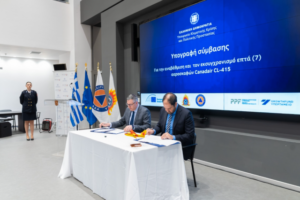
The contract concerns the modernization of the aircraft’s electronic and navigation systems, including the installation of modern avionics equipment based on the “glass cockpit” philosophy. The aim is to address the obsolescence of existing systems and ensure compliance with the standards of the European Union Aviation Safety Agency. At the same time, the upgrade is expected to improve reliability, flight safety and operational effectiveness during aerial firefighting missions.
The first upgraded aircraft is expected to be delivered in 2027, while the project is scheduled to be completed in 2030.
Kefalogiannis described the agreement as an important step in modernizing Greece’s civil protection capabilities. He stressed that investing in state capabilities in advance is essential so that the necessary resources are ready when the country faces crises.
According to the minister, the Canadair aircraft are among the most recognizable and essential tools in Greece’s efforts to combat forest fires. In many parts of the country, the sight of a Canadair in the sky often represents the first sign that the state is present and that the battle against the fire has begun.
He also emphasized that upgrading seven CL-415 aircraft goes beyond a simple technical intervention, as it involves a comprehensive operational modernization of the platform and ensures that this valuable fleet will continue to operate with modern safety and reliability standards for many years.
The modernization also creates technological continuity with the new generation of Canadair CL-515 aircraft, which Greece is expected to start receiving from 2028. Greece plans to acquire seven CL-515 aircraft, meaning that together with the seven upgraded CL-415s the country could operate a fleet of 14 aircraft of the same family, potentially the largest such fleet worldwide.
According to the minister, this shared technological base will facilitate training, technical support and the integration of the new aircraft into the national fleet.
The project has a budget of €43 million, financed through a loan from the European Investment Bank as part of the Aegis civil protection program. Implementation will begin gradually so that the fleet’s operational capability is maintained throughout the upgrade process. The project also includes training for flight crews and technical personnel, as well as long-term technical support.
Deputy CEO of the Hellenic Corporation of Assets and Participations, Panagiotis Stamboulidis, highlighted that the agreement marks the start of another major project within the Aegis program, implemented by the fund’s Strategic Contracts Unit. He noted that more than 100 contracts worth €1 billion have already been signed under the program with over 50 contractors, achieving savings exceeding €35 million.
The signing also represents an important milestone in the long-standing cooperation between Greece and Canada, according to the Canadian ambassador to Greece, Sonia Thissen. She said the agreement is an investment in resilience, preparedness and safety for future generations, reflecting the commitment of both countries to work together in addressing climate challenges.
Representing De Havilland Canada, Vice President for Programs and Business Development Jean‑Philippe Côté stated that the upgraded CL-415 aircraft will be equipped with modern navigation and avionics systems, ensuring the fleet remains operationally ready and technologically relevant for decades.
He added that in Greece the CL-415 is more than just an aircraft: it is a critical national asset that protects communities, forests, infrastructure and lives during increasingly challenging wildfire seasons.
Ask me anything
Explore related questions




