






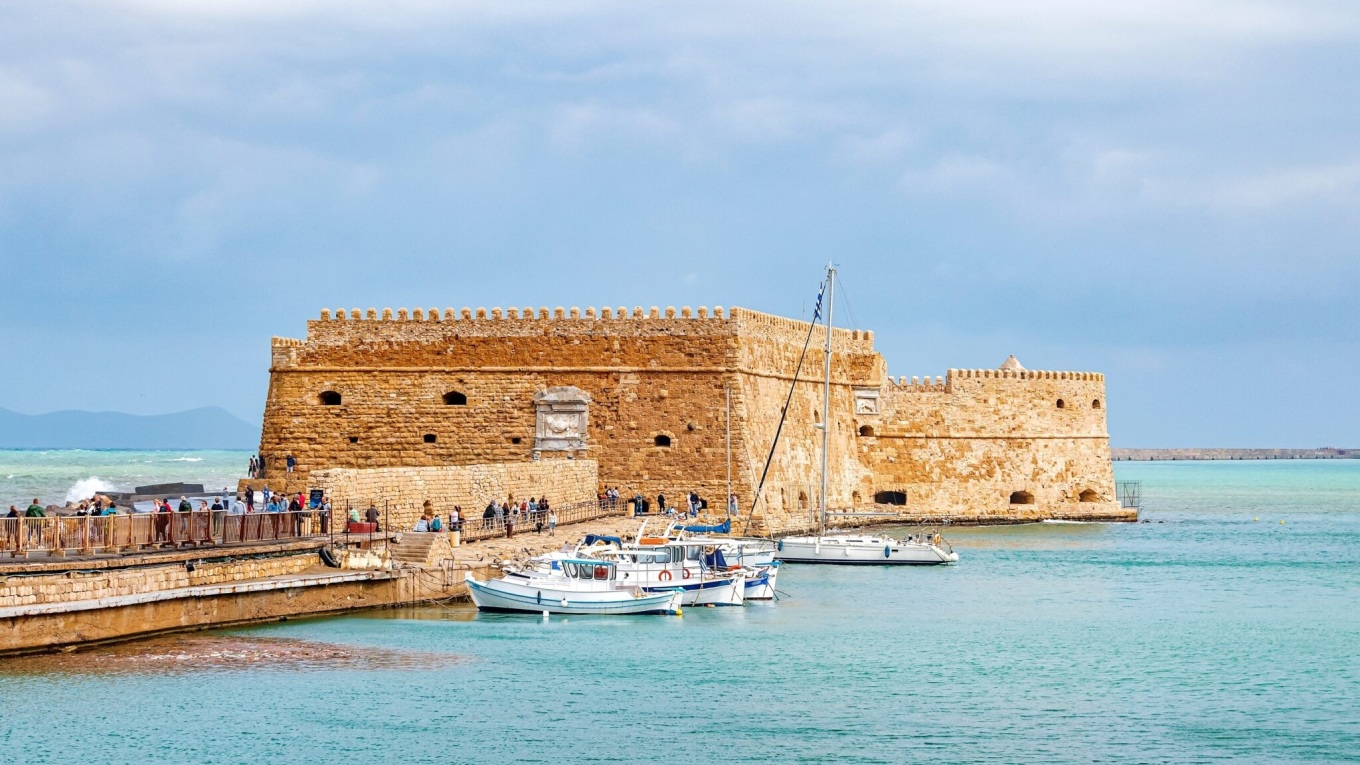
Last week in Crete, at Heraklion Airport, the first charter flight from Switzerland landed, with mid-March effectively marking the start of the season on the island for mass tourism. In fact, on the largest island destination in the Aegean, this year’s summer season begins slightly earlier than last year, with more flights from Germany and the United Kingdom—the two top inbound tourism markets for Greece—while on another popular destination starting alongside Crete, Rhodes, the first flights arrive in larger numbers in the last week of March.
Europeans
The summer season is therefore beginning now, with early indications for inbound tourism to the island destinations being generally positive. However, concern is present, as is the freeze in the flow of new bookings, more pronounced since last week due to developments in the Middle East. Tourism officials have repeatedly emphasized in recent days that it is too early to draw conclusions, suggesting that the picture will become clearer after Orthodox Easter. They advise calm at this stage, focusing on the “duration” of the geopolitical crisis, and note that Greek tourism has repeatedly proven its resilience in recent years, successfully responding to last-minute booking challenges.

With everyone hoping that the new geopolitical crisis will end as soon as possible, current concern regarding the sector’s prospects for summer 2026—which contributed decisively to Greece’s current account balance with travel receipts exceeding €23.6 billion in 2025 (+9.4% versus 2024)—focuses on two main points regarding foreign visitors. First, whether the Middle East conflict will affect European wallets, the primary source of inbound tourism. Second, whether Americans—who prioritize the safety of their travel destinations and rank among the top 5 markets for Greece—will continue to visit, as they spend the most, travel long distances, and combine multiple destinations in the country.
Bookings
A first indication came last week from the president of the country’s largest airline, which since February 28, when the Middle East conflict began, has been dealing daily with cancellations, rescheduling, and refunds for travelers with planned trips to the region: “It is too early to predict what will happen and how long the crisis will last, whether for the coming weeks or the entire summer season,” AEGEAN President Eftychis Vassilakis said last Thursday. “By the end of the month, I expect we will have a clearer picture, as recent experience shows that the public needs a 3–4 week adjustment period,” he added, noting that the airline’s booking flow mirrors what happened four years ago when Russia invaded Ukraine: “We have an 8–10% decrease in bookings compared to previous weeks, a percentage that may normalize depending on future developments.”
Hoteliers have also noticed a freeze in bookings in recent days, understandably causing concern. “Despite this, we must keep the positive agenda high because Greek tourism has shown remarkable resilience in crises,” says the President of the Hellenic Federation of Hoteliers, Giannis Chatzis, adding that in times of international uncertainty, “the worst thing is to get trapped in the noise of events beyond our control. It is important to work on what we can influence, and the most important is safeguarding our hotels’ competitiveness.”
Along the same lines, the President of the Hellenic Chamber of Hotels, Alexandros Vasilikos, told THEMA that it is too early to form a clear trend, and the caution of international travelers is understandable as the global community weighs the situation without yet knowing the crisis’s duration. He also emphasizes the exceptional resilience of Greek tourism in recent years.
Possible Scenarios
In Crete, the first destination to begin the summer season, messages before February 28 were very positive, with a steady flow of new bookings, notes the President of the Heraklion Hoteliers Association, Nikos Chalkiadakis. However, “in recent days, the picture looks more frozen—the mood of travelers is not as good, and we now rely more on last-minute bookings for Easter. For summer, new bookings are being made but at much slower rates—the flow has been interrupted. Because we can also see online searches from potential travelers, we notice that demand exists as last year—and even more. Searches are being made, but the final ‘click’ for booking is not happening easily. So, we believe everything depends on the duration of the crisis.”
Alpha Bank also focuses on the uncertain environment, analyzing potential scenarios stemming from a prolonged or expanded Middle East conflict, with implications at the macroeconomic level. “Increased uncertainty in the broader Mediterranean may affect Greek tourism, reducing arrivals, particularly via cruises. However, if the impact is limited to the Middle East, Greek tourism is likely to benefit, increasing market share over competing destinations, as observed during the Arab Spring in the early 2010s. In any case, Greek tourism has proven highly resilient during the pandemic, rebounding rapidly after the lockdowns’ severe negative effects, recording new historical highs in recent years, and increasing its share of global arrivals.”
In the near term, the first impacts of the war on Greek tourism relate to daily management of bookings and cancellations.
“Every day, we manage issues with paid airline tickets and hotels canceled due to developments in the Middle East. For hotels, we mostly succeed in keeping vouchers open, and refunds are more difficult. However, we don’t yet know whether travelers will have the psychology to visit nearby destinations immediately,” says Maria Alifragki, CEO and co-owner of Signature Travel. European destinations continue to hold demand, albeit at slower rates, “so we hope the situation stabilizes as soon as possible.”
The Question Mark
Looking at inbound tourism for the coming period, based on data collected by members of the FEDHATTA Travel Agencies Federation, the market has indeed frozen, but there is no indication yet of a disruption in tourist flows to Greece. Market mobility is expected to become clearer during Orthodox Easter, when demand traditionally increases from core source markets such as Europe, the U.S., and other international markets.
A question mark arises for tourism from Israel, one of the most dynamic inbound markets, which feeds all of Greece—islands, mainland, and both major urban centers—and is known for quick recovery. In 2025, Israel ranked 8th among international markets for the country’s largest airport, “Eleftherios Venizelos,” recording the highest percentage increase, +25% compared to 2024 in direct international passenger traffic to and from Athens, despite flight suspensions in June 2025. In Thessaloniki, a city with significant Israeli traffic, the tourism outlook currently appears unaffected, says Andreas Mandrinos, President of the Thessaloniki Hoteliers Association: “Overall, Thessaloniki remains upward at this time. We do not see notable cancellations from the Israeli market currently.”
The Outlook for Summer
Looking ahead to the Greek summer, tourism experts believe Greece has all the prerequisites—starting with increased air connectivity—to be among the top European destinations again. However, the season’s trajectory now depends on the intensity and duration of the Middle East crisis, which inevitably affects traveler sentiment.
In terms of preparation, the balance favors the sector when considering increased connectivity compared to the (very good) 2025, with additional seats offered by major tour operators, such as Jet2.com and Jet2holidays from the U.K., providing the largest program ever for Greece this year with more than 3.5 million seats across 15 Greek airports and 23 destinations, including lesser-known ones to the British market such as Kalymnos, Symi, the Saronic Islands, Pieria, and Samos. From Germany, Greece’s top inbound market, TUI reports “strong demand for the summer season,” and Alltours confirms bookings “significantly above 2025 levels.”
On the other hand, Middle East developments could disrupt this picture at any time. For example, a Barclays survey shows a sharp drop in consumer confidence in the U.K., other European markets, and the U.S. following geopolitical developments. The public still wants to spend on leisure, travel, wellness, and experiences, but balancing quality and price and prudent spending will remain central. Energy costs are the greatest concern, with over 4 in 5 (82%) worried that the war will raise fuel prices, energy bills (81%), and inflation (78%). Food prices worry 76%, supply chain disruptions 70%, and economic slowdown 69%.
These concerns are mirrored by domestic tourism operators, particularly regarding whether Europeans will cut back on travel spending this summer. European wallets play a decisive role, as five markets alone (Germany, U.K., France, Italy, and Spain) contribute nearly half (48%) of total inbound tourism revenue, according to the Bank of Greece.
For the American market, this year’s planning shows flights to and from the U.S. during the summer will exceed previous records, surpassing last year’s peak of 103 weekly direct flights. Additionally, U.S. airlines plan to start summer routes earlier this year: Delta from Atlanta 20 days ahead, United from Chicago, Delta from Boston, and American from Charlotte, NC. The question is whether these airlines will secure sufficient occupancy and demand from Americans, who contributed €1.72 billion to Greece’s travel receipts last year.
Another broader aspect under discussion is whether tourism markets across Europe—and beyond—will absorb any redistribution of demand, whether in luxury travel or mid-to-lower-income segments, with the Western Mediterranean gaining more ground versus the Eastern.
The World Travel & Tourism Council (WTTC) estimates losses at $600 million per day in the travel and tourism sector across the Middle East from international visitor spending, as air transport disruptions, reduced traveler confidence, and connectivity issues limit demand. The Middle East is crucial for global travel, representing 5% of international arrivals and 14% of global transit, as major hubs—Dubai, Abu Dhabi, Doha, and Bahrain—normally handle around 526,000 passengers daily.
Here, another factor touches Greek tourism: even if travel volumes are smaller, Middle Eastern airports serve distant destinations without direct flights to Athens, such as Australia.
Ask me anything
Explore related questions




