





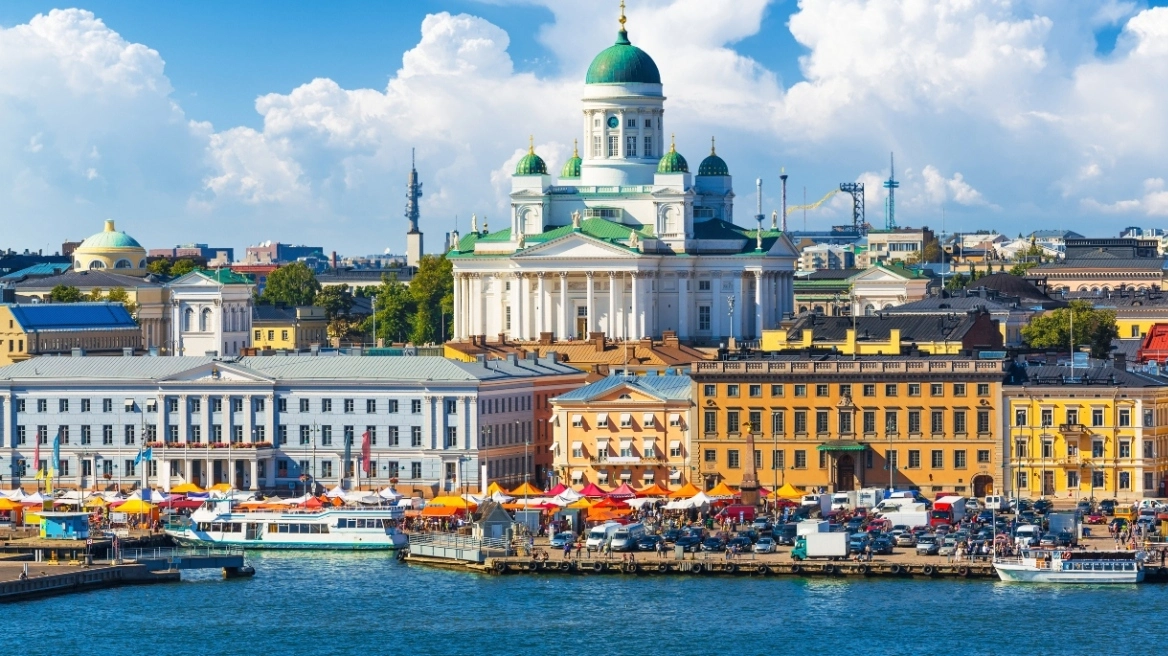
For yet another year, Scandinavian countries dominate the World Happiness Report rankings. However, in 2026 there is a remarkable development: for the first time in the report’s history, a Latin American country, Costa Rica, enters the top five, rising impressively from 23rd place in 2023 to fourth.
The ranking, compiled by Gallup, the Oxford Wellbeing Research Centre, and the UN Sustainable Development Solutions Network, is based on a three-year average of life evaluations from citizens in 140 countries. Factors such as GDP, social support, life expectancy, freedom of choice, generosity, and perceptions of corruption are also considered.
Greece’s Ranking
Greece is ranked 85th on the list, between Bulgaria (84th) and Albania (86th), scoring 5.697 points in the evaluation system. Last year, Greece was 64th, while Cyprus fell from 50th to 62nd place.
Notably, for the second consecutive year, no major English-speaking country is in the top 10: Australia ranks 15th, the USA 23rd, Canada 25th, and the United Kingdom 29th.
Finland Again in First Place
Finland maintains first place for nine of the last ten years, with residents attributing their well-being mainly to the safety and trust that characterize society. The ability of children to move independently from an early age, as well as the general sense that citizens keep their promises, enhances a feeling of stability.
Despite high taxes, citizens believe the quality of public services—especially in health, education, and transport—compensates for the cost. The work environment is characterized by collaboration and minimal hierarchy, while contact with nature is an essential part of daily life, as even in cities, access to parks, the sea, or forests is immediate.
Experiences of Finnish culture, such as the sauna—with about three million facilities for 5.5 million inhabitants—are considered an integral part of life. Residents also advocate a slower, calmer way to explore the country.
Iceland
Iceland ranks second, standing out for strong social cohesion. Residents say they can rely on each other during difficult times, a trait attributed to the country’s historical isolation, where survival required collective effort.
Daily life is shaped by the ability to adapt to harsh conditions, such as long, dark winters. Residents focus on simple pleasures like coffee, hot pools, and social interaction. During summer, with nearly 24 hours of daylight, the sense of well-being is significantly enhanced.
Contact with nature remains central, and the phrase “Þetta reddast” reflects the belief that no matter the circumstances, everything will eventually work out.
Denmark Consistently in the Top Ten
Denmark, in third place, has long been a stable presence at the top of the rankings. Happiness here is not necessarily linked to outgoing displays but to deep-rooted trust among citizens and toward institutions.
The education system promotes social cohesion, with children from different social backgrounds attending the same public schools, while social interaction and understanding of different lifestyles are encouraged.
Daily life is marked by slower rhythms and low pressure, with residents emphasizing balance and quality of life.
The Surprise: Costa Rica
Costa Rica is the big surprise of this year’s ranking. Despite not performing as strongly on economic indicators or public services, citizens report high levels of life satisfaction.
Central to this is the sense of community and daily contact with nature. Residents describe a life connected to the countryside, the sea, and social relationships, while freedom of choice enhances happiness.
Daily life includes activities such as beach walks, wildlife interaction, and social engagement, fostering a strong sense of balance.
Closing the Top Five: Sweden
Sweden ranks fifth, maintaining a consistent presence among the top positions in recent years. The country is distinguished by the balance between modern urban life and easy access to nature.
Short distances, both geographically and socially, strengthen trust and cooperation. The culture of equality is reflected even in language, with the informal “du” used regardless of social status.
Daily life is characterized by slower rhythms, while practices such as “fika”—a coffee break with conversation—are a key part of social life.
Top Ten Countries for 2026
- Finland
- Iceland
- Denmark
- Costa Rica
- Sweden
- Norway
- Netherlands
- Israel
- Luxembourg
- Switzerland
Afghanistan remains at 147th and last place. Other countries at the bottom are Botswana (143rd), Zimbabwe (144th), Malawi (145th), and Sierra Leone (146th).
Ask me anything
Explore related questions




