





The United States will help relieve increased traffic at Hormuz Strait, U.S. President Donald Trump said in a message today, in an effort to show that with U.S. intervention oil can get back into more normal circulation, at least for the next two weeks that the ceasefire is expected to last.
“We will load supplies of all kinds and stay in the area to ensure that everything goes smoothly,” he said. At the same time, he spoke of “many positive developments“, adding that significant economic benefits will be created (“we will make a lot of money” he said) and that “Iran can start the reconstruction process.”
At the same time, although there is an agreement to reopen the Strait of Hormuz, experts warn that de-escalation in fuel prices may be delayed for months.
Gasoline prices have been one of the most immediate ways in which consumers have experienced the impact of the conflict with Iran. According to AAA in Alabama, the average price of regular unleaded in the U.S. is now at $3.85 per gallon, up from $3.01 just a month ago, registering a significant increase. The same picture, of course, prevails in all regions of the world, from Europe to Asia to Australia, intensifying fears of an inflationary explosion.
Following the agreement to reopen the crucial sea crossing, many drivers are wondering when prices will start to fall. However, according to NBC, relief is not expected immediately. The truce is temporary in nature, lasting two weeks, and uncertainty and transportation delays may lengthen the time until prices at the pump start to show a decrease.
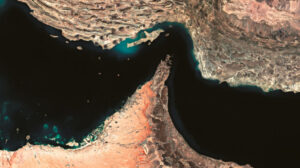
The Strait of Hormuz is one of the world’s most important energy arteries, with around 20% of the world’s daily oil supply passing through it. Any disruption in transit has a direct impact on energy markets and, ultimately, consumers.
Although oil prices have retreated about 15% since the agreement (at one point they even went as low as 18%), this does not automatically translate into cheaper fuel. According to NBC, the sea route remains strained after the prolonged shutdown, with large amounts of oil awaiting transit.
As a result, it may take weeks or even months before supply flow is fully restored and there is a noticeable reduction in gasoline prices.
It remains unclear, however, the exact timeline for full reopening of the Straits of Hormuz.
Reports of only 10-15 ships passing through per day
However, as reported by investinglive, there are reports that Iran will allow just 10 to 15 ships a day to transit through the Strait of Hormuz, which significantly changes the market narrative, shifting the picture from a temporary disruption to an eventual structural constraint on global oil supply. Even with a ceasefire in place, constrained flows and increased costs may keep crude prices high, reinforce inflationary pressures internationally and sustain volatility, while increasing geopolitical risk premiums associated with energy security and navigation.
According to information circulating on social media, during the ceasefire, only 10 to 15 ships per day will be allowed to transit the Strait of Hormuz during the ceasefire, subject to the approval of the Iranian authorities and in coordination with the Revolutionary Guards Navy (IRGC), and tolls will reportedly be paid. At the same time, the United States appears ready to proceed with the release of the frozen Iranian funds. The same sources say that, even in the event of a final agreement, the Straits will not be restored to their previous status of full freedom of navigation. During the same period, the negotiations are expected to be based on a 10-point Iranian plan, as reflected in a statement issued by the country’s Supreme National Security Council, and in the event of failure to reach an agreement, hostilities may resume.
If confirmed, these details suggest that the reopening of the Strait of Hormuz will be much more limited than initially estimated, heightening concerns that global energy flows may remain under structural stress even in conditions of temporary de-escalation.
Based on available information linked to Tehran’s negotiating stance, shipping will be subject to strict control during the ceasefire, with a very limited number of transits per day. The process will require approval by the Iranian authorities and coordination with the IRGC, and the imposition of transit fees represents a significant departure from the Straits’ previous status as an open international seaway.
Ask me anything
Explore related questions




