





Ukraine’s chief negotiator with Russia believes the talks are nearing an agreement, leaving open the possibility of ending the war in the relatively near future.
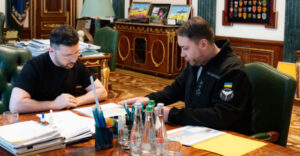
Kirilo Budanov, a key adviser to Ukrainian President Volodymyr Zhelensky and former head of military intelligence, told Bloomberg that despite limited progress at the public level, negotiations are moving toward compromise and that Moscow is also seeking an end to the conflict. “Everyone understands that the war must end. That is why they are negotiating. Idon’t think it will take a long time,” he said.
Budanov, who has led the presidential office since January, is a central figure in trilateral talks between Ukraine, the US, and Russia, and plays a key role in prisoner swaps. Despite his move to the command, he retains the rank of lieutenant general, combining political and military perspectives.
Markets reacted positively to the statements, with Ukrainian bonds strengthening and the euro recovering, while expectations of aggressive interest rate hikes by the European Central Bank were reduced.
Despite the optimism, he acknowledged that both sides have so far maintained “maximalist” positions, but estimated that they would converge towards a compromise. He also noted that Russia has a strong economic incentive to reach an agreement, given the high cost of war.
The basic thorn remains the territorial issue, with Budanov avoiding specifying the contours of a possible solution. “There is no final decision yet, but everyone now understands the limits of what is acceptable. This is huge progress,” he said.
More cautious Kremlin
However, sources close to the Kremlin appear more cautious, citing limited progress, mainly due to disagreements over security guarantees to Kiev. Moreover, reaching an agreement requires greater convergence between the US and Europe, which have no common ground on the outcome of the war.
The only tangible development so far is an exchange of positions that remain incompatible between the two sides, according to the same sources.
In a symbolic move, Russia and Ukraine have agreed to a coupled Easter ceasefire. Vladimir Putin ordered a cessation of operations from April 11 to April 12, with Zelensky saying Ukraine would “retaliate” accordingly.
Bunanov stressed that a key achievement of the talks is the retention of the US involvement as a mediator. He said Kiev expects a visit by White House envoys Stiv Whitcoff and Jared Kushner, possibly within the next week.
What the two sides are asking for
Ukraine is seeking clear security guarantees from the US to deter future Russian aggression, an issue that is expected to dominate the talks.
Moscow is demanding the withdrawal of Ukrainian forces from areas of Donetsk, even from territories it does not fully control, while Kiev favors freezing the conflict on the current front line. The US has proposed creating a special economic zone in the region.
Ukraine remains heavily dependent on military and financial support from its allies, notably the European Union, and faces the risk of a funding gap in the coming months as the disbursement of European funds is delayed.
At the same time, the Russian economy has been squeezed by rising budget deficits due to high military spending, although rising oil prices offer temporary relief.
Despite Russia’s numerical advantage in manpower, Budanov believes this does not translate into substantial gains on the battlefield as Ukraine exploits technological innovations, particularly in drone warfare.
Asked about the possibility of failure of the negotiations, he replied: “There are only two options – war or peace. And not just continued war, but also negotiations. If they agree to that – because they may not agree to that.”
Ask me anything
Explore related questions




