





Talks between the United States and Iran have reached a critical phase in recent hours, aiming to remove the remaining obstacles to reaching an agreement, given that military operations in the region have exceeded three months, with visible global economic impacts, including on the U.S. economy.
As both official and behind-the-scenes negotiations continue uninterrupted, the U.S. President unexpectedly announced today a temporary suspension of “Project Freedom,” which concerns the safe passage of ships through the Strait of Hormuz, while primary elections are also underway ahead of the November midterms.
Regarding his motives, Donald Trump stated on his personal social media platform: “Based on the request of Pakistan and other countries, the significant military success we achieved during the campaign against Iran, and the progress toward a complete and final agreement with representatives of Iran, we mutually agreed that, while the blockade will remain fully in force, Project Freedom will be paused for a short period to determine whether the agreement can be finalized and signed,” thus bringing the prospect of a deal even closer.
However, this does not imply the end of the naval blockade, which remains in place, maintaining pressure on Tehran. At the same time, it is considered a goodwill gesture by the U.S., which is monitoring Iran’s intense diplomatic activity, as the country’s Foreign Minister, Abbas Araghchi, is currently visiting China.
The end in sight
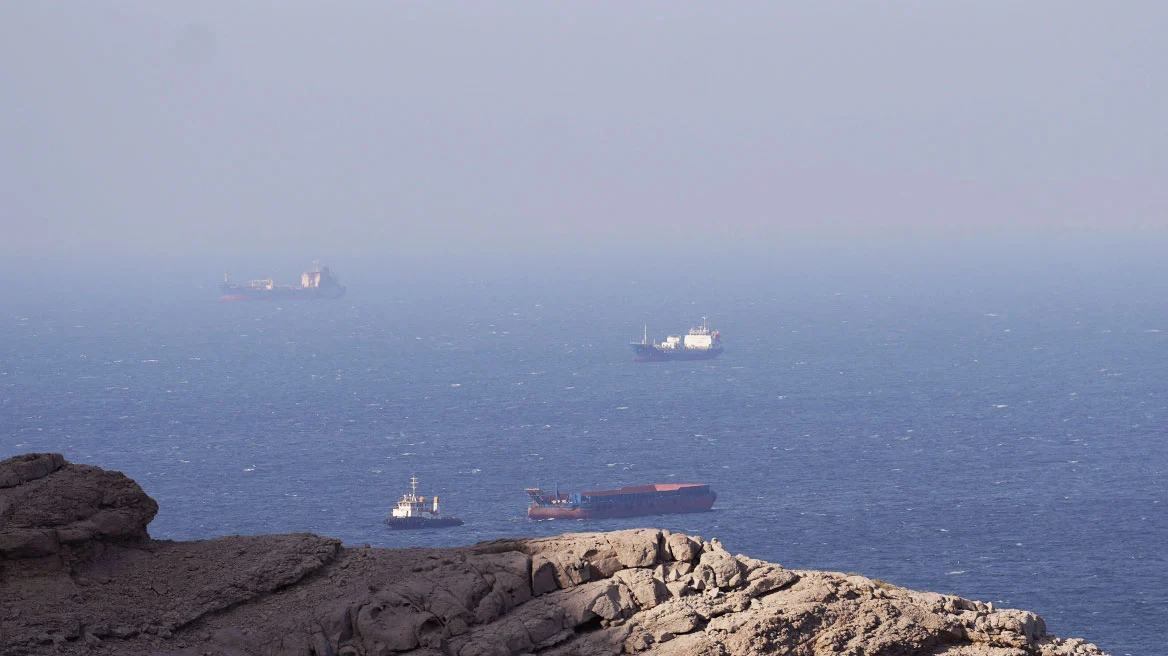
Intensive diplomatic contacts and negotiations are also fostering cautious optimism among millions of consumers worldwide, who have been affected by rising fossil fuel prices, increasing social discontent. This pressure partly explains Trump’s urgency in accepting a temporary pause in an operation that had only been active for a few days, especially with hundreds of commercial ships blocked due to the closure of the Strait.
The need for the U.S. to officially declare the end of the war had already become evident in earlier statements by Secretary of State Marco Rubio, made just hours before Trump’s announcement. Rubio said that military operations against Iran have ended and that the U.S. is now focusing on “Project Freedom.”
Statements from the White House leadership are closely linked to ongoing diplomatic efforts. Iran’s Foreign Minister Abbas Araghchi visited Beijing for the first time to discuss “regional and international developments,” meeting with his Chinese counterpart Wang Yi. China, being the main buyer of Iranian crude oil, has a clear interest in resolving the conflict. Trump has publicly acknowledged China’s positive role, and Beijing is known to influence Iran’s leadership. The U.S. President is also expected to visit China next week.
All these developments reinforce the sense that an agreement on Iran’s future may be imminent. Meanwhile, U.S. Secretary of State Marco Rubio also spoke with Russian Foreign Minister Sergey Lavrov regarding developments in Iran, although Russia’s Foreign Ministry stated that the two officials “exchanged views on current international issues and U.S.–Russia relations and discussed the schedule of bilateral contacts.”
At the same time, oil demand is dropping due to soaring prices, affecting not only transportation but also essential goods, a fact acknowledged even by Iranian state media as a side effect of the Strait’s closure. Iranian media interpreted Trump’s announcements as an admission of failure by the U.S. to “achieve its objectives,” claiming that the pause came “after firm positions and warnings from Iran.”
In particular, Tehran’s strategy of shifting the center of the conflict to the Strait of Hormuz forced the U.S. to adjust its military operations, with the nuclear issue still unresolved despite ongoing efforts to reach an agreement—efforts in which Pakistan remains actively involved.
In any case, the economic consequences are tangible for American consumers and appear to be a major driver of developments. Trump commented on rising oil prices, calling them “a small price” compared to the strategic goal of preventing Tehran from using nuclear weapons.
Nevertheless, oil prices remain a dominant issue, especially as Iran has introduced a new mechanism to regulate maritime traffic in the Strait of Hormuz, seen as a “rehearsal for the next day.” Specifically, all ships wishing to pass through the Strait will receive emails from the Persian Gulf Strait Authority (PGSA) with details on new rules they must follow to obtain passage clearance, according to state broadcaster Press TV. This new procedure gradually reinforces the idea of tolls benefiting Tehran, aiming for increasing profits until the war’s definitive end.
Ask me anything
Explore related questions




