





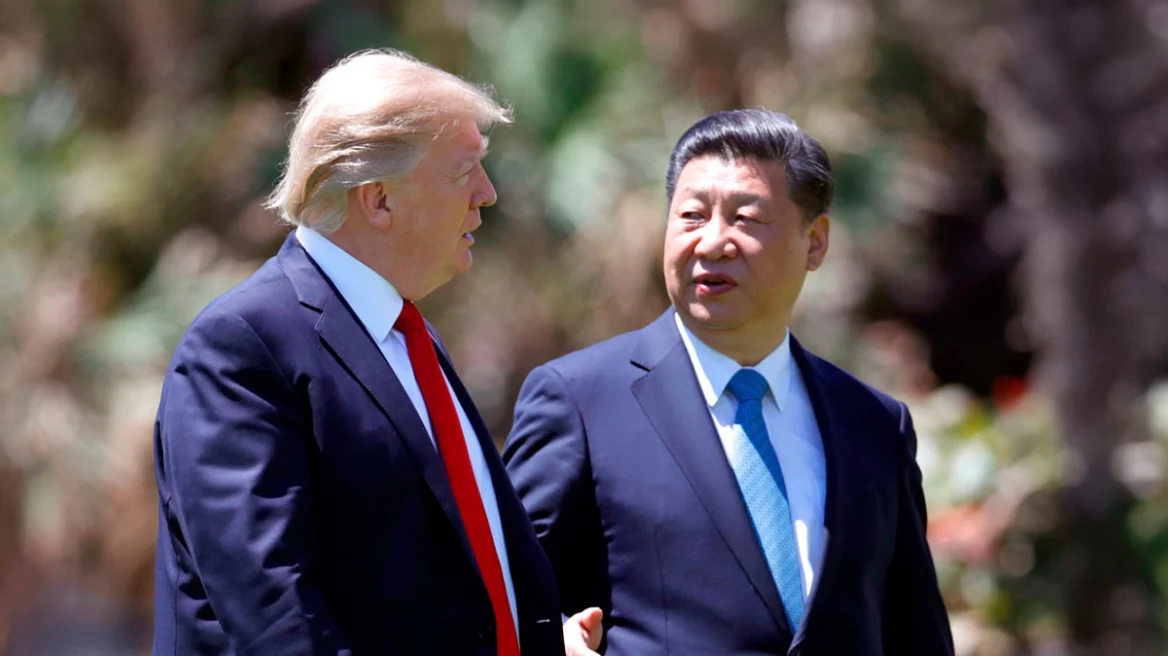
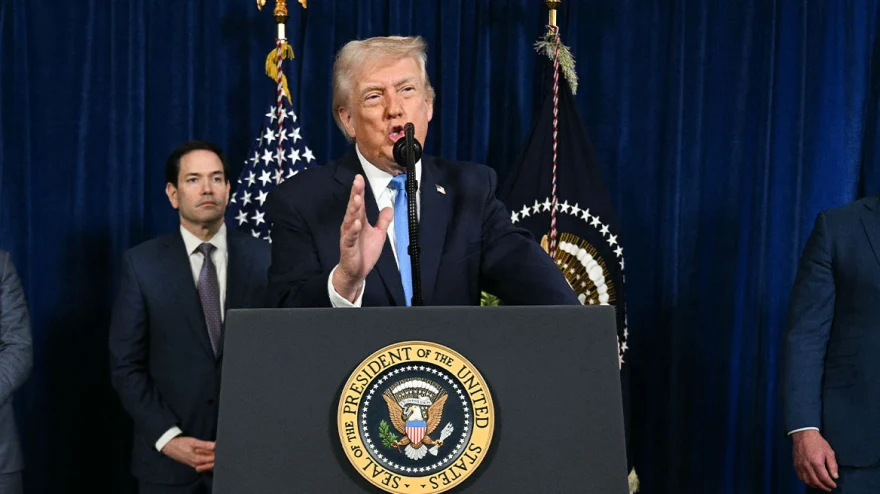
During his departure for China, U.S. President Donald Trump emphasized that he would have a long conversation with Xi Jinping about the war in Iran during his visit to Beijing. He also stated that the Chinese president could help Washington bring an end to the war in the Middle East.
“We will have a long discussion about this issue. I think he has behaved rather well,” Trump replied when asked by a journalist about the war, while later denying that Iran would be the dominant topic of their discussions, seeking to signal that the war is under control. “We have many things to discuss; I wouldn’t say Iran is one of them, to be honest with you, because we largely have Iran under control.” He then added:
“Iran will either do the right thing or we will finish the job,” he warned, also saying: “I’m thinking one thing—we cannot allow Iran to acquire nuclear weapons.”
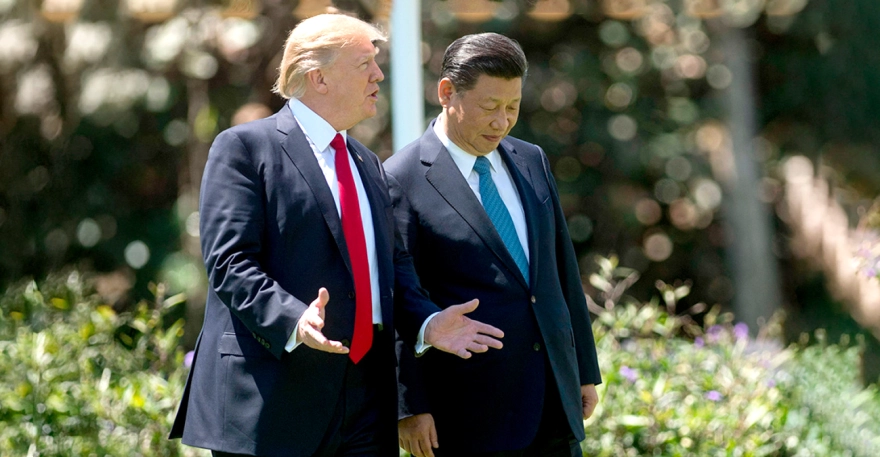
The American president also noted regarding his visit to China that he will ask his counterpart Xi Jinping to “open up” China’s economy more to U.S. companies during the talks they will hold on Thursday and Friday in Beijing.
“I will ask President Xi, an unparalleled leader, to open China so that brilliant people can do their magic and elevate the People’s Republic to an even higher level,” Trump said, apparently referring to U.S. business leaders accompanying him on the trip.
The agenda at the Xi–Trump meeting
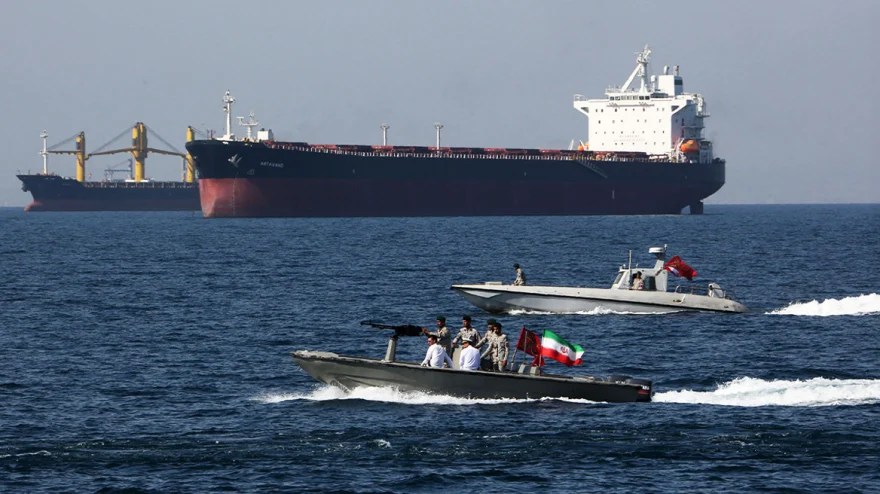
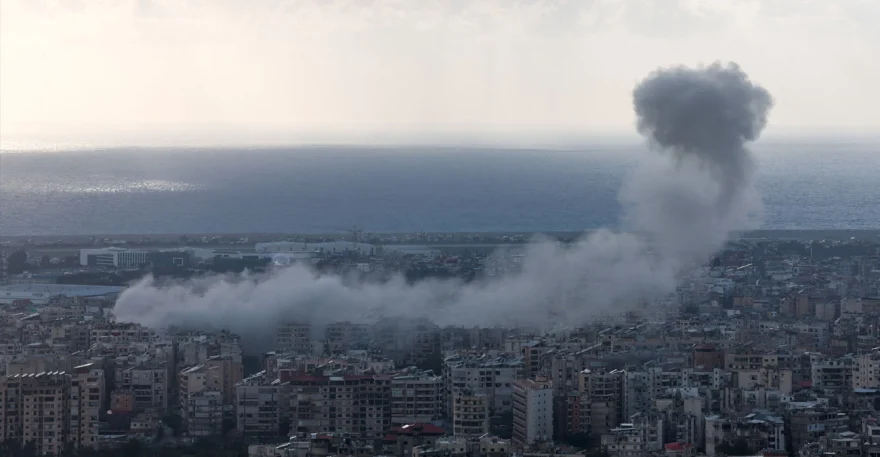
How can a ceasefire hold when missiles are being exchanged at the same time? This is now the central question behind Washington’s effort to end the war with Iran. The latest flare-up in the Strait of Hormuz revealed the exact limits of the current situation.
On paper, a ceasefire exists. In practice, U.S. warships pass through one of the most dangerous maritime chokepoints on the planet, Iranian missiles and drones are activated, Washington responds with strikes, and U.S. Gulf allies count each new incident as a potential beginning of a second—or even third—phase of the war.
Donald Trump insists the ceasefire remains alive and in place. However, the reality is more complex. A ceasefire that requires daily interpretation, military restraint, and political backing is not—if we are honest—a foundation of peace.
It is a temporary suspension of fire over an active battlefield. And when that battlefield is Hormuz, the difference between a limited response and a general escalation can be measured in minutes.
Movement
This is exactly what is now pressuring the White House. Trump does not simply want the missiles to stop. He wants the image of an unfinished war to stop. He wants to arrive in Beijing for the May 14 meeting having transformed the Iranian file from an open military crisis into a manageable diplomatic issue.
Not as a president indirectly asking for help to extricate himself from the Middle East, but as a leader who can impose terms, stabilize markets, and restore American power to its main strategic arena: the Indo-Pacific.
This is the real backdrop of the new diplomatic momentum. The U.S. has increased pressure on China to use its influence over Tehran to reopen the Strait of Hormuz. At the same time, Abbas Araghchi traveled to Beijing for talks with Wang Yi, just days before the Trump–Xi meeting. The timing is not accidental—it is part of the negotiation.
The crisis in the Strait of Hormuz has become a strategic burden for Trump. It is not only about oil. It is about the image of American power.
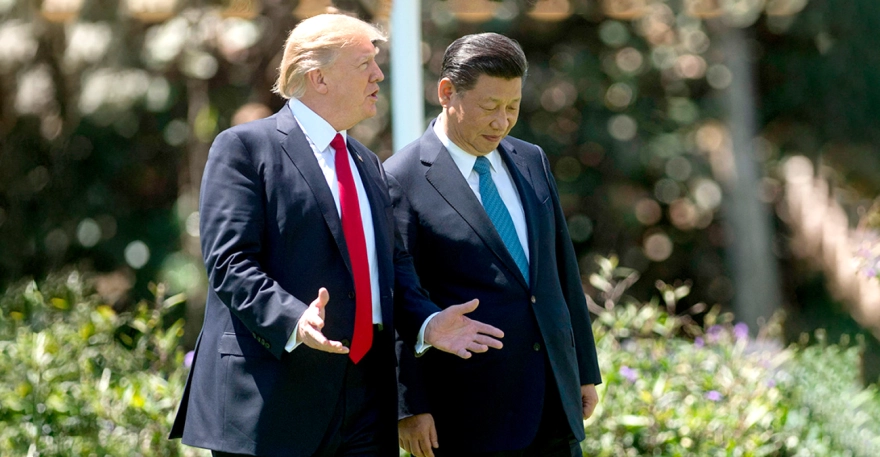
If the U.S. president arrives in Beijing while Hormuz is still closed, “semi-closed,” or militarily unstable, he will face Xi Jinping not as an equal negotiating partner, but as a leader who needs Chinese mediation to contain a crisis Washington has not managed to end militarily. Even if never stated openly, this will always hang in the background as a “shadow” of power. Tehran knows this.
That is why Iran is attempting to shrink the framework of any agreement. From initial maximal goals—nuclear containment, military weakening, secure navigation, and regional restructuring—the discussion is shifting to something much narrower: reopening Hormuz, freezing escalation, and returning to future nuclear talks.
In other words, Iran is trying to sell Trump what he urgently needs before Beijing: an exit. Not victory—an exit.
The deeper problem for Washington is not in the Persian Gulf but in the Pacific. The war with Iran has already absorbed naval, air, and missile capabilities that the U.S. would prefer to keep available for deterring China.
The absence of an American aircraft carrier from the Pacific for over two months is not a mere operational detail. It is a political signal. It shows that the Middle East still has the power to pull America back into a theater Washington has long tried to strategically downgrade. Ammunition stockpiles, naval maintenance needs, weapons system wear, and production pressure are not abstract concepts.
They are the core of deterrence. If the U.S. has consumed critical capabilities in the Middle East, its credibility against China regarding Taiwan, Japan, the Philippines, and the South China Sea is weakened. At that point, the Iran crisis stops being regional. It becomes global.
A position of necessity
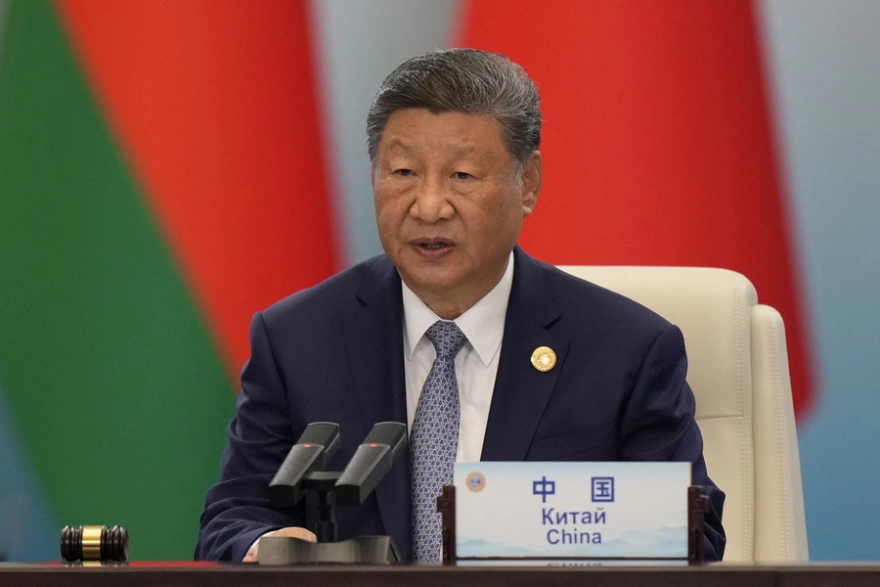
Xi Jinping would prefer to receive Trump while the war is still ongoing—not because he necessarily wants full destabilization of the Gulf (China depends on energy flows through the region), but because a Trump tied down in Iran is a Trump with less negotiating freedom.
Beijing can then present itself as the responsible player: speaking of stability, pressing for freedom of navigation, and appearing as a power that engages with everyone—Tehran, Moscow, Gulf states, and Washington—while advancing its global narrative that the U.S. causes crises and China manages them.
The meeting between the Iranian foreign minister and his Chinese counterpart in Beijing, days before Trump’s arrival, is not coincidental. It is diplomatic staging.
China wants to appear present in the crisis. Iran wants to show it is not isolated. And Trump wants to avoid asking Xi for something that would politically cost him the most: helping him end a war he opened.
Taiwan and the other objective
The second major field is Taiwan. Xi will almost certainly attempt to extract some verbal shift in the U.S. position.
Beijing has long pushed for the U.S. to move from saying it “does not support” Taiwan independence to something stronger: that it “opposes” it.
The difference may seem technical, but it is not. In Taiwan diplomacy, every word functions as a boundary of security. “Does not support” preserves U.S. strategic ambiguity. “Opposes” would give Beijing valuable political gain, allowing it to frame it as American acknowledgment that Taiwanese independence is unacceptable.
So far, Trump has not made this shift. However, he has already shown willingness to reduce tensions with China ahead of the summit.
Trump is also heading to Beijing with a second objective: stabilizing economic relations after last year’s escalation over tariffs and critical minerals. He wants U.S. product purchases, aircraft deals, and a mechanism to manage trade and investment disputes that would allow him to present the summit as a stability agreement rather than a retreat.
But to do that, he needs space. He cannot negotiate trade concessions while simultaneously asking for Chinese help on Iran, diplomatic backing at the UN Security Council, and pressure on Tehran. In such a setting, every Chinese concession comes at a price—commercial, technological, or geopolitical.
Beijing knows how to link issues. Taiwan, tariffs, critical minerals, semiconductors, the South China Sea, and Iran are not separate files for Xi, but a single integrated bargaining system of power.
Window of Opportunity
For Tehran, the timing is nearly ideal. It knows Trump needs de-escalation before arriving in Beijing. It knows China does not want a total collapse of energy flows. It knows Gulf states, India, and Europe are pressing for restored navigation. This gives Iran room to lower the bar: not accepting an American victory, but offering a limited package—gradual reopening of Hormuz, avoidance of new attacks, indirect guarantees through intermediaries, and postponement of the hardest nuclear issues.
Washington can present it as success. Tehran can present it as endurance. China can present it as proof that 21st-century crises cannot be solved without it.
Difficult equation
Ultimately, the struggle is not only about Iran’s terms but about America’s position in global competition. Washington started the war aiming to demonstrate strategic discipline over Tehran. Now it risks ending it to regain freedom of action against China.
This does not mean Trump has lost. But it does mean the scale of the confrontation has changed. The Middle East has once again functioned as a black hole of American power.
Beijing does not need to defeat the U.S. militarily to gain advantage. It only needs to see it arrive at the table exhausted, with fewer options, less patience, and greater exposure.
Trump needs an agreement because he does not want to sit across from Xi Jinping as a president asking for help to reopen the Strait of Hormuz. Even more, he does not want to arrive in Beijing with a ceasefire that exists only in communiqués while missiles are still falling on the ground.
The Iranians know it. The Chinese know it even better. That is why the terms are narrowing, why the initial war goals are shrinking, and why any final agreement—if it emerges—will need to be read not only as the conclusion of the Iran war, but as the prologue to the next phase of U.S.–China rivalry.
Ask me anything
Explore related questions




