





Just before opening its doors on Chicago’s South Side, the Obama Center is sparking intense debate across the United States.
According to The Guardian, the approximately $850 million project is the largest and most ambitious complex ever created for a former U.S. president. It is being presented as a space that will support “future changemakers,” aiming to serve as a hub for community activity and civic engagement. At the same time, it has become the focus of criticism over its scale and its impact on the local community.
In the United States, presidential libraries have evolved into institutions that go far beyond the role of simple archives. Since President Franklin D. Roosevelt established the tradition in 1940 with his library in New York, every president has sought to leave a lasting legacy by combining historical archives, museums, and public spaces.
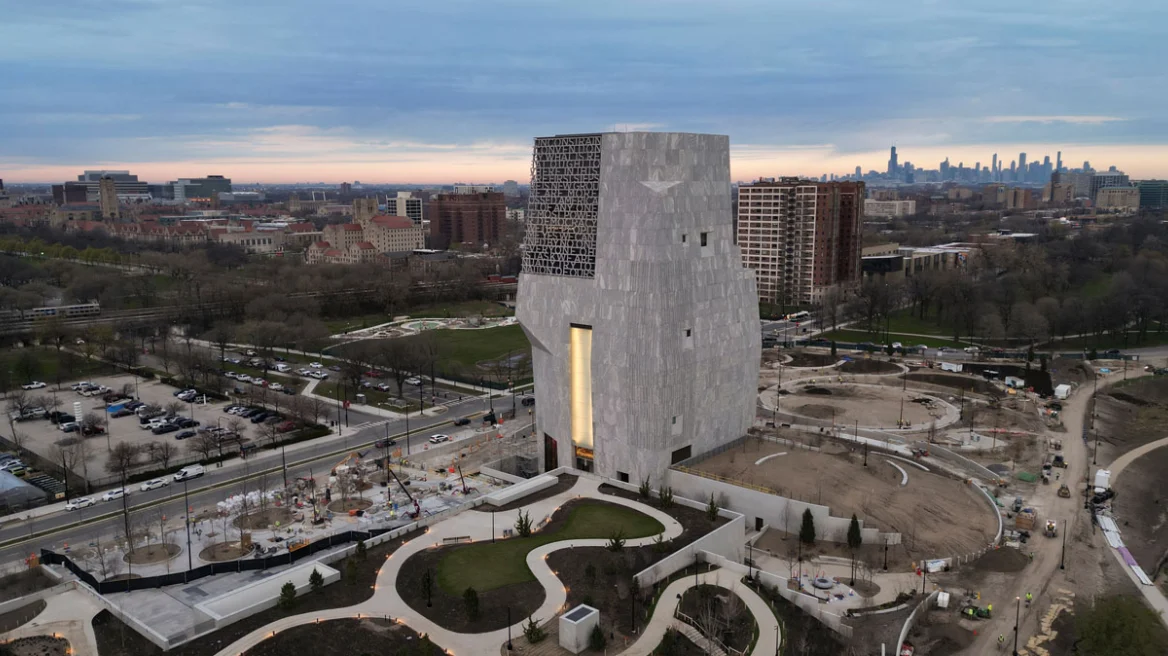
At the heart of the complex bearing Barack Obama’s name stands an imposing 70-meter (230-foot) granite-clad tower that resembles a modern obelisk and dominates the local skyline.
Its distinctive architecture has led critics to compare it to a “Klingon prison” from Star Trek, an anti-aircraft defense tower, or even a mausoleum.
The building is the most recognizable feature of a 19-acre campus that includes event spaces, a library, athletic facilities, restaurants, and outdoor areas.
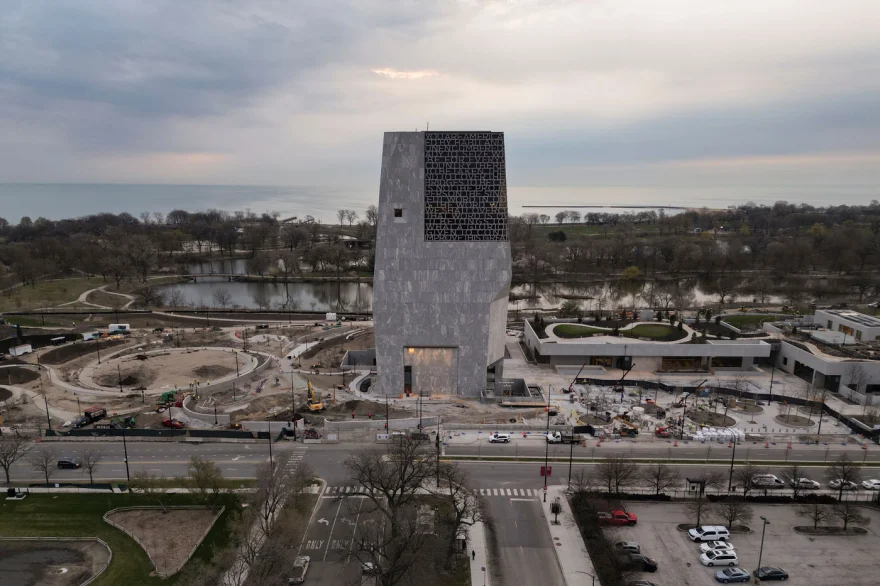
Architect Billie Tsien, who led the project’s design, has revealed that Obama himself was actively involved in shaping the building’s final form.
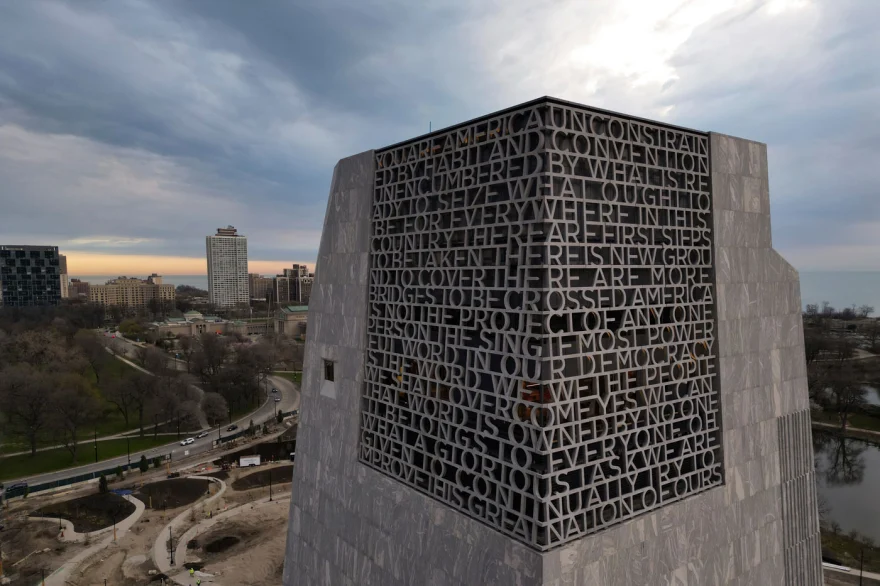
The designers intended to create a “beacon” representing hope and justice. Nevertheless, the structure’s austere appearance and its nearly blind façades have prompted some critics to liken it to a fortress or even a science-fiction set.
The complex also includes an event hall, shops, cafés, a restaurant, and a branch of the Chicago Public Library. Visitors will be able to browse books that rank among Obama’s favorite reads, while the surrounding grounds feature dozens of species of trees and plants, including a tulip variety named after him.
Special emphasis was also placed on sports facilities. Home Court, a large athletic center designed by Moody Nolan, features an NBA-standard indoor basketball court adorned with slogans associated with the former president’s election campaigns, including “Yes We Can.”
Unlike traditional presidential libraries, the Obama Center will not house a physical archive. It is the first presidential archive to operate entirely in digital form, and it will be managed by the Obama Foundation rather than the U.S. National Archives. This decision has raised concerns among historians and researchers, who worry about preserving the archive’s independence and objectivity.
Visitors will be able to explore four floors of interactive exhibits dedicated to the journeys of Barack and Michelle Obama, from the civil rights movement to their years in the White House. Exhibits include a full-scale replica of the Oval Office, as well as personal items, campaign memorabilia, and interactive presentations.
Despite the project’s ambitions, its construction has generated significant controversy. The complex occupies part of the historic Jackson Park, leading to legal challenges from citizens and environmental organizations. Meanwhile, local residents argue that the development has contributed to rising property values and rental costs in the area.
Ask me anything
Explore related questions




