





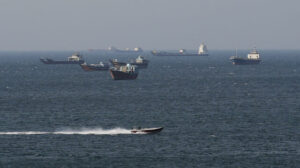
Iran will not charge ships crossing the Strait of Hormuz for 60 days, according to Iran’s Fars news agency, citing a source familiar with the matter. However, it intends to introduce charges after that period expires.
According to the Iranian outlet, the final wording explicitly recognizes the role of Iran and Oman in the future management of maritime services in the Strait of Hormuz.
According to the same source, Washington has for the first time accepted Tehran’s right to impose fees for services related to navigation through the strategically important waterway.
“Iran will allow ships to pass through the Strait of Hormuz free of charge for only 60 days,” the report states.
After the 60-day period, Tehran intends to generate revenue from vessel transit by providing security, navigation, and insurance-related services. Fars did not specify exactly when this arrangement would take effect.
“In other words, the United States even agreed to the very idea of imposing fees,” the Iranian media outlet noted.
According to the agency, the text of the Iranian-American memorandum stipulates that navigation through the Strait of Hormuz will be regulated by Iran and Oman.
Fars reports that Tehran added a clause regarding maritime service fees to the framework agreement with the United States shortly before its announcement.
“In the final moments of the negotiations, the text of the memorandum was amended to clearly and explicitly emphasize the issue of Iranian and Omani sovereignty over the Strait of Hormuz,” the source cited by Fars said.
“The use of the term ‘maritime services’ means that the United States has accepted that fees will be paid to Iran,” it added.
600 Ships Waiting in Line and the Difficult Bet of Returning to Normality
The announcement of the agreement between the United States and Iran to end the war brought immediate relief to international markets. Oil prices fell, investors rushed to price in a de-escalation of tensions, and the global economy appeared to breathe easier after months of uncertainty.
However, behind the optimism of the initial reactions, reality is proving far more complex. The agreement may have halted the military confrontation, but it does not automatically restore normal conditions in global trade, energy markets, or shipping.
For many analysts, the real test begins now. Nearly 600 vessels remain stranded inside the Persian Gulf, while hundreds more are waiting outside its entrance. Analysts, shipowners, insurers, and traders warn that a return to normality will be neither immediate nor easy.
The crisis did not merely disrupt energy flows. It created new trade patterns, increased transportation costs, altered procurement strategies, and forced many countries to seek alternative sources of supply. For this reason, markets are approaching the first steps after the agreement with caution.
Ask me anything
Explore related questions




