





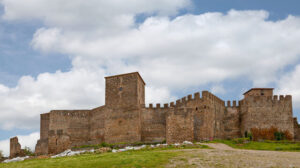
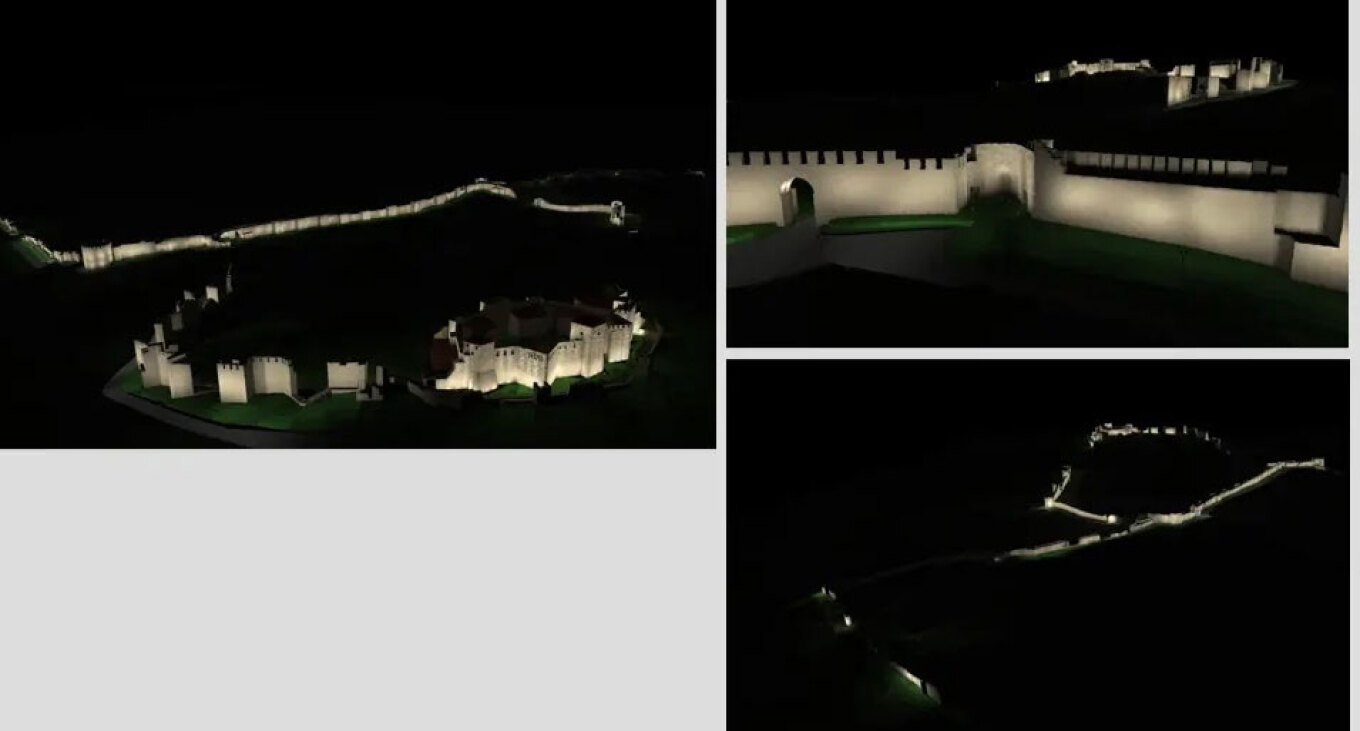
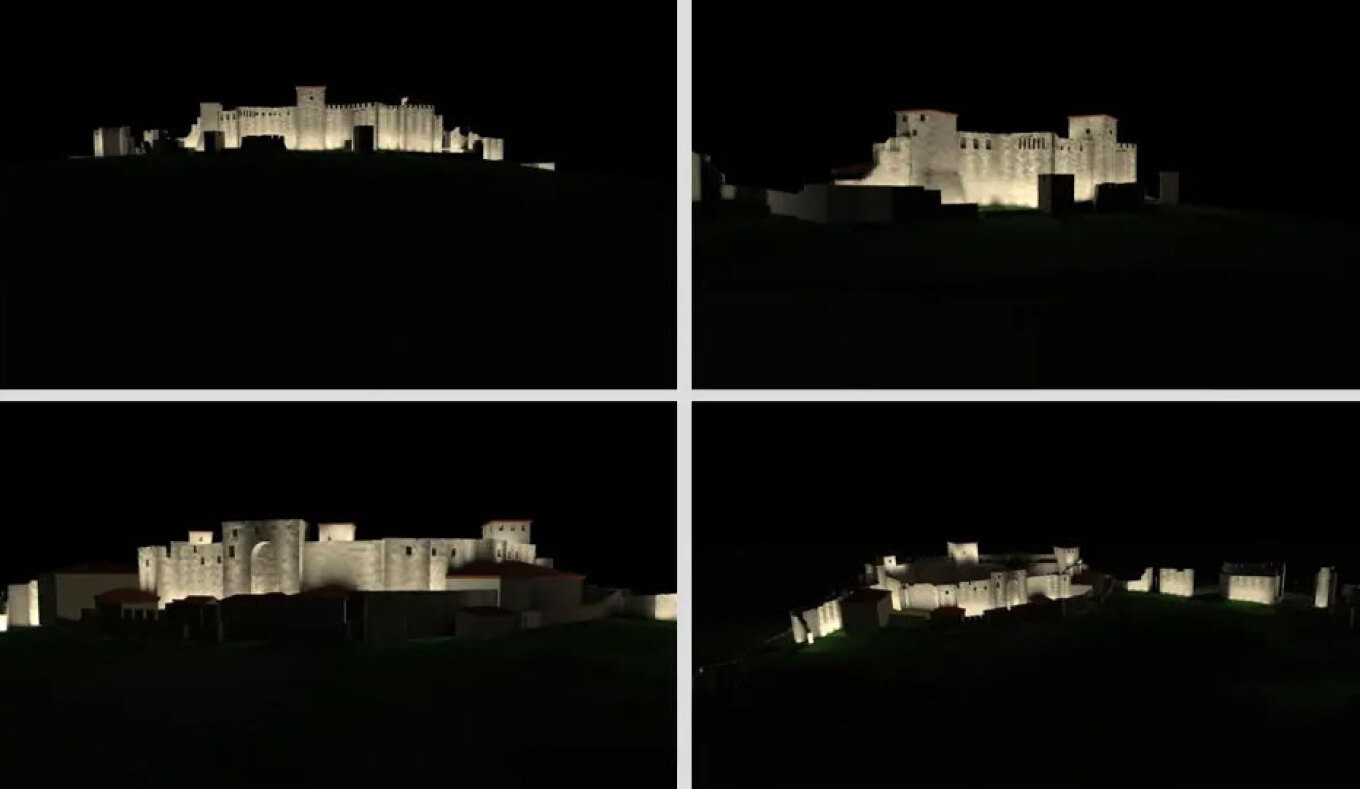
The project for the restoration and promotion of Thessaloniki’s fortification ensemble is entering its final stage. It includes the Heptapyrgion, the White Tower, and the city’s Byzantine walls, which will be highlighted with modern lighting. The aim is to improve the nighttime appearance of the monuments while ensuring functionality and long-term maintenance of the lighting system.
In particular, the White Tower, one of Thessaloniki’s most iconic landmarks visible from much of the urban fabric, will be illuminated using high-standard, modern bioclimatic lighting specifications.
In addition to the planned interventions for the White Tower, the Heptapyrgion, and sections of the walls, the existing lighting will also be upgraded where necessary.
One of the most imposing fortification complexes of the Byzantine Empire
The Byzantine walls of Thessaloniki are considered one of the most impressive fortification works of the Byzantine era. The city’s defensive system dates back to its founding by Cassander in 316 BC and evolved over time through successive interventions, expansions, and repairs.
During the Byzantine period, the fortifications developed into an approximately 8-kilometre-long enclosure, reinforced with towers and an outer wall, culminating in the Acropolis. There, in the late Byzantine era, the Heptapyrgion was established as the final defensive refuge for the city’s inhabitants.
Under Ottoman rule, the Heptapyrgion underwent extensive modifications, serving as both a defensive stronghold and an administrative centre of Thessaloniki. From the late 19th century until 1989, it was used as a prison before being handed over to the Ministry of Culture.
Of the original 8 kilometres of walls, around 4 kilometres remain visible today, forming a complex structure of construction phases, dominated by late Roman and early Byzantine developments (4th–5th century). The monument continues to dominate the modern cityscape, marking its historic core.
Minister Mendoni: “The surviving sections are valuable witnesses to Thessaloniki’s long history”
Culture Minister Lina Mendoni stated:
“Since 2019, major interventions have been carried out and are ongoing across Thessaloniki’s Byzantine monuments. The protection, restoration, and promotion of the Byzantine walls have been a priority of the Ministry of Culture. The surviving sections, with their numerous towers and gates, are invaluable witnesses to the city’s long history.
The restoration project of the fortification complex is now being completed with a decisive intervention: the lighting of the Heptapyrgion, the White Tower, and the walls. This lighting enhancement offers a contemporary aesthetic approach that highlights the historical value and architectural integrity of the monuments. It aims at a clear and legible perception of their volume and geometry, both up close and from distant viewpoints. The project crowns the Ministry’s overall planning for the protection, restoration, and promotion of this unique monument, completing our lighting strategy for Thessaloniki’s monuments within the urban fabric and along Egnatia Street.
In this way, we significantly contribute to upgrading the city’s cultural landscape and improving the daily life of Thessaloniki’s residents. A big thank you to Evangelos Mytilineos for his generous donation to Thessaloniki and the Ministry of Culture.”
The project is implemented through a donation to the Ministry of Culture by the company “MYTILINEOS S.A.”. With funding from the Recovery and Resilience Facility and the Regional Operational Programme “Central Macedonia” under the NSRF, key restoration works on Byzantine monuments have already been completed, while the major project for the conservation and enhancement of the northern, northwestern, and western walls is scheduled for completion by the end of 2026.
The Byzantine walls of Thessaloniki, a monument of major historical and archaeological significance, have been included in the UNESCO World Heritage List since 1988.
Ask me anything
Explore related questions




