





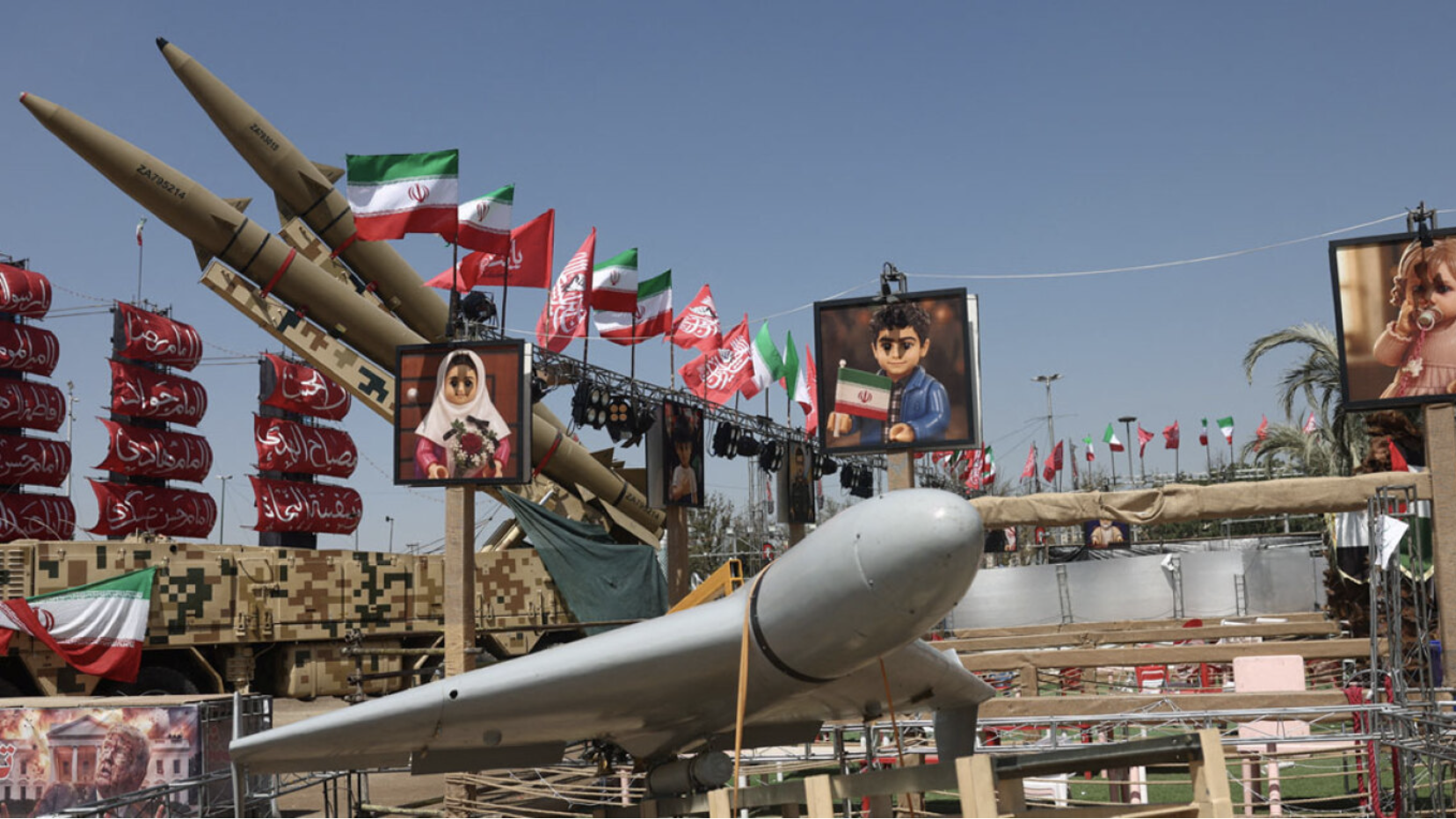
Iran has considered the possibility of expanding the war beyond the Middle East by targeting U.S. military installations in Europe if Donald Trump pursues further escalation, according to people close to the Iranian regime who spoke to the Financial Times.
Two sources familiar with the discussions told the FT that Iranian forces have assessed scenarios involving attacks on U.S. military facilities in southeastern Europe, including in Bulgaria. Sofia approved the use of the Bezmer air base by U.S. tanker aircraft last month. One source said that Cyprus was also among the potential targets for retaliation in the event of another U.S. attack, where the British base at Akrotiri was hit by a drone in March.
At the same time, according to the same sources, Iran’s armed forces have separately considered the possibility of attacking undersea fiber-optic cables in the Strait of Hormuz if the conflict escalates further.
Tehran sees another round of war as increasingly likely
The threats reflect the atmosphere in Tehran, where more and more people within the regime believe that a resumption of hostilities is becoming a question of “when” rather than “if.”
Negotiations over reopening the Strait of Hormuz have stalled, while last week Iran’s Supreme Leader, Ayatollah Mojtaba Khamenei, appointed hard-line figures to senior positions within the country’s security apparatus and armed forces. On Tuesday, Donald Trump said that there were “no talks or contacts underway or scheduled” with Tehran.
The Islamic Revolutionary Guard Corps and other Iranian military commanders have warned that, in the event of a new full-scale conflict, Iran would abandon its previous strategy, which focused on U.S. military installations, energy infrastructure and other targets in the Middle East, and would instead extend its attacks far beyond the region.
Last month, the Revolutionary Guards also warned Britain over the use of British military bases by the U.S., saying that “any base used to launch an attack against Iranian territory will be considered a legitimate target.”
How real is the threat to Europe?
Sidharth Kaushal, a researcher at the Royal United Services Institute (RUSI) in London, described the threat posed by Iranian missiles to targets in Europe and elsewhere as “real, but limited.”
According to him, Iran could use medium-range ballistic missiles, such as those in the Shahab series, against U.S. facilities in southern and southeastern Europe. However, he estimated that these missiles would have difficulty causing significant damage over longer distances. The scale of any Iranian retaliation would nevertheless depend on Washington’s actions, according to the FT’s sources.
One of the sources said the regime was preparing a plan to further widen the conflict if Trump follows through on previous threats to attack Iranian infrastructure. Last month, the U.S. president had said Washington would destroy an Iranian bridge or power plant each time the Islamic Republic attacked a vessel in the Strait of Hormuz. The second source said Tehran would impose “no limits” on its response to an American attack.
“If the U.S. goes too far, Iran will defend itself at any cost, move beyond the region and strike Europe as well,” the source said.
The message through Diego Garcia, Turkey and Cyprus
Iran has already demonstrated a willingness to operate against targets at very long distances. In the weeks after the U.S. and Israel began the war in February, Washington accused Tehran of launching multiple missiles toward Diego Garcia, the joint U.S.-British military base in the Indian Ocean, approximately 4,000 kilometers away. None of the missiles reached their intended target.
In March, Turkey announced that NATO air defenses had intercepted several ballistic missiles launched from Iran. That same month, the British base at Akrotiri in Cyprus was hit by a drone. Western officials at the time assessed that it was probably an Iranian unmanned aircraft operated by forces aligned with Tehran, rather than a direct strike by Iran itself.
The sources also said that Iran’s attack last month on a U.S. base in Jordan, in which three American servicemen were killed, represented the Islamic Republic’s most accurate long-range strike to date and demonstrated its ability to hit targets at greater distances.
“This was also a message to Europe: it can be hit by missiles, so it should be aware of what stance it will take in this war,” the first source said. “A very serious mistake, such as a strike on our infrastructure, could take the war beyond the region and all the way to Europe,” the source added.
Hard-liners gain strength in Tehran
At the same time, some within the Iranian regime are concerned that Tehran may be pushing things too far. Many hard-liners, however, believe that the United States cannot be considered reliable when it comes to implementing any agreement and that Iran should increase the cost for Washington in order to ensure that it honors its commitments under any potential final deal.
Among them is Mohsen Rezaei, a former commander of the Revolutionary Guards, whom Khamenei appointed last week to the country’s top security position. Iranian analysts interpreted the move as a sign that figures such as Mohammad Bagher Ghalibaf, Tehran’s chief negotiator, have for now been sidelined, as the chances of reaching a lasting agreement appear increasingly remote.
“Iran is sending a clear message: if you don’t reach an agreement with Ghalibaf, you will have to deal with Rezaei,” the second source said.
He summarized Tehran’s message as follows:
“Don’t go crazy, because I’m crazier than you.”
Ask me anything
Explore related questions




