





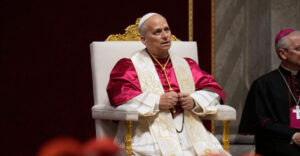
The initial assessment of Pope Leo XIV’s health is encouraging after he underwent surgery on Tuesday, 13 October, to remove a cancerous tumour from his right lung. According to CNN, citing pulmonary medicine experts, early diagnosis and surgical removal of the tumour are important positive factors for his prognosis, although the results of further tests will determine whether the 71-year-old pontiff needs additional cancer treatment.
The operation was performed at the Agostino Gemelli University Hospital in Rome, where surgeons removed a lung nodule diagnosed as lung adenocarcinoma, the most common histological type of lung cancer. According to the Vatican, the cancerous tumour was removed along with the lower lobe of the right lung. The operation was completed without complications.
What is lung adenocarcinoma?
Adenocarcinoma accounts for approximately 40% of lung cancer cases and belongs to the category of non-small cell lung cancer. It is a malignant tumour that generally develops and spreads more slowly than small cell lung cancer, although this does not mean it cannot behave aggressively.
When the disease is detected at an early stage and the tumour can be surgically removed, surgery is usually the first treatment option. The right lung consists of three lobes, while the left lung has two. In cases such as that of the pontiff, surgeons can perform a lobectomy — removing the entire lobe containing the tumour — to achieve complete removal of the cancer and improve the chances of a cure. Following a lobectomy, the body gradually adapts to the reduction in functioning lung tissue by making use of the respiratory reserve of the remaining lobes.
Who is most at risk?
The exact causes of lung adenocarcinoma are not always known. Although smoking is a major risk factor, this form of cancer also occurs in people who have never smoked. Other contributing factors include exposure to radon, a naturally occurring radioactive gas that is the leading cause of lung cancer after smoking, as well as long-term exposure to air pollution and particulate matter.
Adenocarcinoma is the most common type of lung cancer among non-smokers and occurs proportionately more often in women, younger patients and people of East Asian ancestry. One of the main challenges in diagnosing the disease is that it often causes no pronounced symptoms in its early stages, meaning many cases are detected only after the cancer has progressed. This is one reason lung cancer remains among the leading causes of cancer-related death worldwide.
Why doctors are optimistic about the Pope
In Leo’s case, the fact that the tumour was detected early is considered crucial. On Sunday, he revealed that doctors had identified the abnormality in his lung at a “very early stage”, allowing the operation to be arranged promptly.
Dr Juanita Mora, a spokesperson for the American Lung Association, told CNN that, based on the information available so far, the pontiff’s prognosis is expected to be good.
“The fact that Pope Leo had localised adenocarcinoma, which was diagnosed at an early stage, works in his favour — particularly following its surgical removal,” she said.
According to Mora, another positive factor is that the 71-year-old does not smoke and generally maintains good physical fitness. He plays tennis and exercises, factors that may contribute to a more effective recovery after surgery.
Removing a lung lobe temporarily places an additional burden on respiratory function, as the body needs time to adjust to reduced lung capacity. Mora explained that the pontiff’s recovery could take a little longer precisely because his lungs will have to adapt to the new circumstances.
“Initially, he may find it a little harder to breathe until the left lung begins to compensate for the loss,” she noted.
Postoperative care will include respiratory physiotherapy and specific exercises aimed at improving lung ventilation and speeding up the recovery of respiratory function. Particular attention will also be needed to prevent respiratory infections, as reduced lung reserve can make them more difficult to manage.
The specialist recalled that Leo’s predecessor, Pope Francis, had also undergone surgery to remove part of his right lung at a young age, following a serious lung infection.
“Many people can live and carry out all their activities fully, both in terms of function and stamina, even after a lobectomy,” Mora stressed.
The tests that will determine whether chemotherapy is needed
After an operation of this kind, patients generally remain in hospital for several days until their vital signs and blood oxygen levels have stabilised. They can then continue their recovery at home, while postoperative pain is considered normal following a lobectomy.
Whether the pontiff will be able to make his planned trip to Latin America next month will depend, Mora said, on the test results and the progress of his recovery. Of particular importance will be the histological examination of the removed lung tissue and an examination of the lymph nodes, which will allow doctors to determine the pathological stage of the disease more accurately.
The detection of cancer cells in the lymph nodes or evidence that the malignancy has spread will affect the decision on whether additional treatment, such as chemotherapy or radiotherapy, is needed. Doctors will also conduct molecular testing and biomarker tests to identify specific genetic alterations and tumour characteristics that could guide the choice of personalised treatment. Depending on the results, targeted therapies or immunotherapy may also be considered.
As Mora pointed out, biomarker testing has significantly improved treatment options for lung cancer. However, in the United States, only 15 states require insurance companies to cover the cost of these tests, even when a patient has been diagnosed with lung cancer.
The most important factor in the Pope’s prognosis remains confirmation that the disease was confined to the removed lobe and has not spread to the lymph nodes or other organs. Mora expressed hope that the cancer is localised and that surgery will be sufficient to treat it, without the need for further oncological treatment.
“We hope this is an isolated cancer for which surgery will be the only treatment required. In such cases, we see survival rates of between 80% and 98% following surgical removal,” she said.
These figures relate to selected cases of early-stage lung cancer that can be treated surgically and cannot yet be taken as an individual prognosis for the pontiff, without knowing the full stage of his disease and the survival period to which the figures refer.
“For now, we have to wait for the results of these tests,” Mora concluded.
Ask me anything
Explore related questions




