





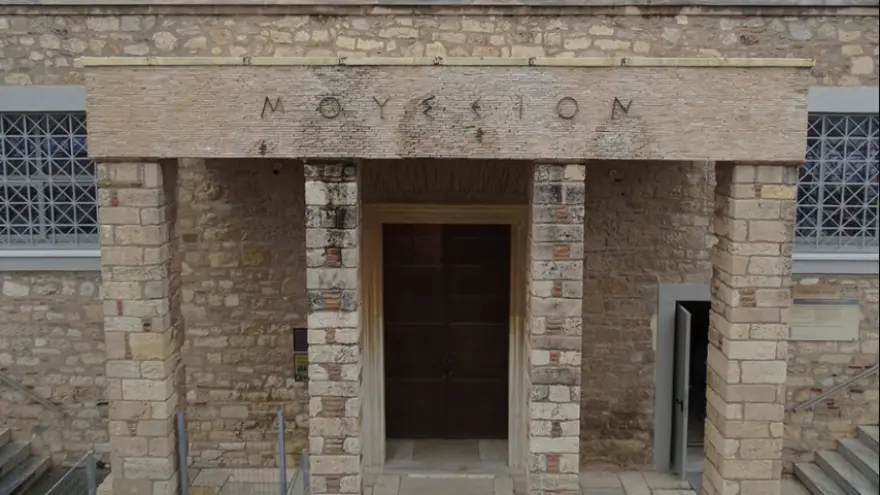
The magnificent legacy of ancient Greece met the present and the future on Monday morning on the Sacred Rock of the Acropolis. There, directly behind the iconic Parthenon, the historic Old Acropolis Museum, which for more than a century housed the Sculptures of Phidias, reopened its doors after almost 19 years, fully renovated and entirely ready to play an important role in the cultural life of Athens and in enhancing the visitor experience at Greece’s foremost UNESCO World Heritage monument.
The modest and discreet building, whose foundations were laid in the 19th century and which lies largely beneath the surface of the hill, had stood isolated and silent since 2007. It has now come back to life, embarking on a new and fascinating dialogue with the Parthenon, which stands opposite its entrance, and is fully prepared to offer visitors to the Acropolis new experiences combining knowledge, research, the art and culture of both yesterday and today.
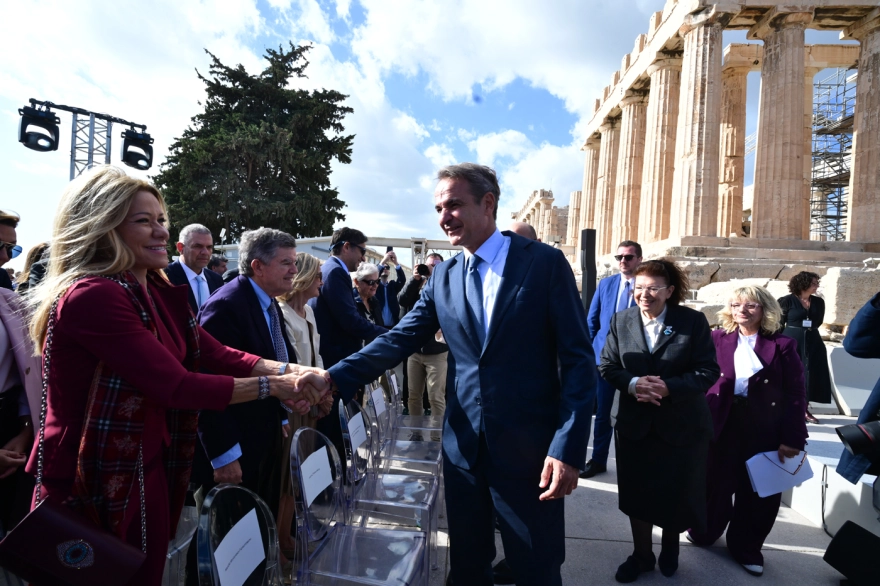
A short while before its official inauguration by Prime Minister Kyriakos Mitsotakis and the opening of its doors to the public, we had the opportunity to be the first to visit the new… Old Museum, or “Mouseion,” as it is also called, and to experience, step by step, the fascinating journey of the Acropolis through the centuries, which continues through four different exhibitions.
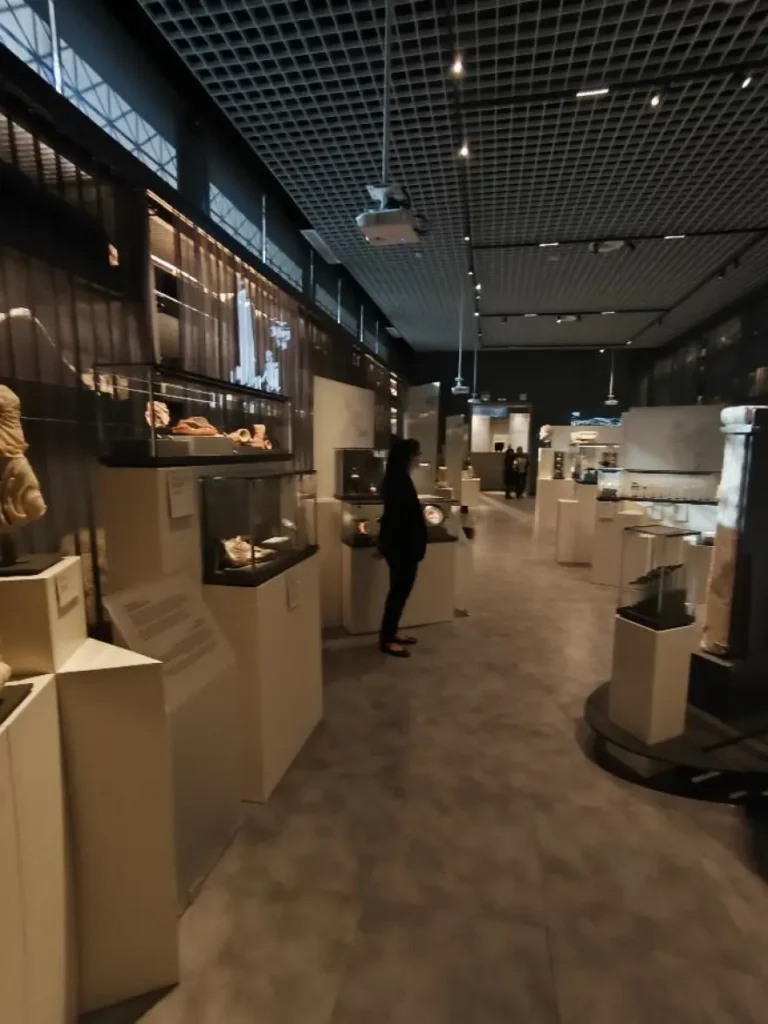
In the temporary exhibition entitled “Athens: City, Idea”, we admired more than 750 artefacts, out of a total of 2,000 that had been held in storage, as Elena Kountouri, Head of the Ephorate of Antiquities of the City of Athens, revealed to us. These objects come from long-running archaeological excavations deep within the soil of Attica, and most are being exhibited for the very first time.
Sculptures, both enormous and miniature, inscriptions, black-figure and red-figure vases, funerary monuments, coins, jewellery and precious archaeological evidence, spanning a vast period of time from the Neolithic era to the height of Athens’ power and its enduring legacy, trace the city’s historical development, its institutions, religious practices, economic activity, inhabitants, and their political and social ideas.
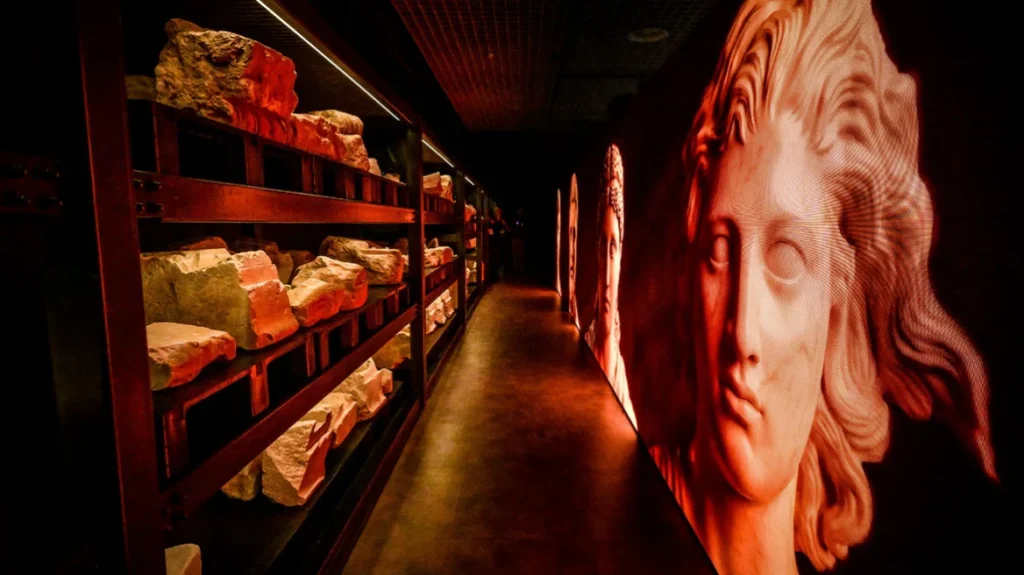
Meanwhile, along the walls of the museum’s galleries, specially designed iron shelving units display, all around the rooms, more than 100 inscribed stones from the Sacred Rock of the Acropolis, as well as public documents, decrees of the Council and the Assembly, treaties with other cities, lists of officials, dedications by magistrates, and more. Together, they form a second, parallel archaeological exhibition, evoking an artistically arranged archaeological storage space to which the public also has access.
The Parthenon Frieze Comes to Life Through AI – The Sponsorship of Marianna Latsis
Yesterday “converses” uniquely with tomorrow through the impressive digital exhibition entitled “Parthenon Alive,” developed by an interdisciplinary team from the Digital Media Laboratory of the School of Architecture at the Technical University of Crete, with the support of the Ephorate of Antiquities of the City of Athens.
The Parthenon frieze, the magnificent 160-metre-long sculpted relief, is infused with life, rhythm and movement through a free creative composition and presentation of selected scenes and figures from the frieze, which come alive before our eyes.
We walked among the Gods and became part of the Panathenaic procession. We admired the Parthenon in all its splendour, gazed upon the chryselephantine statue of Athena, and listened to the ancient Athenians speak about democracy and its timeless values. We also came face to face, in breathtaking detail, with 100 monuments that once stood on the Acropolis and its slopes, brought before us through spectacular holograms. We enjoyed a stunning visual experience created from 21,000 unique sketches…
As the creators meaningfully point out, “at a time when Artificial Intelligence is pushing digital representation towards ever-greater photorealism, the exhibition explores the opposite direction: using it to transfer the digital into the tangible and material world.”
The equipment for the digital exhibition has been sponsored by Ms Marianna Latsis, who attended today’s inauguration.
The First Contemporary Art Exhibition on the Acropolis
A dialogue, and a particularly fascinating one at that, also unfolds between the past and the present through the exhibition by internationally acclaimed Iranian-American artist Michael Rakowitz. It was organised in collaboration between the Ministry of Culture and the cultural organisation NEON, which brings its significant contribution to the Greek visual arts scene to a close with the first contemporary art exhibition ever hosted on the Acropolis.
This is the final part of the trilogy “Michael Rakowitz & Ancient Cultures | Presentation of Ancient Cultures and Contemporary Art,” created by the artist in Greece and curated by Elina Kountouri. It bears the symbolically charged title “What You Leave Behind Is Not What Is Engraved,” a reference to Pericles’ Funeral Oration in 430 BC, delivered in honour of the first dead of the Peloponnesian War.
Through materials, objects and personal testimonies from people who have experienced migration, Rakowitz’s work explores questions of memory, identity, loss and displacement – issues that are timeless and universal.
From the Asia Minor refugees who found shelter on the Rock of the Acropolis in 1922 to contemporary refugees from all over the world, the pain and hopes of all are captured in this exhibition. At times, they are expressed through a huge installation made of 500 bricks placed on the shelves of a stepped kiln; at others, through moving handwritten testimonies by refugees and asylum seekers, which surround a large-scale model of the Acropolis Hill, shown bare, before the monuments that would go on to become timeless masterpieces of world heritage were built.
“The empty hill is a place for the imagination. One can project onto it their own architectural proposal, their own vision for a new Athens. The bricks are the reserve: material for a city that has not yet been built. A city where strangers are welcome,” the artist told us pointedly, before confiding:
“Today, I speak with deep gratitude for the way Athens has embraced me, but also with a sense of melancholy, as this exhibition marks the end of our collaboration. I am not leaving just a work of art here. I am leaving my heart.”
For his part, NEON founder Dimitris Daskalopoulos expressed the immense honour he felt at inaugurating the first contemporary art exhibition to take place at Greece’s most important monument:
“Bringing antiquity and the contemporary world together is a challenge we have taken on many times through our work at NEON. We hope that holding several of our exhibitions in places of historical significance has contributed to a better understanding of the contemporary world and everything it brings with it; has encouraged us to question what we might otherwise have taken for granted; and has inspired us to look beyond the surface of the worlds around us.
“The fact that we are exhibiting next to the Parthenon, in pursuit of these goals, can be described as the greatest of privileges. We can only hope that the awe and inspiration contemporary art can generate in people will come close to those evoked by the centuries of history and energy that permeate the summit of the Acropolis Hill,” he said, expressing his warm gratitude to the Ministry of Culture for its collaboration.
The Mouseion has been open to the public since Monday afternoon. The combined Acropolis–Museum admission ticket costs €45.
Ask me anything
Explore related questions




