





The operational launch of “K.O.M.V.O.S.”, the Greek Police’s new unit combining motorcycles, cameras, drones and artificial intelligence to respond directly to traffic problems, marks a new era in traffic management in Attica. The unit goes live tomorrow, 1 September.
K.O.M.V.O.S. (the Central Unit for Road Congestion Improvement Measures) is part of the new “Traffic Commander” system, through which the Hellenic Police aims to gain a complete, real-time picture of traffic across the Attica basin.
The operational approach is changing. A road accident, a stranded vehicle or even a minor fault will no longer be treated as an isolated incident, but as a potential trigger for a wider traffic problem. At the Hellenic Police’s operations centre, the Traffic Monitoring and Control Operations Room at GADA headquarters in Athens, data is drawn together from 24 different sources.
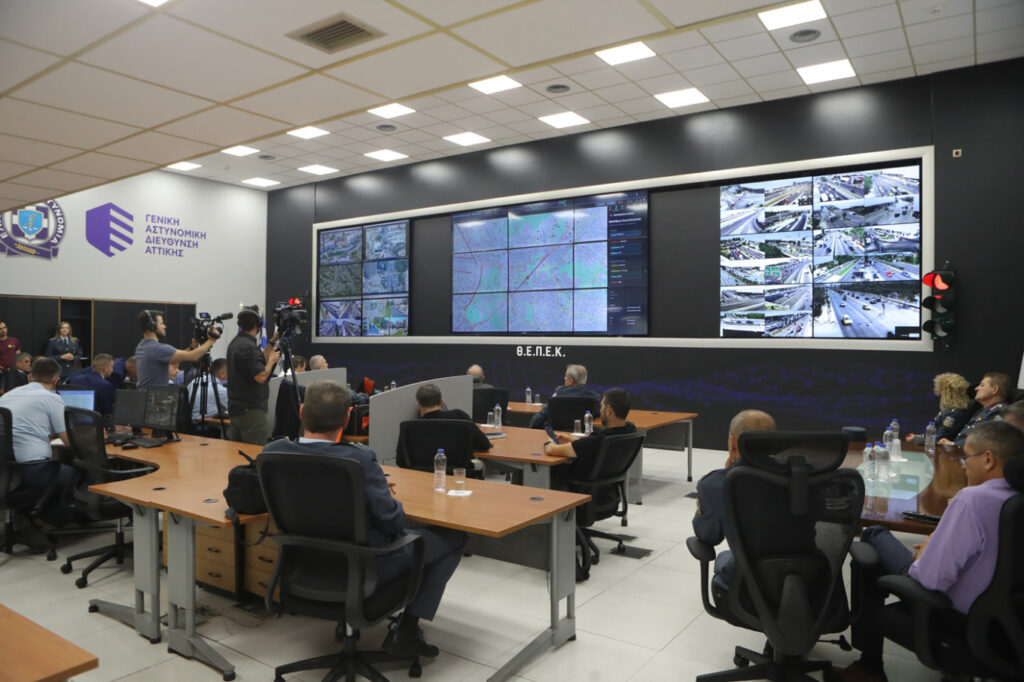
These include 235 traffic cameras, information on accidents and other incidents, roadworks in progress, weather conditions, public transport data and reports from officers in the field.
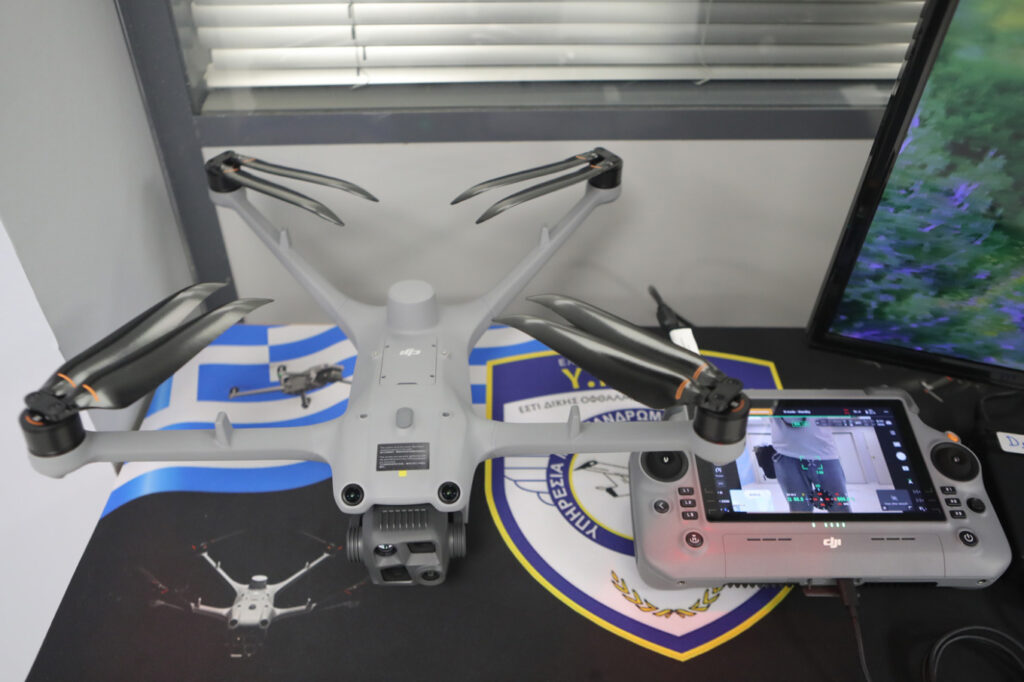
Ten drones are also monitoring the road network, feeding live footage back to the operations centre so officers can see congestion hotspots as they develop. Artificial intelligence processes the incoming data, helping to pinpoint more quickly the areas that need intervention.
As soon as an incident likely to affect traffic is detected, the new unit’s motorcyclists will be able to reach the scene straight away. Their role goes beyond simply logging the incident. They will also be able to step in to manage traffic flow and, where needed, control traffic signals directly, restoring normal conditions as quickly as possible.
The goal is to head off the familiar “domino effect”, in which an accident or broken-down vehicle on a major road builds tailbacks stretching for kilometres and pushes the problem onto neighbouring avenues.
The roads under watch
Particular focus falls on Attica’s major arterial roads, where significant delays are recorded regularly.
Among those in the spotlight are Kifisias Avenue, Syngrou Avenue, Vasilissis Sofias, Panepistimiou, Alexandras Avenue, Ardittou, Vouliagmenis, Poseidonos, Akti Miaouli, Athinon Avenue, Schistou Avenue and Mesogeion Avenue. On these routes, a single incident can trigger serious knock-on effects across the wider network within minutes.
More than 138 officers are involved in the mechanism’s daily operation, both at the operations centre and out on the roads.
The scale of the project reflects just how much traffic Attica handles. More than 700,000 vehicles enter central Athens every day, and the region’s road network runs to over 1,600 kilometres.
At full deployment, the system is expected to be able to manage around 50,000 traffic incidents a day, with the ultimate aim of improving traffic flow and speeding up the return to normal conditions.
Ask me anything
Explore related questions




