





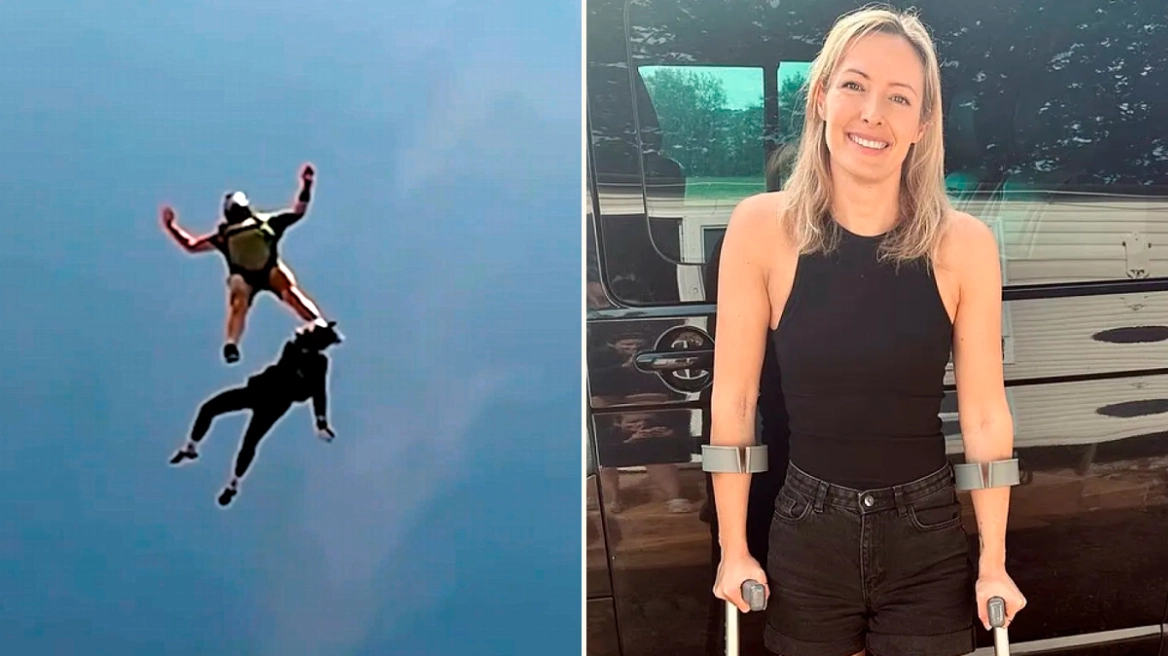
British skydiver Holly Wiffen, a 35-year-old dental therapist from Okehampton, Devon, had an extraordinary escape after losing consciousness from an accidental blow to the head during a jump at Langar airfield, near Nottingham, England, leaving her parachute undeployed and sending her into a freefall from a height of around 3,650 metres.
Footage recorded by another skydiver’s helmet camera captured the moment Wiffen, who has completed 425 jumps, was struck accidentally in the head. The footage shows the 35-year-old losing consciousness and continuing her plunge without opening her parachute.
Skydiver survives 10,000ft fall after being knocked out pic.twitter.com/uLBQDGQ9Ro
— The Sun (@TheSun) September 7, 2026
What saved her life in the accident on 7 August was a conifer tree, which absorbed part of the impact. At the hospital in Nottingham, she was found to have suffered a fracture to her left leg and a fracture to her spine.
The footage shows Wiffen jumping alongside around eight other skydivers from an aircraft using a technique known as “tracking”, in which divers increase their speed by falling horizontally. As the group spread out, one of the skydivers collided with her as she was changing position, sending pieces of equipment flying and knocking her unconscious.
After the collision, Wiffen began falling uncontrollably from a height of around 3,650 metres, with the impact occurring at a speed of around 160 kilometres per hour. Her speed during the uncontrolled descent went on to reach around 240 kilometres per hour, while other skydivers who noticed the accident attempted to reach her in the air. One of them tried to grab her but was unsuccessful and was forced to open his own parachute just a few hundred metres from the ground.
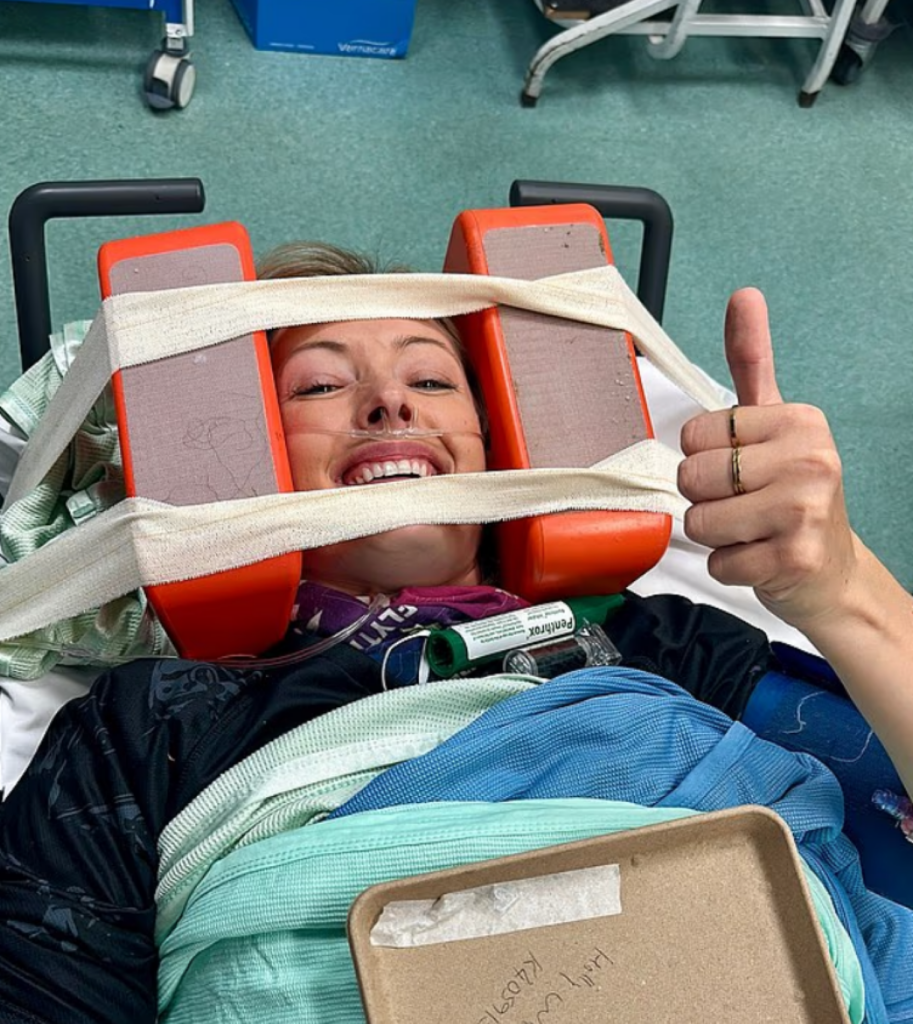
At some point, however, Wiffen managed to pull her parachute’s activation cord at a height of around 300 metres, although she has no memory of the freefall itself. This triggered her reserve parachute, but a few seconds later a second emergency safety system also deployed, after sensors detected she was travelling at excessive speed and at a very low altitude.
The combination of the two parachutes created what is known as a “downplane” effect, slowing her descent, while the tree standing in the middle of a vast expanse of open fields proved decisive in softening the force of the impact.
Despite an experience that very nearly cost her life, Wiffen is already planning her next jump. “If I hadn’t hit the tree, I would have hit the ground and wouldn’t have had any chance of survival. Most people don’t survive accidents like that. I want to get back to it as soon as possible. Still, knowing what happened and how close I came to death, I do feel a bit nervous,” she said.
Ask me anything
Explore related questions




