





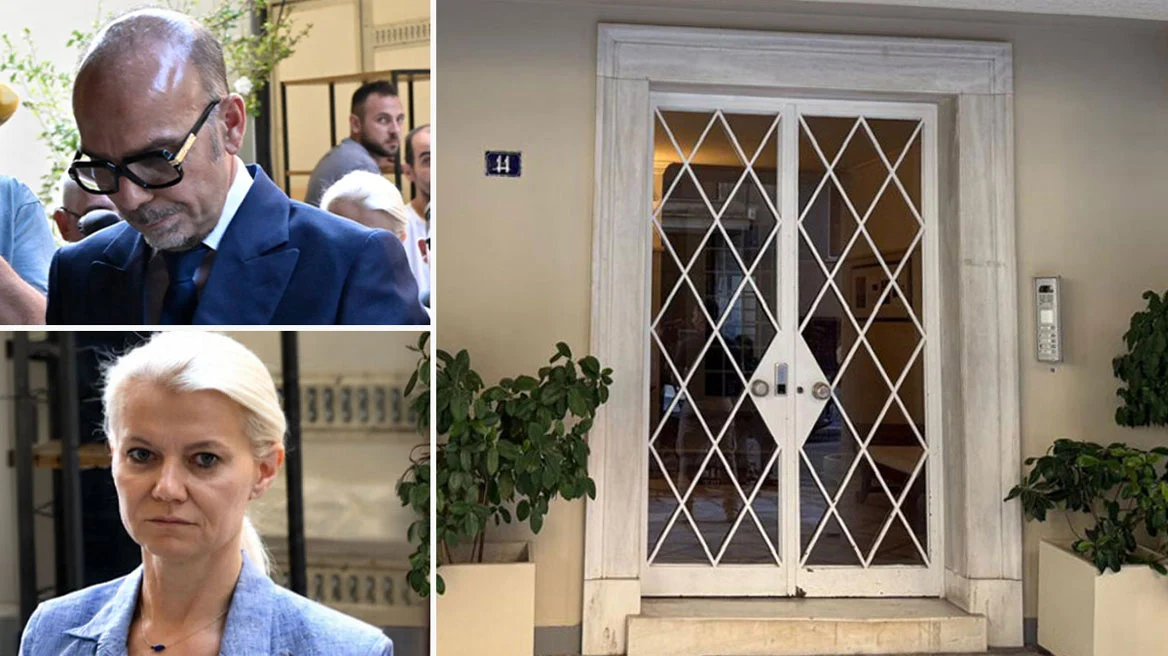
The two doctors who were at the Stem Cell clinic in Kolonaki when George Mazonakis died are due to appear before the investigating magistrate today, as new evidence from the digital history of the plasma exchange machine adds to the picture of the critical minutes before the singer’s death.
The two doctors are being called upon to answer questions about what happened inside the clinic, while the investigation is now focusing both on their actions and on the times recorded electronically by the machine, from the start of the procedure through the successive warnings and the call to the emergency services.
According to the police investigation and information obtained by protothema.gr, the machine was activated at 2:14pm, although the exchange of blood with the patient had not yet begun at that point. It is noted that, according to the evidence available to the Hellenic Police, including the testimony of the taxi driver who transported the singer, George Mazonakis is believed to have entered the clinic between 1:50pm and 2pm.
Nine minutes after the machine was activated, the system recorded its first alarm. According to the researchers’ assessment of the data, this particular indication could be linked either to a problem with the tubing, such as a kink in one of the tubes, or to a change in the patient’s blood pressure.
The actual start of the procedure, namely the exchange of blood, was recorded at 2:37pm. From that point onwards, the most critical part of the timeline begins.
This time is particularly significant, as it now constitutes objective digital evidence of when the treatment began and adds to the other data from the cameras, photographs, witness statements and electronic records.
At 3:22pm, the first critical pause was recorded. The machine stopped carrying out the blood exchange.
This is the point on which the investigation is focusing particularly closely, as from then onwards the system began recording successive warnings. The authorities are examining exactly what had happened to the patient at that moment and what actions were taken inside the clinic.
By 3:45pm, according to the data that has been recovered, the machine had recorded three further alarms. According to the assessment being made as part of the police investigation, these particular alarms are linked to the absence of a heartbeat.
This finding is of exceptional significance to the investigation, as police are seeking to establish exactly when the singer’s condition seriously deteriorated and what response was made by the doctors present.
The most critical new piece of evidence concerns what appears to have happened at 3:45pm. According to information obtained by protothema.gr, following the repeated alarms, the machine was instructed to start operating again. However, the system stopped itself immediately.
This particular digital trace is being examined particularly closely, as the authorities want to establish exactly what the machine was detecting at that moment and why it effectively did not allow the procedure to continue.
The question now being raised is what condition George Mazonakis was in when the attempt was made to restart the machine and what indications the doctors already had at their disposal.
The timeline that must be reconciled with the call to the emergency services
The new data adds to the already known fact that the call to the emergency services was made at 4:11pm.
Thus, 49 minutes elapsed between the first pause in the treatment at 3:22pm and the call for emergency assistance, while in the intervening period the machine recorded repeated alarms and an unsuccessful attempt to restart it at 3:45pm.
The full timeline is as follows:
2:14pm: The machine is activated. At this stage, George Mazonakis has not yet been connected for the blood exchange.
2:23pm: The first alarm is recorded. According to the assessment being made as part of the investigation, such an indication may point either to a problem with the tubing or to an issue with the patient’s blood pressure.
2:37pm: The actual blood exchange procedure begins and the treatment enters its main phase.
3:22pm: The first pause in the treatment is recorded. From this point, the machine stops delivering blood.
3:22pm to 3:45pm: The system records a total of three new alarms which, according to information from the investigation, are linked to an absence of a heartbeat.
3:45pm: An attempt is made to restart the machine.
Immediately after 3:45pm: The machine stops by itself almost immediately after being restarted.
4:11pm: The emergency services are called, 49 minutes after the first pause in the treatment at 3:22pm.
Ask me anything
Explore related questions




