





The international escalation in the Persian Gulf, which is unfolding in an even more damaging way for the global economy, combined with strikes on energy infrastructure in the Russia-Ukraine war, has caused serious concern in Athens, despite the fact that winter is still some way off. Temperatures are, nevertheless, now lower, while from Thessaly northwards the cold is more noticeable during the evening hours. At the same time, petrol and diesel prices at the pump have risen in a way that is effectively canceling out the government subsidy, as well as the additional subsidy from the refineries.
It is clear that the government wants to have a plan in place ahead of the difficult winter that is beginning, with its focus on fuel prices and, in particular, the price at which heating oil will be sold. This may be determined in a few weeks, but the early indicators are extremely worrying, and it is estimated that, without intervention, the price could open at between €1.80 and €1.90 per litre, compared with last year’s much lower pump prices. It is clear that the situation calls for intervention and there are fiscal reserves, but they are not unlimited.
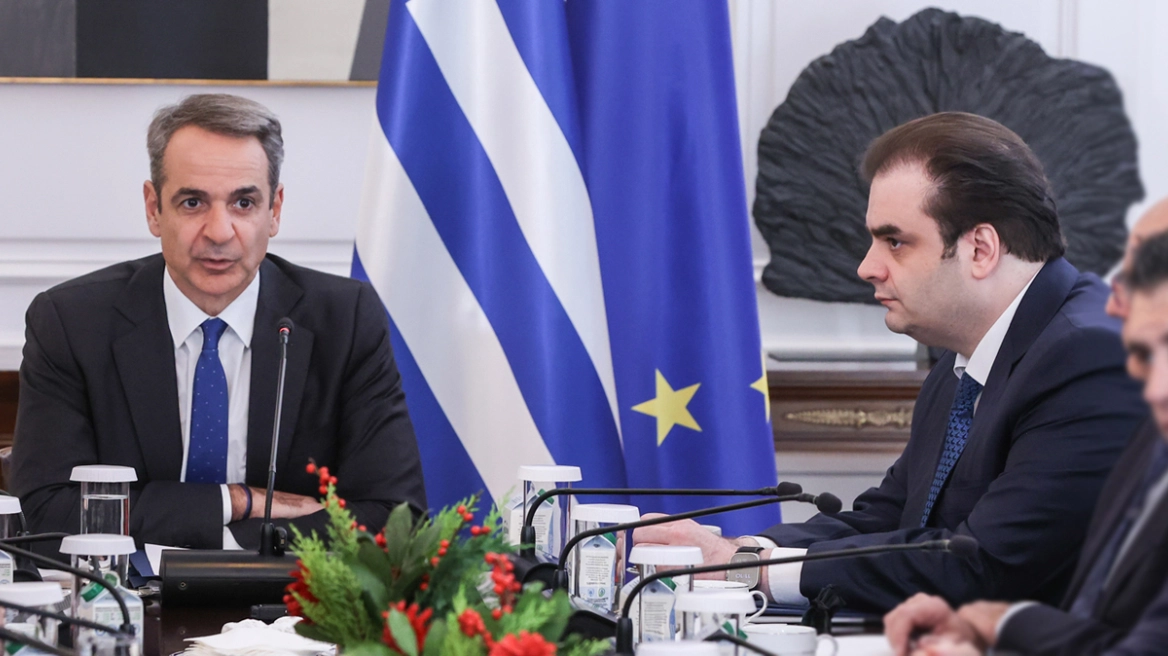
According to information from protothema.gr, Kyriakos Mitsotakis will hold an initial discussion on the issue this afternoon with the ministers jointly responsible, Finance Minister Kyriakos Pierrakakis and Environment and Energy Minister Stavros Papastavrou, who will meet at the Maximos Mansion after Mr Mitsotakis concludes his presence in Parliament as part of the debate on Constitutional Revision.
Officials familiar with the matter estimate that no decisions will be taken today, as the current framework for the subsidy at the pump remains in force until the end of the month. There will, however, be an initial discussion on what comes next and what room for manoeuvre there is. Incidentally, Mr Pierrakakis has just returned from Berlin, where he had the opportunity to discuss, among other things, global energy developments with German Chancellor Friedrich Merz and his counterpart, Vice Chancellor Lars Klingbeil. Based on the data available so far, there appears to be no intention of a unified European response to the sharp rise in prices.
The government’s intention to intervene again was already signalled yesterday by government spokesman Pavlos Marinakis (SKAI 100.3) and Stavros Papastavrou (ANT1), who made clear that the government would stand by citizens. “The government has kept reserves for 2026. The data on energy prices will be assessed for October so that whatever more can be given to citizens, based on fiscal capacity, can be provided,” Mr Marinakis said characteristically. However, the government spokesman once again rejected the idea of reducing the Special Consumption Tax on fuels, pointing out that the subsidy at the pump, which has been implemented in various phases, has had the same or an even greater positive impact on prices compared with a possible reduction in the Special Consumption Tax.
Ask me anything
Explore related questions




