






In a development this week that the Financial Times and Bloomberg described as the first step towards a new Greek success story — in terms of the country’s efforts to attract international hedge funds and financial-sector executives — Chris Rokos, one of the world’s leading asset managers, announced that the tax domicile of his fund, Rokos Capital Management (RCM), would be moved from London to Athens, along with the establishment of a corporate presence in the Greek capital.
Less than 24 hours later, the same outlets reported that two more globally significant, this time American hedge funds are seriously considering opening offices in Athens, initially. New York-based Millennium Management and Greenwich, Connecticut-based Verition Fund Management LLC are already in advanced exploratory discussions with Greek officials regarding the possibility of establishing a presence in Greece.
Anyone looking at the combined firepower of these investment firms would immediately understand the heightened interest shown by two of the world’s leading financial and business news organisations. The three funds collectively manage $134 billion in assets, and the message is clear, regardless of whether all three cases ultimately come to fruition: Greece is finding a response to its efforts to enter Europe’s hedge fund map and establish itself as an emerging hub for the international investment community. Through a years-long, structured effort involving a range of incentives, particularly tax incentives, which have been strengthened by recent measures introduced by the Finance Ministry, with a notable contribution from Vassilis Karatzas, special adviser to Kyriakos Pierrakakis, Greece is gaining significant momentum that allows it to look with confidence towards a promising future.
Clearly, Greece cannot compete overnight with Europe’s traditional financial centres, led by London’s City, followed by Frankfurt and Switzerland. However, moves such as the transfer of Rokos Capital Management’s tax domicile and personnel to Athens, as well as the exploration of plans by the other two funds, are laying the first foundations for the gradual creation of a new competitive financial hub in Europe.
What They Saw
But what did Chris Rokos and his fellow investors Izzy Englander of Millennium and Nicholas Maounis of Verition see in Greece that has led them to consider establishing a business presence in the country? The answer is very simple: the landscape, the backdrop. In Luchino Visconti’s cinematic masterpiece of the 1960s, Rocco and His Brothers, the protagonist, Alain Delon’s Rocco, migrates with his brothers from economically backward southern Italy to the already flourishing and industrialised north, seeing there an opportunity for their future.
In an analogy with the present day, as powerful asset managers, Rokos first among them and several of his peers, they see Greece, which is seeking a place on Europe’s hedge fund investment map, as a favourable landscape for the further development of their highly competitive plans. And what does this landscape look like? Since 2019, Greece has had a special tax regime for high-net-worth individuals. Foreigners, as well as Greeks who transfer their tax residence to Greece, can exempt income earned abroad from Greek taxation by paying a flat annual tax of €100,000, for a period of up to 15 years.
The corresponding Italian regime has already attracted private equity fund executives, bankers and entrepreneurs, but it now provides for three times the annual charge, amounting to €300,000. In Greece, meanwhile, foreign tax residents are exempt from Greek inheritance tax on assets located outside the country. At the same time, executives relocating from abroad can take advantage of the so-called 5C regime, which provides for a 50% exemption on eligible employment income for seven years.
Last July, following consultations with asset managers, the government introduced a new incentive regime specifically tailored to private equity and hedge funds, while also ensuring the avoidance of double taxation.
The distinction between a fund’s permanent and actual place of establishment is clarified in this context, so as to eliminate uncertainty for foreign investors. If a foreign fund opens a support office or transfers executives to Athens, this does not mean that the tax domicile of the fund itself or its central manager is transferred to Greece. It therefore continues to be taxed in the country where it was originally established, avoiding double taxation.
At the same time, asset managers who transfer their tax residence to Greece are taxed at a rate of 5% on the share of profits they receive based on investment performance. This is significantly lower than the standard rate of 15%.
The Big Challenge
However, the favourable treatment comes with one critical condition: the Greek corporate entity employing the executives must incur at least €3 million in annual operating expenses in Greece. The threshold was introduced to exclude cases in which a fund might maintain merely a formal or nominal presence in the country in order to benefit from tax advantages. It confirms that Greece’s deeper objective is not simply the transfer of the funds’ tax domiciles to Athens, but their actual and operational presence here, with a sufficient number of executives and other employees.
This is also the main challenge for the Greek side. If it were limited to the €100,000 that Rokos will pay for the transfer, the entire effort would amount to “a drop in the ocean”. The point is for the funds, their executives and, if possible, their leading managers to establish fully fledged investment offices rather than merely tax domiciles, and to develop genuine business activities in Greece.
This opens up the prospect of creating, around these international companies, an ecosystem for global asset management, accompanied by the development of legal, tax, accounting, consulting and other services on a scale unprecedented for Greece. Naturally, this would also mean the creation of numerous new jobs.
The Message
Rokos’s decision to choose Athens over London is certainly not related to his Greek-Cypriot background, nor is it simply a personal tax decision. It is a development with much broader economic, business and even political implications.
Rokos is not simply another rich and famous figure on the European scene. He is one of Europe’s most important players, the third-largest taxpayer in Britain, having paid $447 million in taxes last year, according to the Sunday Times. His personal choices serve as powerful signals — and sometimes a compass — for the international investment community, as he is a macro investor whose investment decisions are driven by assessments of global macroeconomic trends emerging in markets, the changes accompanying them and the potential risks they contain.
Such a move would have been considered unthinkable 11 years ago, when Greece was at the height of its debt crisis. Since then, and particularly from 2019 onwards, “a lot of water has flowed under the bridge”, with the Greek economy following a steady upward trajectory and outperforming the rest of the EU. It is therefore no coincidence that Greece is now attracting people such as Rokos, who are at the centre of the global economy and business world. The next trip by the Greek Finance Minister to London is likely to include meetings with prominent financial-sector executives to explore the possibility of further relocations to Athens.
Of course, Athens is not looking only to London for this particular category. Interest has also emerged from investment companies in the Gulf states, amid concerns over the continuing conflict in the region. Government officials also believe that there could be interest from Switzerland. Meanwhile, a Greek investor based in London told the Financial Times that he knows of at least 20 Greek families who have moved from the British capital to Greece over the past two years. Vincent Lazimi, a partner at the Paris-based law firm Jeantet, confirmed that enquiries from wealthy clients in Britain about Greece have increased.
An Attractive Destination
It is also no coincidence that Greece is being assessed and recommended by numerous international firms and organisations as an attractive wealth destination. According to the Henley Private Wealth Migration Report 2026, Greece ranks seventh in Europe (and 14th globally) in terms of attracting wealthy investors relocating to the country, whether by purchasing property, transferring liquid wealth and/or the headquarters of their businesses, moving their family offices, establishing new companies or investing capital in existing Greek businesses.
In its 2025 report, the same company, using data collected on its behalf by New World Wealth, ranked Greece eighth worldwide in terms of millionaire inflows, with 1,200 millionaires relocating from their countries of origin and settling in Greece, bringing $7.7 billion in wealth with them.
Meanwhile, according to the 20th edition of Knight Frank’s Wealth Report 2026, published four months ago by the leading real estate consultancy, Greece ranks 18th among the world’s most dynamic wealth markets over a five-year horizon.
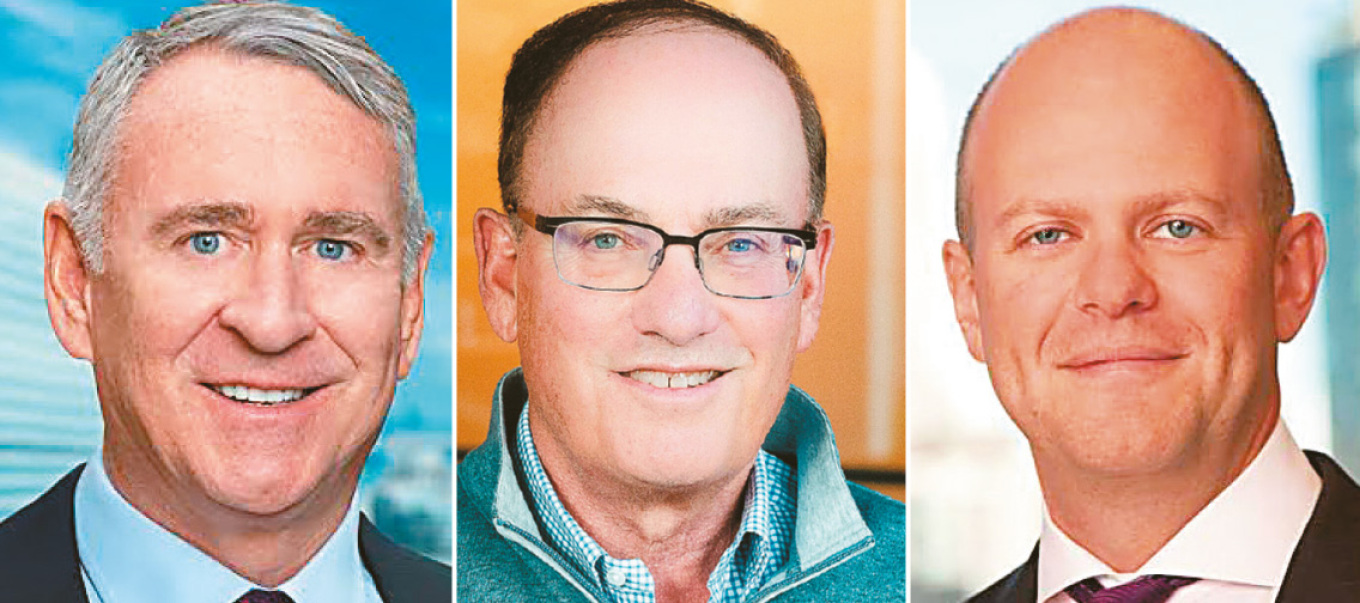
Greece is on the radar of major investors such as (from left) Kenneth Griffin of Citadel Investment Group LLC, Steven Cohen of Point72 Asset Management and Dmitry Balyasny of Balyasny Asset Management
The Decline of the City
Greece’s emergence as an emerging hub for attracting asset managers is, of course, not happening in a vacuum. London, according to Bloomberg, remains the world’s second-largest hedge fund hub after the United States. The sector supports around 40,000 jobs in the UK and generates £3.9 billion in tax revenues, according to a report by industry body AIMA. With $542 billion in assets under management, it accounts for around 10% of the global total and as much as 85% of Europe’s total, according to a report by TheCityUK.
However, emerging hubs are gradually eating into these shares. A key factor is excessive taxation, primarily the change to the favourable tax regime for wealthy foreign residents introduced by the British government. Tryfon Natsis is now based in Abu Dhabi, Alan Howard and Jeremy Coller have moved to Geneva, while major funds such as Millennium, Point72 Asset Management, Qube Research & Technologies and Brevan Howard have transferred executives from London to Dubai.
Last year, the country was also left by Goldman Sachs vice chairman Richard Gnodde, who moved to Milan, as well as Aston Villa co-owner Nassef Sawiris, Checkout.com founder Guillaume Pousaz and steel magnate Lakshmi Mittal, according to CityAM.
Other names, including John Fredriksen, Christian Angermayer, Herman Narula and Nik Storonsky, have also transferred their tax domiciles or parts of their business activities to Switzerland, Italy and Dubai. Meanwhile, British property magnates the Livingstone brothers moved to Monaco.
Next in Line
As international media reports have also noted, although the claims have not been independently confirmed by Greek sources, Greece is on the radar of other major hedge funds that are carefully examining whether and how exactly to include the country in their next moves. Among them are U.S. giants such as Citadel Investment Group LLC, which, based in Miami, manages $77 billion in assets across equities, commodities, fixed income, quantitative strategies and credit. It is led by 58-year-old Kenneth Griffin, whose $60.6 billion fortune makes him the 32nd richest person in the world today.
Also considering Greece is Point72 Asset Management, founded by 70-year-old Steven Cohen, which manages $45.7 billion in assets from its headquarters in Stamford, Connecticut, as well as Balyasny Asset Management, founded by Dmitry Balyasny, which is headquartered in River Point, Chicago, operates across Canada, Asia and Europe, and has $32 billion in assets under management.
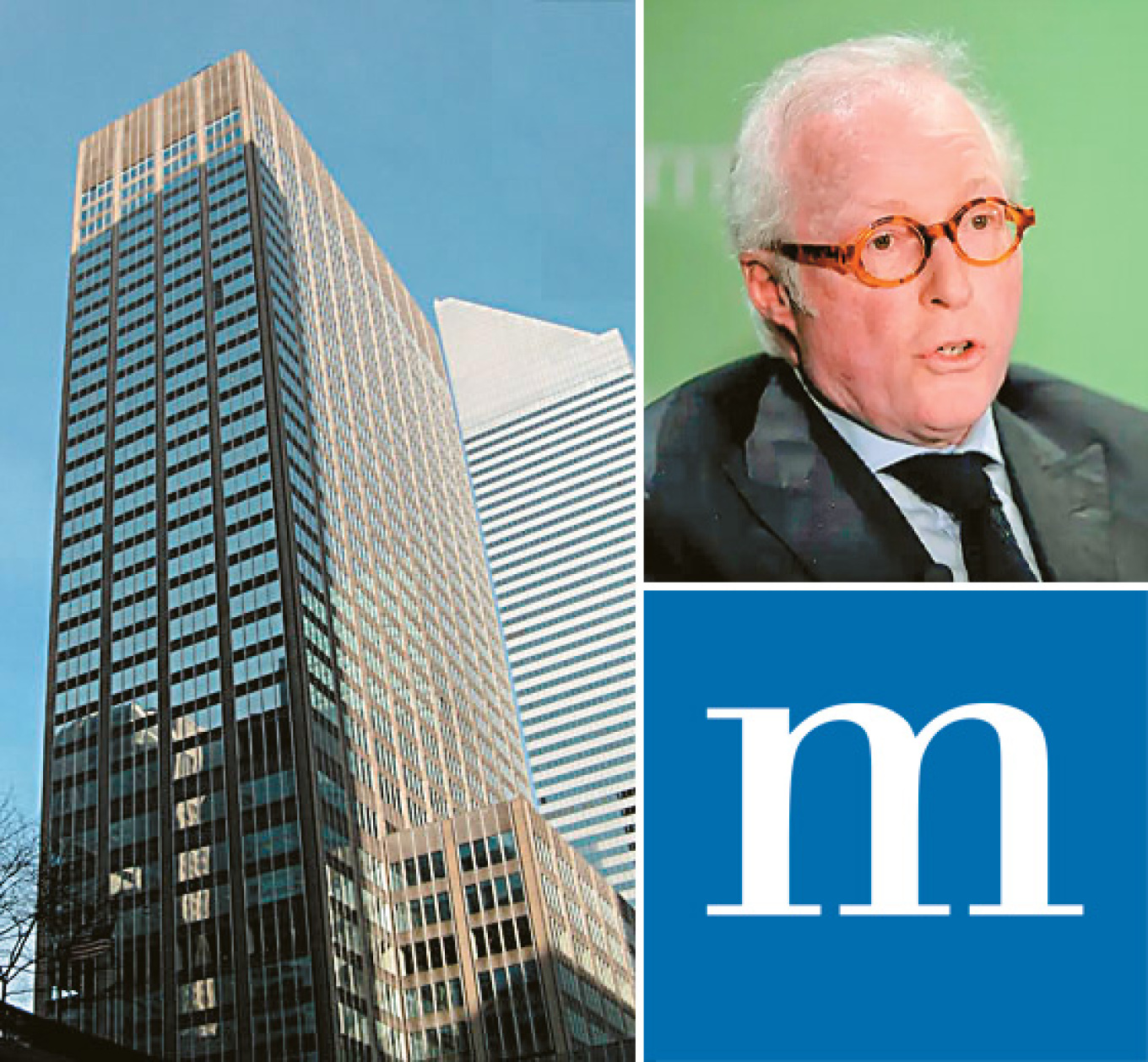
Izzy Englander: No. 88 on the Billionaires List
The 78-year-old Israel (Izzy) Alexander Englander, of Polish-Jewish descent and born in Brooklyn, New York, is an American billionaire and manager of the Millennium Management hedge fund, which he founded in 1989 with Ronald Shear. He started with $35 million in capital and, by July this year, had reached $97 billion in assets under management. With a personal fortune of $27.6 billion, he ranks No. 88 on Forbes’ global billionaires list.
A graduate of New York University with a degree in Finance, he initially worked as a stockbroker and trader at the American Stock Exchange. He is divorced from Caryll Schechter, with whom he has three children. According to Bloomberg, Millennium is in talks with Greek authorities over the creation and staffing of a new office in Athens. Discussions are ongoing and the plans remain outside the public domain. Millennium employs more than 7,000 people and has more than 360 investment teams. Its executives operate in more than 140 cities worldwide.
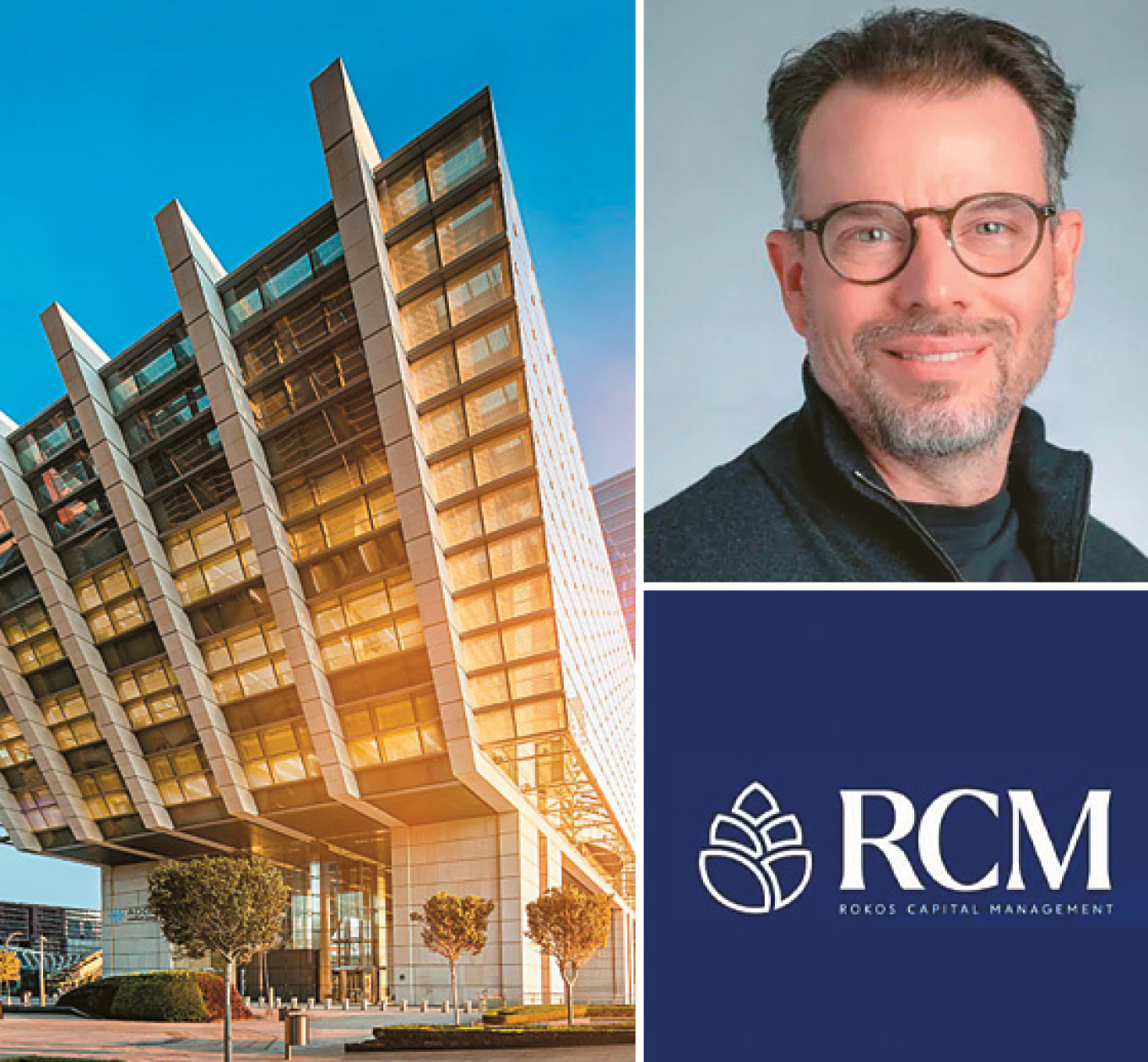
Chris Rokos: The Greek-Cypriot Mathematician Who Became a Top Trader
The 55-year-old Chris Rokos heads Rokos Capital Management (RCM), a global macro fund managing more than $22 billion in assets, with offices in London, New York, Singapore and Abu Dhabi, according to data from the University of Cambridge.
A first-class Mathematics graduate of Oxford’s Pembroke College, he built his career at major banking institutions including UBS, Goldman Sachs and Credit Suisse. In 2002, he was one of the five founders of Brevan Howard, which went on to become a leading force in European hedge funds. There, he established his reputation as a leading trader in government bonds and interest rates. It is estimated that during his tenure he generated more than $4 billion in profits for the firm, recording impressive returns during the global financial crisis.
He left in 2012 and founded RCM the following year, building a fund that invests based on major macroeconomic trends in interest rates, currencies, equities, credit, emerging markets and commodities. It has performed exceptionally well in recent years, returning 31% in 2024 and 21% in 2025, with revenues of £1.2 billion and profits of nearly £940 million in the most recently disclosed financial year. Rokos himself received a share of approximately £477 million. He now belongs to an exclusive group of investors whose personal views on interest rates, currencies and major shifts in the global economy can direct billions of dollars in investment capital.
He takes advantage of market opportunities whenever they arise, occasionally recording major successes. According to Bloomberg, RCM made nearly $1 billion in profits across all asset classes the day after Donald Trump’s re-election in 2024. Earlier, during the first two months of the same year, his highly accurate predictions that investors would have to settle for the prospect of a slower pace of interest-rate cuts by the U.S. Federal Reserve (Fed), rather than the rapid start of a downward cycle, also generated $1 billion in profits for RCM.
Despite the scale of his wealth and influence, he maintains an exceptionally low public profile. Forbes estimates his current personal net worth at $2.3 billion, ranking him No. 1,822 on the global list.
Earlier this year, he caused a major stir when, despite being an Oxford graduate, he committed £190 million to the University of Cambridge to establish the new Rokos School of Government. It is the largest single donation to a British academic institution in modern history.
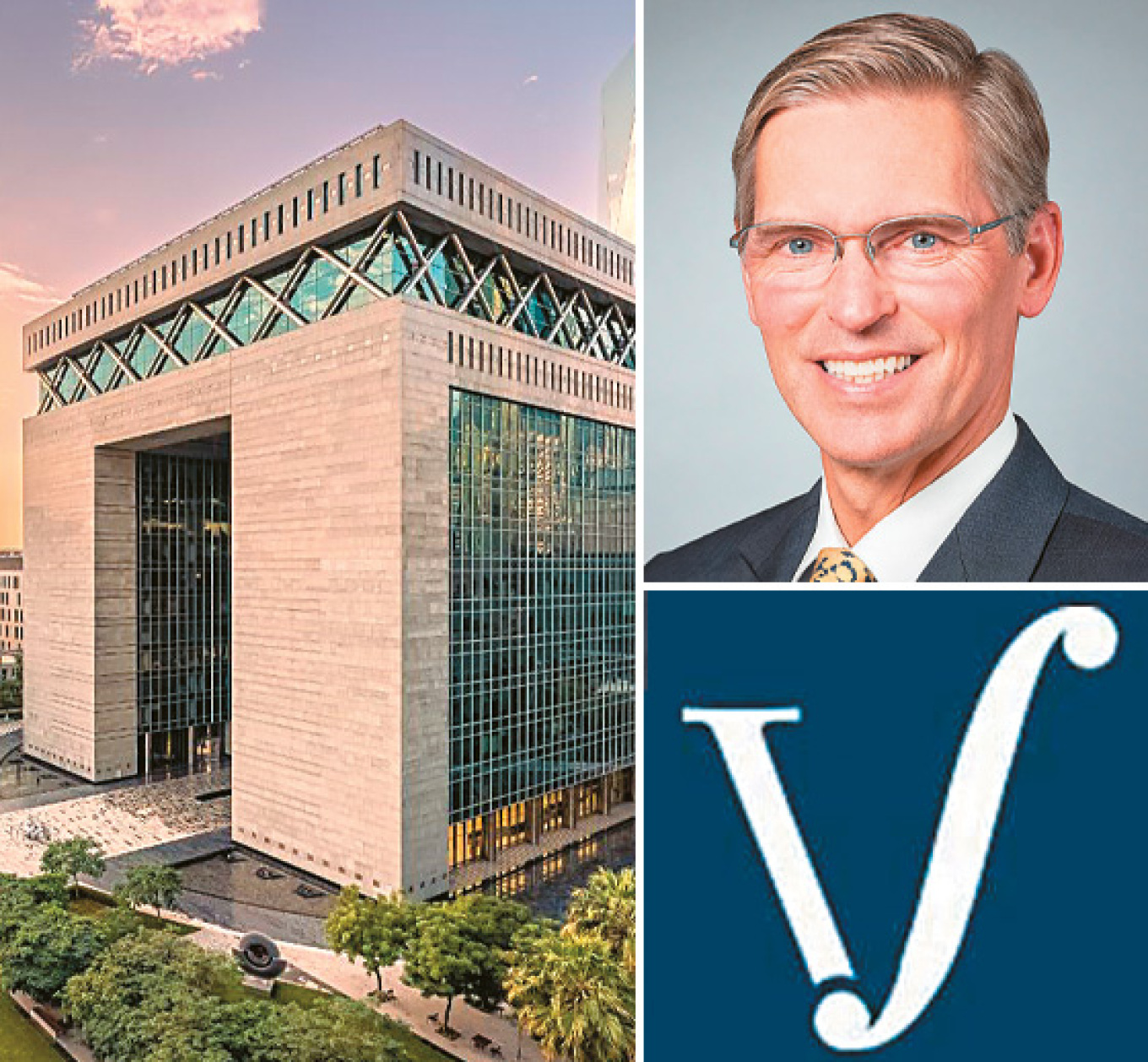
Nicholas Maounis: The Greek-American of Three Continents
The 63-year-old Nicholas Maounis, of Greek descent, has been co-founder (alongside Josh Goldstein) since 2008 and is now CEO of Verition Fund Management. He previously served as president and chief investment officer of Amaranth Advisors LLC.
He graduated from the University of Connecticut with a Bachelor of Science degree in Finance. He is married to Susan, and they have two children, Tim and Lexi.
In addition to the United States, Verition maintains offices in Asia and Europe, employs a team of approximately 850 people, manages $12.6 billion in assets and is in the early stages of exploring the opening of an office in Athens, although no final decisions have been made.
The company specialises in a broad range of global investment strategies, including bonds and fixed income, macroeconomic positions, convertible and volatility arbitrage, as well as quantitative strategies.
Ask me anything
Explore related questions




