





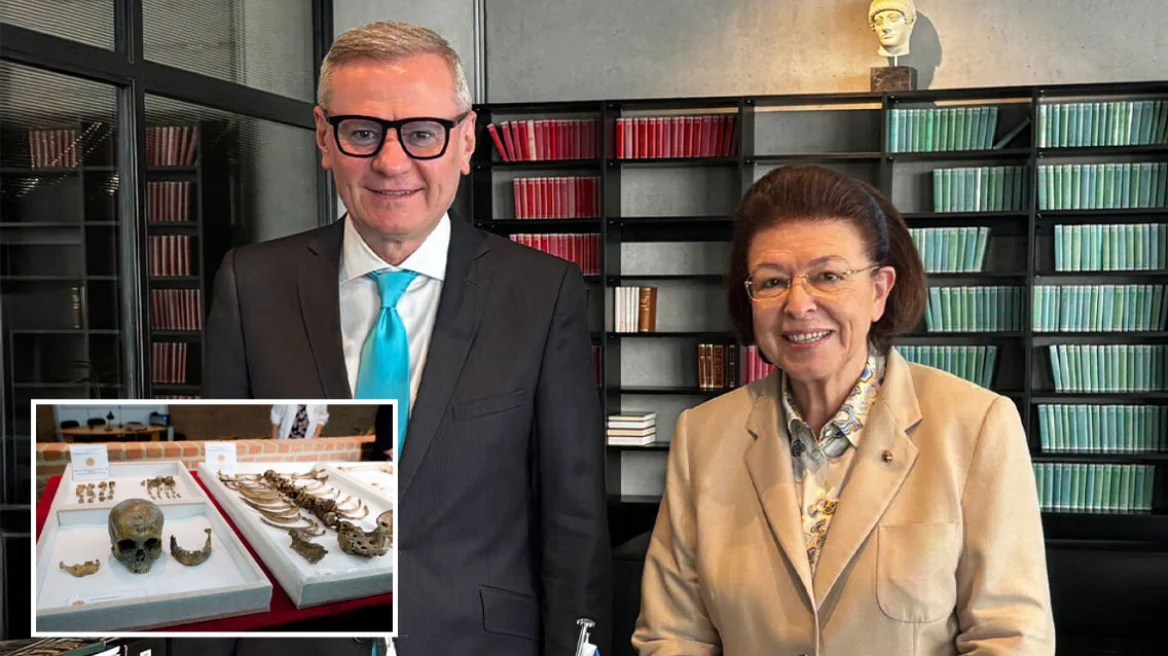
After more than a century, 48 historic relics that were transferred to Bulgaria in 1917, during the First World War, as part of a cultural exchange agreement between the two countries, are returning to Greece. The same agreement also includes the transfer to Sofia of the remains of Tsar Samuel of Bulgaria.
The agreement has been described by the Greek government as being of historic significance, as it is the result of years of negotiations between the two sides.
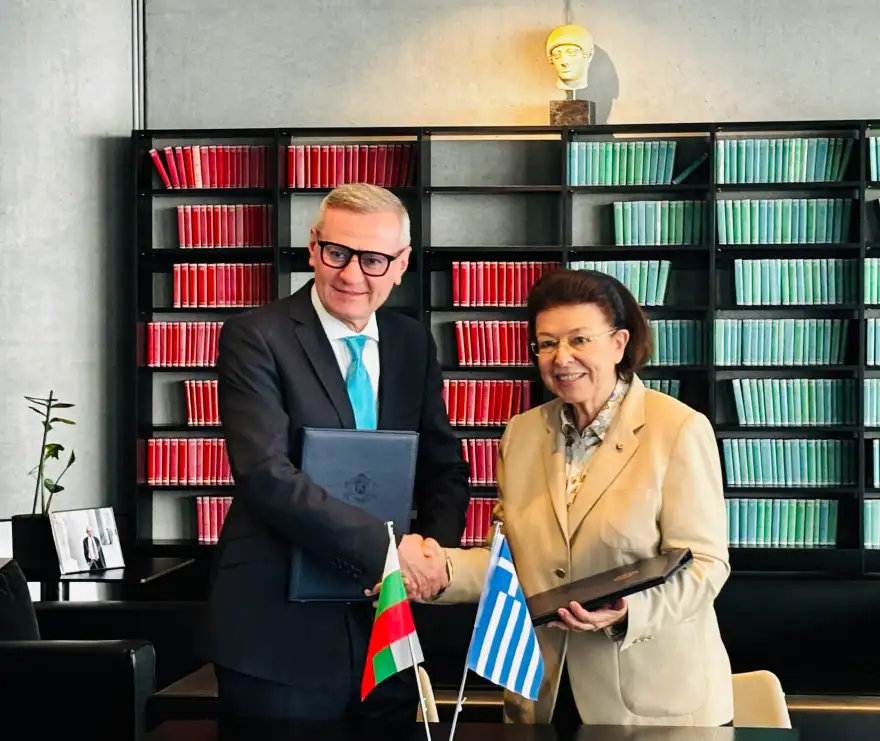
The Memorandum of Understanding was signed today by Greek Culture Minister Lina Mendoni and Bulgarian Culture Minister Evtim Miloshev and provides for the reciprocal “deposit” of relics of historical value to the two countries.
The 48 relics returning to Greece come from the Holy Monastery of Panagia Eikosifoinissa, the Holy Monastery of Timios Prodromos in Serres and the Holy Metropolis of Serres and Nigrita. They were transferred to Sofia in 1917, during the First World War, and were displayed or kept at the National Museum of History of Bulgaria.
For its part, Greece will hand over to Bulgaria the remains discovered at the Basilica of Saint Achillius in 1965 by Professor Nikolaos Moutsopoulos and identified as belonging to Tsar Samuel of Bulgaria (997–1014), together with the rest of the anthropological material found in the four sarcophagi in total inside the basilica. The remains had been kept in recent years at the Museum of Byzantine Culture in Thessaloniki.
The two sides agreed to continue negotiations on the identification and inclusion in a subsequent agreement of historical objects of mutual interest that were not covered by the present agreement.
The signing of the relevant protocols will take place at the Museum of Byzantine Culture on Saturday, 3 October this year, in the presence of the Prime Ministers of the two countries, Kyriakos Mitsotakis and Rumen Radev.
The relics will be displayed at the Museum of Byzantine Culture until 5 November 2026. They will then be handed over to the Holy Monasteries of Timios Prodromos in Serres and Eikosifoinissa, and to the Holy Metropolis of Serres and Nigrita, according to their provenance.
Who Was Tsar Samuel and Why Are His Bones in Greece?
Tsar Samuel was one of the most important rulers of the First Bulgarian Empire, which he ruled as tsar from 997 to 1014, during a period of continuous wars with the Byzantine Empire. The centre of his power was in the wider region of Macedonia, with Prespa and later Ohrid holding particular importance.
On the islet of Saint Achillius, in Little Prespa, Samuel built a large basilica at the end of the 10th century in order to house the relic of Saint Achillius, which he had transferred from Larissa. The area was then one of the most important political and ecclesiastical centres of his state.
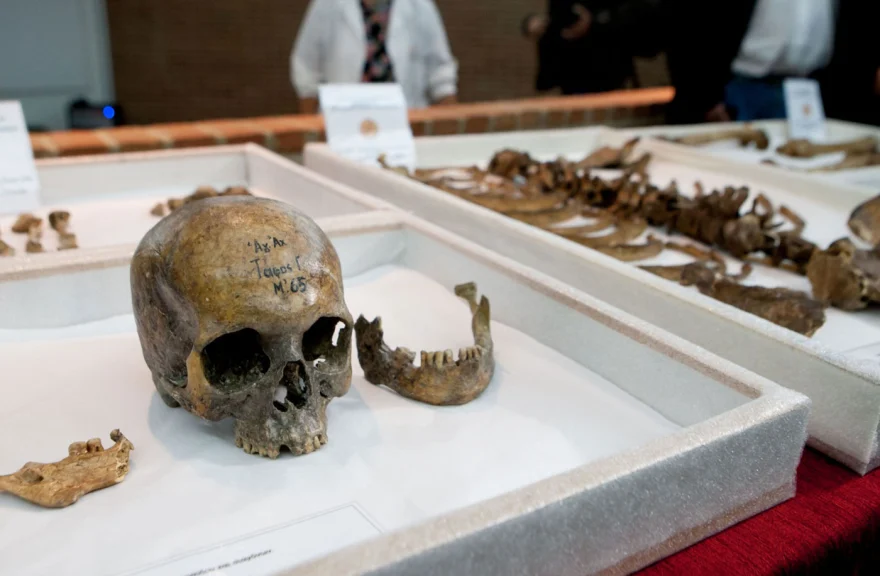
In 1014, Samuel’s army suffered a crushing defeat at the hands of the forces of Byzantine Emperor Basil II, known as the Bulgar-Slayer, in the Battle of Kleidion. Samuel died a few months later, on 6 October 1014, and is considered to have been buried in the Basilica of Saint Achillius in Prespa.
The remains attributed to Samuel came to light during excavations conducted by Aristotle University of Thessaloniki professor Nikolaos Moutsopoulos in 1969. Four burials were discovered in the southern aisle of the basilica, which were attributed to members of the Cometopuli dynasty, with one of the skeletons identified by the excavator as Samuel himself. The identification is based on archaeological and historical evidence, as there was no inscription bearing his name.
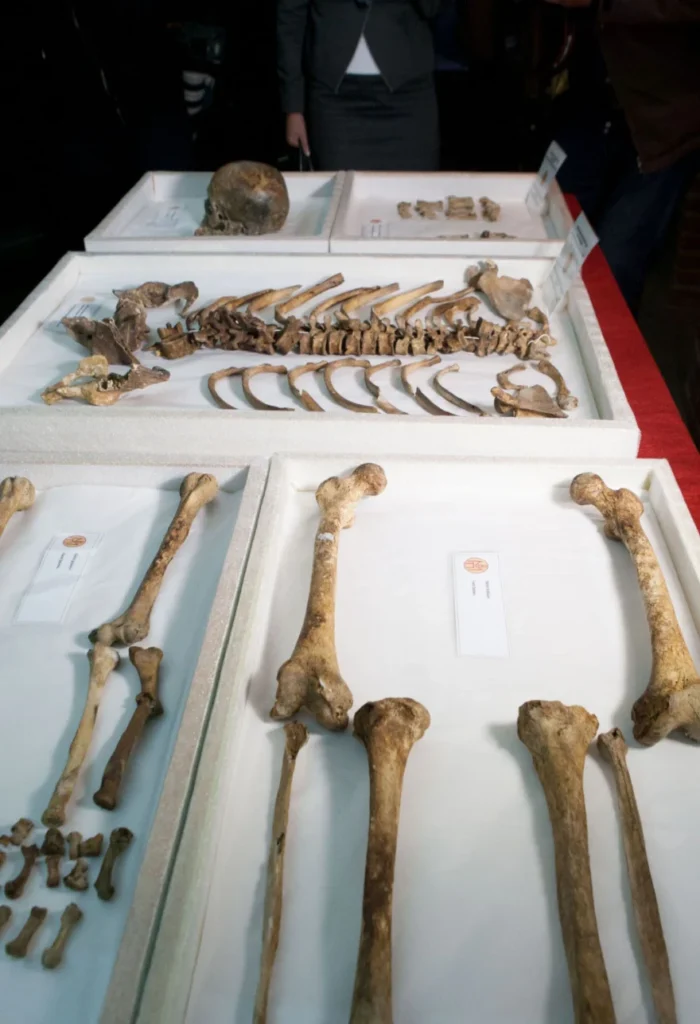
The reason his bones are in Greece today is primarily historical and geographical: Samuel was buried in Prespa approximately nine centuries before the region became part of the Greek state, following the Balkan Wars. The remains attributed to him were transferred to Thessaloniki after the excavation and are kept under the responsibility of the Greek authorities.
Ask me anything
Explore related questions




