





A large-scale online scam has been uncovered in which fraudsters exploit the war in Ukraine, and the suffering and hardship it causes those living through it, to extract money from men seeking romantic partners. An investigation by the Kyiv Independent found that scammers use stolen photographs, forged documents and images manipulated with artificial intelligence (AI), posing as Ukrainian women trapped in Russian-occupied areas and asking for financial assistance to escape and meet the men with whom they have developed online relationships.
The investigation examined 58 cases referred by the non-profit organisation Helping to Leave, which assists people seeking to leave Russian-occupied parts of Ukraine, including Zaporizhzhia, Kherson, Donetsk and Luhansk. The findings showed that many of the women supposedly in need of rescue were not even in those areas, while in some cases their identities had been entirely fabricated.
The general pattern involved scammers gradually winning their victims’ trust by building personal relationships and telling increasingly dramatic stories about their living conditions. Once the men had become emotionally invested, the scammers asked for money to “escape” the occupation, obtain travel documents or cover supposed costs associated with their departure. In one case, a man lost €2,500, while another victim reportedly sent around €9,000.
The 48-year-old Austrian who believed he had found love in occupied Ukraine
A 48-year-old Austrian man named Stefan was looking for a partner from Ukraine. He had previously been in a relationship with a Ukrainian woman and, as he explained to the Kyiv Independent, was attracted to what he perceived as the importance Ukrainian culture places on family.
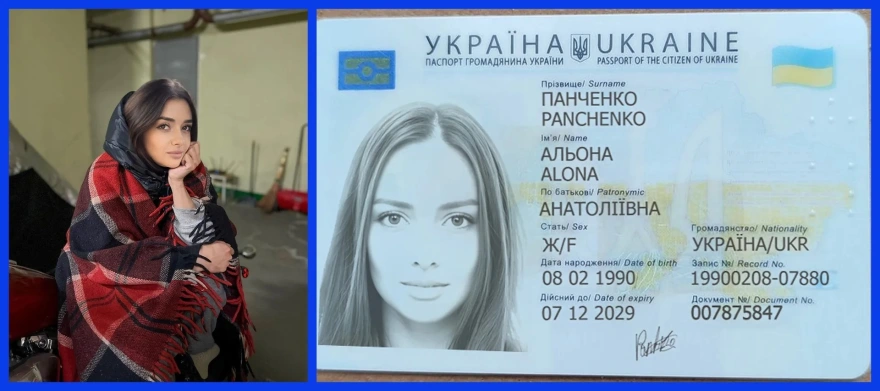
Through the international dating website Christian Cupid, he met a woman who introduced herself as “Alona Panchenko” and claimed to live in Enerhodar, a city in Ukraine’s Zaporizhzhia region under Russian occupation.
Shortly after their first contact, the woman suggested that they continue communicating by email. For the next three months, they exchanged lengthy messages but never spoke by telephone or had a video call. “Alona” claimed she did not have a mobile phone and could communicate only through an old tablet connected to public Wi-Fi networks because of the conditions in the occupied city.
As time went on, her story became increasingly dramatic. She claimed to be unemployed, to have run out of money and, at one point, to have been hospitalised with “severe exhaustion” after going without food for two days. Eventually, she told Stefan that the only way they could meet was if he helped her financially to leave the occupied area.
To make her story more convincing, she frequently sent him photographs supposedly showing herself and everyday life in Enerhodar. However, the investigation found that the evidence she provided had been fabricated. Her photographs were traced to another woman’s profile, while images supposedly taken in Enerhodar originated from a local news outlet. Some photographs and videos also showed signs of AI manipulation. Even the identity document “Alona” sent Stefan contained an invalid number and a photograph altered using AI.
The final contradiction emerged when she asked Stefan to send her money through Western Union. Specifically, she instructed him to list Ukraine as the recipient’s country of residence, despite claiming to be in Russian-occupied territory where Western Union does not operate. Stefan became suspicious that something was wrong and ultimately sent no money. Other men, however, were not so fortunate.
Around 200 rescue requests involving women who may never have existed
Since 2022, the non-profit organisation Helping to Leave has received thousands of requests from people seeking to leave Ukrainian territories under Russian control. The organisation has helped thousands of civilians escape occupied areas, and its staff are familiar with urgent evacuation appeals.
Over time, however, it began receiving a different type of request. Men from abroad contacted the organisation asking it to arrange the rescue of Ukrainian women they had met online, who claimed to be trapped in Russian-occupied areas.
Some asked the organisation to organise the women’s evacuation. Others had already sent money to the women, believing they were paying for their escape and would meet them once they reached safety. The meetings, however, never took place.
According to Natalia, the organisation’s communications officer, Helping to Leave has received around 200 such requests over the past four years. It now receives as many as four similar appeals a week.
He paid €2,500 to rescue “Victoria”
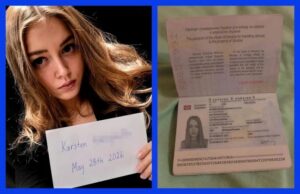
A German man, Karsten R., had a similar experience after meeting a woman online who introduced herself as “Victoria Kremenchutska”. She claimed to be trapped in Russian-occupied territory, avoided video calls and asked for money to escape.
When Karsten agreed to help her, she announced that she had begun her journey. A series of new problems then emerged, each requiring additional payments. First, she told him she needed to pay to cross a checkpoint between occupied territory and areas under Ukrainian control. Later, she claimed to have a debt that was preventing her from continuing her journey.
The documents she sent him, however, proved to be forged. Her passport copy had been digitally altered, the photograph had been inserted using Photoshop, her surname contained a spelling mistake, and the typeface did not match that used in a Ukrainian passport.
The photographs she presented as her own belonged to another woman living in Russia, while some images showed signs of AI manipulation.
At one point, Karsten demanded more specific proof. “I told her: ‘I want to see your suitcases. I want to see you holding a piece of paper with my name and the date on it,’” he told the Kyiv Independent. The requested photograph did arrive, but investigators at the Ukrainian news outlet confirmed that it had been manipulated using AI.
Even after he began uncovering the inconsistencies, Karsten found it difficult to cut off contact. On one occasion, he even considered driving to a Ukrainian border crossing after “Victoria” told him she was stranded there. He eventually became convinced that he was communicating with scammers, but by the time he stopped making payments, he had already sent a total of €2,500.
The 58 cases investigated — and the real people behind the photographs
The Kyiv Independent examined 58 cases referred by Helping to Leave, using photographs, contact details, facial-recognition tools and research into publicly available online sources.
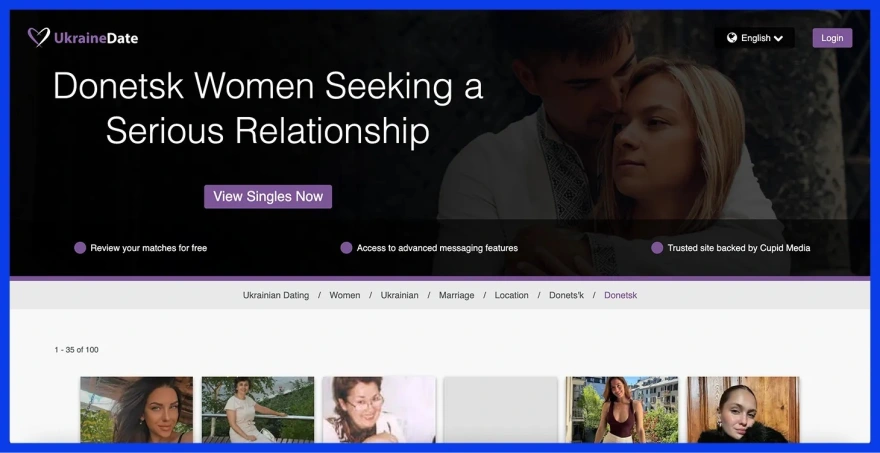
Most of the relationships began on dating websites such as UkraineDate, Christian Cupid and International Cupid.
In some cases, the women contacted men directly through Instagram or X. Of the 58 cases, the journalists and investigators managed to match 22 profile photographs to real women, while two additional profiles appeared to use AI-generated identities. There were insufficient photographs or other evidence in the remaining cases to establish the women’s identities.
Of the 22 profiles using photographs of real people, only seven had names that matched the women pictured.
In some of these cases, the women even took part in video calls, confirming that they were indeed the people shown in the images. However, they lied about their whereabouts: they lived either in areas controlled by the Ukrainian government or abroad. None was in occupied territory.
In the remaining 15 cases, the names and surnames used on the profiles did not match the real women pictured.
Ten of these women were popular Instagram content creators from Russia, Moldova, Ukraine, Germany, Denmark and Latvia. The images used by “Alona” belonged to Natalia Chernysheva, a woman from Chișinău, Moldova, while the photographs used by “Victoria” came from Anna Kolesnyak, who is from Russia. Both women have popular Instagram accounts.
The common scam pattern: No video calls, successive crises and repeated requests for money
An analysis of the emails and conversations examined by the Kyiv Independent revealed a recurring pattern across the 58 cases: the women presented themselves as abandoned and trapped in Russian-occupied areas, claiming that they could not obtain help from either the Ukrainian authorities or humanitarian organisations.
In some cases, they claimed that evacuation was impossible, giving the men the impression that they were the only people who could save them.
“Natalia from Helping to Leave isn’t going to help me get out of here. How can you not understand that?” “Alona” wrote to Stefan.
In reality, when the women involved in the cases examined were referred to the non-profit organisation, they either never contacted it or failed to cooperate with its coordinators to clarify what kind of assistance they needed.
Another common feature was the systematic avoidance of video calls. The women cited unreliable internet connections in occupied areas, outdated electronic devices or restrictions on communication apps. They also avoided sharing their personal social media accounts.
After the initial introduction, conversations were usually moved to email, Telegram or WhatsApp. Telegram accounts often concealed their telephone numbers, while WhatsApp accounts were generally registered with Ukrainian numbers.
They even sent fake live locations through WhatsApp
In some cases, the women sent their victims live locations through WhatsApp that appeared to confirm they were in Russian-occupied territory.
However, the Kyiv Independent found that such data can be falsified using apps that allow GPS information to be manipulated.
The journalists even conducted an experiment, managing in just ten minutes to share a live location that placed them in Paris while they were actually in Ukraine. When they attempted to contact the telephone numbers and Telegram accounts the supposed women had given their victims, they received no replies.
Most of the telephone numbers were invalid or no longer in service, suggesting that they may have been used temporarily for the purposes of the scam.
When messages and excuses were not enough to persuade the men to send money, the scammers resorted to forged documents. Many of the women sent photographs of Ukrainian passports. However, with one exception, all the documents examined showed signs of digital manipulation, including altered personal details, edited photographs or invalid passport numbers.
The men were then asked to pay specific amounts to allow the supposed escape to proceed.
Who is behind the scams? Links to Russia also uncovered
One of the most difficult aspects of the investigation was identifying the people behind the fake profiles.
In some cases, the women whose photographs were being used did take part in the conversations. The journalists identified four cases in which the women had agreed to video calls, confirming that they were the people shown in the photographs.
In many other cases, however, communication was limited exclusively to written messages, making it much harder to identify the people actually operating the accounts.
Money transfers provided some clues. Many of the women requested payments through services such as Western Union, RIA and MoneyGram, while some also used PayPal. Cash-pickup services allowed money to be transferred without directly disclosing bank account details. In several cases, the women asked the men to use the name shown on their dating profile as the recipient’s name and to list Ukraine as the recipient’s country of residence.
Listing Ukraine as the country where the money was to be collected clashed with the women’s claims that they were in Russian-occupied areas. Although Ukraine and most of the international community recognise the occupied territories as Ukrainian, in practice they are controlled by Russian authorities and are cut off from Ukraine’s financial system.
A Western Union customer service representative confirmed that the company does not operate in Russian-occupied areas. Consequently, money sent to Ukraine could be collected only in areas under Kyiv’s control.
The investigation also identified at least two cases showing possible links to Russia.
In one case, a woman asked her victim to transfer money to a supposed travel agency. The bank details she provided belonged to a Russian citizen, Vladislav Gafarov, who held an account with a Russian bank. According to a leaked database from 2023, the telephone number used by the woman was linked to the same man, who was listed as an employee of the Military Academy of Communications in St Petersburg.
The journalists also examined the possibility that some accounts were being operated by more than one person.
From dating agencies to fake profiles
The use of Ukrainian women’s identities in online romance scams is not a new phenomenon. Previous cases have involved foreign men travelling to Ukraine to meet women with whom they believed they had developed relationships, only to discover that they never met them.
Similar practices have been documented in Russia, Belarus, Kazakhstan, Ghana and Nigeria, among other countries. Although legitimate dating agencies exist, previous investigations have uncovered agencies that used fake profiles or paid chat operators to prolong conversations and generate more revenue from clients.
In 2023, Ukraine’s largest job-search platform, Work.ua, included such dating agencies among the types of businesses it routinely excluded over suspected misconduct.
How people looking for partners online can protect themselves
Anna Bauer-Zueva, owner of the Ukrainian dating agency Grace Family, argues that one of the first steps when starting an online relationship should be to have a live video call.
“This is not about exchanging videos. We are talking about real, face-to-face communication,” she told the Kyiv Independent.
She notes that asking the other person to show their surroundings during a live call can help verify their story.
Scammers, she explains, often rely on emotional pressure, presenting themselves as vulnerable and in urgent need of help. By contrast, people genuinely looking for a relationship do not usually begin an acquaintance by portraying themselves as someone who needs rescuing.
For its part, Helping to Leave advises anyone who genuinely wants to help people trapped in occupied Ukrainian territories to contact verified humanitarian organisations rather than send money to people they have met exclusively online.
Ask me anything
Explore related questions




