





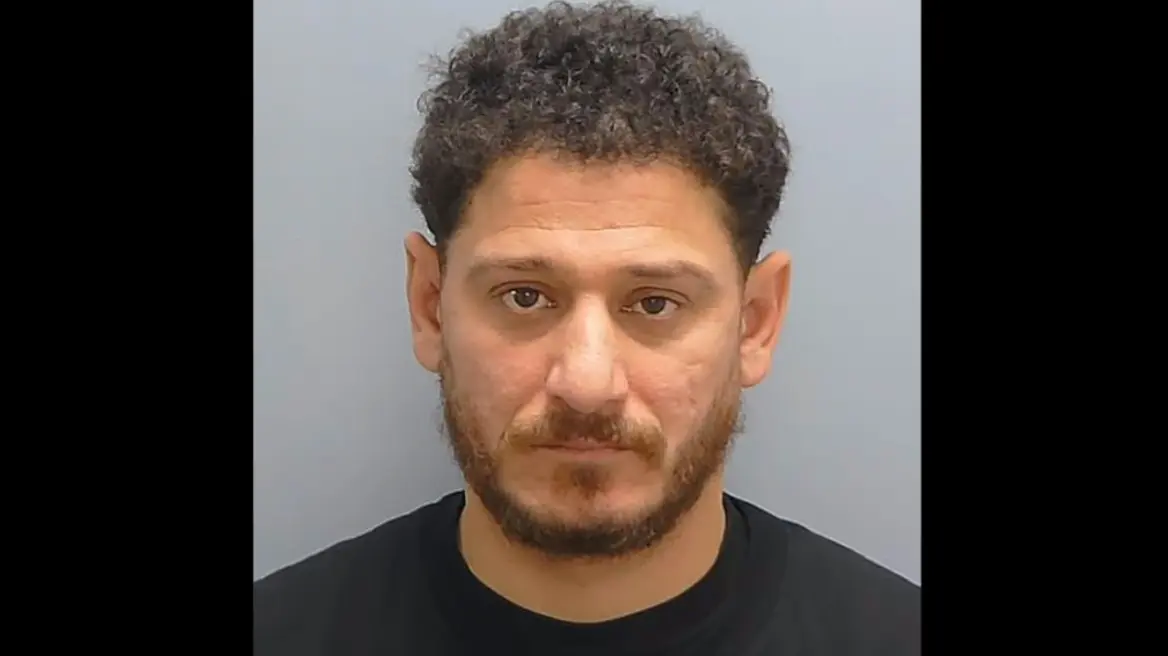
Britain has been rocked by revelations that a convicted ISIS terrorist linked to beheadings, stonings and mass executions in Iraq was walking free on the streets of Windsor, just a short distance from King Charles’s castle. Mohammed Yasin, who entered the country illegally in a small boat crossing the English Channel, had not been deported because of concerns that he could face torture or even execution if he returned to his homeland.
According to an exposé by the Mail on Sunday, the Iraqi national, whom a British court had heard described as “a danger to the whole of the United Kingdom”, was released from prison last week after serving just six months of a two-year sentence imposed for entering the country illegally.
He was subsequently transferred to a supervised accommodation facility for released prisoners in Windsor, where newspaper reporters spotted him shopping at a Co-op supermarket near the royal residence.
From al-Qaeda to ISIS executions
Yasin’s story begins in Ar Rutbah, a town in western Iraq that became an al-Qaeda stronghold following the 2003 US invasion.
In 2006, at just 16 years old, he joined the Islamic State of Iraq, an organisation linked to al-Qaeda that carried out attacks against US forces. It was led by Abu Musab al-Zarqawi, whose organisation claimed responsibility for the beheading of Western hostages, including 62-year-old British engineer Ken Bigley in 2004.
According to evidence presented before the German courts, Yasin was accused of planting at least 13 explosive devices on roads around Ar Rutbah. He was also linked to bomb attacks in which American soldiers were killed.
He later joined ISIS, where he served as an armed guard at public executions. Court documents state that, carrying a Kalashnikov rifle, he supervised crowds gathered to watch the executions.
Among the incidents examined were the stoning to death of a couple accused of adultery and two mass executions in which, according to the allegations, children were among the victims.
In 2020, a court in Düsseldorf, Germany, convicted him of membership of a foreign terrorist organisation. Published court records show that he received a sentence of four years and three months, while being acquitted of other charges, including complicity in the war crime of murder.
Crossed the Channel under a false name
Yasin arrived in Germany in 2015 and applied for asylum. German authorities were initially unaware of his past, and he settled in Bottrop, North Rhine-Westphalia, where he worked as a hairdresser. He was arrested in 2018 alongside three Iraqis following information received by the authorities.
When his sentence was completed, Germany attempted to deport him to Iraq. However, a judge ruled that there was a real risk he would be mistreated or executed if he returned to his home country.
In December 2025, Yasin was among 80 migrants detected by British border authorities while crossing the English Channel in a small boat.
Upon arrival, he used a false identity, concealing both his real name and his terrorist past. He was initially accommodated in a migrant hotel in Basingstoke at the British taxpayer’s expense, until routine biometric checks revealed his true identity.
During his trial, it also emerged that he had chosen to travel to Britain after watching a TikTok video portraying the country as welcoming towards asylum seekers. He reportedly said he did not like living in France.
At Winchester Crown Court, prosecutor Stephen Molloy described him as a man with “deep and longstanding involvement in terrorism and Islamist extremist ideology”.
Free on an electronic tag near the royal family
After his release, the convicted terrorist was transferred to Windsor, where he was placed under electronic monitoring and required to remain at the accommodation facility between 6pm and 6am.
However, according to the Mail on Sunday, he was free to move around the town during the day, and there was no indication that he had been barred from Windsor Great Park or the area around the castle.
The revelations sparked a backlash because members of the royal family live in the wider area. The Prince and Princess of Wales live with their three children—13-year-old George, 11-year-old Charlotte and eight-year-old Louis—at Forest Lodge, while the Duke and Duchess of Edinburgh reside at Bagshot Park.
Meanwhile, Windsor Castle is due to host an official dinner on Thursday, 22 October, at which King Charles will entertain the Sultan of Oman.
Legal obstacle to deportation and the cost to taxpayers
The case has reignited debate over the limits of immigration policy and Britain’s obligations under human rights protections.
Yasin has submitted a fresh application to remain in the country, prompting the British Home Office to suspend its efforts to deport him.
According to information reported by the Mail on Sunday, the Foreign Office has expressed concerns that the Iraqi national could face mistreatment if returned to his homeland because of his previous involvement with terrorist organisations.
The prospect of him remaining in Britain has also prompted criticism over the financial cost. Legal experts estimate that Yasin is entitled to publicly funded legal aid and that, if his case reaches the European Court of Human Rights, the associated costs could approach £500,000.
Other specialists estimate that his accommodation in a state-funded facility, living allowances and monitoring could cost up to £85,000 a year. These are estimates, rather than confirmed expenditure.
Chris Philp, the Conservatives’ Shadow Home Secretary, criticised the situation, arguing that British taxpayers were being asked to cover the accommodation and living costs of people who pose a threat to national security. He called for Yasin’s immediate deportation.
Returned to prison
The case took a new turn just hours after the Mail on Sunday contacted the British Home Office seeking an explanation for Yasin’s presence in Windsor.
According to government sources cited by the newspaper, the authorities decided to return him to prison because he had allegedly breached good-behaviour conditions attached to his release and residence at the accommodation facility.
A Ministry of Justice source confirmed that the convicted terrorist was no longer in Windsor, although it was not clarified exactly which breach had led to his release being revoked.
His return to prison does not resolve the question of deportation, as proceedings concerning his application to remain in Britain are still pending.
Ask me anything
Explore related questions




