





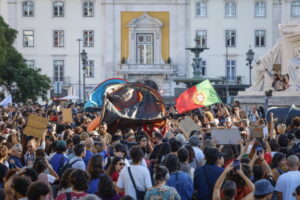
Dozens of tents remained pitched in central Lisbon and Porto on Monday morning, as protesters campaigning for the right to housing vowed to continue occupying public spaces to demand measures to curb soaring housing costs in Portugal.
The night passed peacefully in both cities, but demonstrators remain determined to maintain their protest camps.
Hundreds of activists refused to dismantle their tents despite warnings from the authorities that occupying public spaces is subject to regulations and that they could face prosecution for disobeying orders if they refuse to leave.
In Porto, where the movement began around ten days ago, Maria João Calisto, one of its representatives, told the newspaper Público that formal notification of planned demonstrations had been submitted for the period from 21 October to 31 December.
A meeting between protesters and Porto Mayor Pedro Duarte may also take place, although the details have yet to be finalised.
The demonstrators occupying public spaces have called for protests across the Iberian Peninsula, hoping to join forces with a movement taking shape in Spain. They have also urged trade unions to call a general strike on 11 November.
Protesters accuse the Portuguese government of failing to do enough to tackle the housing crisis and of seeking to make evictions easier through reforms to the rental market.
In late September, parliament approved a reform in its first reading aimed at accelerating evictions of tenants who fail to pay their rent, as part of broader efforts to liberalise the rental market.
The Portuguese protest movement has emerged at a time when Spain is experiencing its own wave of demonstrations over housing, now entering their fourth week.
The protests in Spain have also led to the calling of snap parliamentary elections for 29 November, further highlighting the political repercussions of the housing crisis across the Iberian Peninsula.
Ask me anything
Explore related questions




