





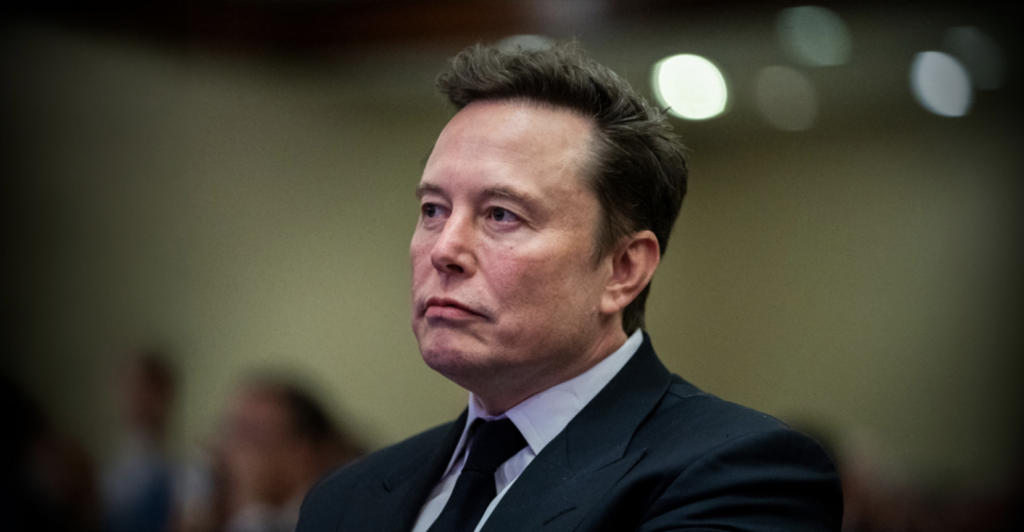
‘What can you buy in Texas with half a billion dollars? Nothing!’ That is the latest joke doing the rounds in Texas since yesterday. Its obvious target is the world’s richest man, trillionaire Elon Musk, who spent almost half a billion dollars – $474 million, to be precise – in an effort to get his preferred Republicans, Ken Paxton into the Senate and Greg Abbott elected governor. Instead, his fierce critics, Democrats James Talarico and Gina Hinojosa, won.
Things have not gone particularly well for Musk. Taking into account the plunge in share prices, for example, the Anadolu Agency estimates that the trillionaire has lost $60 billion since yesterday. Other estimates put the figure at half that amount. Either way, Musk has much more to lose, having run out of political allies in Texas, where he has established the headquarters of his empire.
Tesla has moved its headquarters to Texas. SpaceX launches rockets from Cameron County in the same state. Starlink satellites are manufactured in Bastrop County and, most importantly, Musk and SpaceX are in the process of opening a Terafab chip manufacturing plant in Grimes County. All of these operations are in Texas. The project will require investment of more than $16.8 billion and create 3,000 new jobs, while it has also secured a $30 million grant from state funds.
When the project was announced in August, Musk described it as ‘the most epic chip-building effort ever’, while a press release said SpaceX had chosen Texas as the home of Terafab partly because of the state’s ‘business-friendly climate’.
Hinojosa had focused her election campaign on regulating data centres, which she wants to see driven out more broadly, and Musk’s operations in particular. She called for a moratorium on data centres until the state legislature could introduce relevant regulations. As governor, she will now have the power to impose such a moratorium, as well as to call the legislature directly to establish the rules.
Musk did not miss the opportunity to joke on X, which he also owns, saying he would build data centres in space. But the best goals are sometimes scored between jest and seriousness. In other words, this is an idea SpaceX is actively pursuing. The company is developing solar-powered satellites that would not require cooling in the vacuum of space and could serve as artificial intelligence data centres. The Gigasat factory in Bastrop is manufacturing them, with the aim of launching the satellites as early as the end of 2027.
On more earthly matters, the Texas Parks and Wildlife Commission, a state agency, was discussing the possible sale of Boca Chica State Park to SpaceX, as was revealed in October. Under Hinojosa’s leadership as governor, such a deal now appears much less likely. It is worth noting that members of the Texas Parks and Wildlife Commission are appointed by the state’s governors.
Starbase is located at the southern tip of Texas, near the Mexican border. SpaceX established the base in 2014, next to Boca Chica Beach. It is now the launch site for the Starship rocket, which Musk hopes will one day carry humans to Mars.
On 3 May 2025, the area officially became a city. The vote was 212 in favour and six against. Most of the 283 registered voters worked for the company or were connected to it. SpaceX vice-president Bobby Peden was elected mayor unopposed. The polling station was housed in a building on Memes Street, while a large bust of Musk stands near the company’s facilities.
The new city had around 500 residents and covered an area of approximately 3.9 square kilometres. Its municipal status, however, gave it control over construction, permits and local regulations. Critics describe it as a company town, a small state within the state. Local officials estimated that it would generate more than $13 billion in economic benefits between 2024 and 2026.
Starbase has expanded since then. In 2025, Texas lawmakers gave the city and the state’s Space Commission the authority to close the beach during launches, a power previously held by the county. In June 2026, the Texas Supreme Court rejected a lawsuit brought by environmental groups challenging the closures. In September 2026, the city completed the annexation of more than 28,000 acres, covering a large part of Boca Chica State Park.
But why did Musk choose Texas? The move began towards the end of 2020, when Musk announced that he was leaving California, accusing Silicon Valley of having excessive influence. In Texas, where he also transferred his residence, there is no state income tax. In 2021, Tesla moved its headquarters from Palo Alto to Austin, which is also home to its largest factory in the United States.
SpaceX followed in July 2024. Musk described a California law preventing schools from requiring staff to notify parents when children changed their gender identity as the ‘last straw’. That same summer, the relocation of X to Austin was also announced.
The move also brought a change in the legal landscape. After a Delaware court overturned Musk’s $56 billion pay package in 2024, following a lawsuit brought by a shareholder who owned just nine shares, Tesla moved its corporate headquarters to Texas. In May 2025, Governor Greg Abbott signed Senate Bill 29, allowing companies to set a minimum ownership threshold of up to 3 per cent for certain shareholder lawsuits. Tesla adopted the provision immediately. Based on its valuation at the time, the threshold corresponded to shares worth more than $30 billion.
Musk himself voted in Cameron County in 2024, where Starbase is located, and his name was among the 283 registered voters in the city in 2025. Reports have also placed him in the Austin area, where he has a corporate complex and has discussed establishing a second city.
The ‘hunt’
No law has given Musk immunity in the legal sense. His critics use the word to describe a series of favourable decisions by state authorities, which Republicans have controlled for more than 30 years.
The clearest picture emerged from the election campaign of Gina Hinojosa, the Democratic candidate for governor. According to her campaign lawsuit, SpaceX’s Terafab chip factory received approximately $1.7 billion in school tax exemptions, while SpaceX secured more than $54 million in state grants. Starlink received around $110 million in grants after Abbott’s office promoted broadband rules that benefited the company. Those grants subsequently came under scrutiny.
Hinojosa requested more than 1,000 pages of communications between Abbott and Musk, which the governor considered too personal and embarrassing to make public. A Travis County court ruled in her favour, but the Court of Appeals subsequently suspended the decision. In one of the messages, as reported by Fast Company, Musk asked whether Abbott would support him. The governor replied: ‘One hundred per cent.’
Last month, the state park issue also came to light. Texas Monthly, citing two sources, revealed that the Parks and Wildlife Commission had been discussing the sale of approximately 5,260 acres, with SpaceX as a potential buyer. The agency said the matter was not on the agenda for its November meeting, while Abbott said it would not come to a vote any time soon. Talarico made the issue a campaign slogan, although no evidence has been presented of any exchange of political support for public land.
The final part of the plan is also the most expensive. In August, SpaceX and Tesla selected Grimes County for Terafab, a chip manufacturing complex costing $55 billion in its first phase and up to $119 billion in total. The project had already secured a 100 per cent exemption from county property taxes in June, in a 4-1 vote that prompted strong opposition from residents. Musk responded that the company’s payments would increase the county’s revenue by approximately 25 per cent.
SpaceX also wants to become a provider of computing power for artificial intelligence. Rental agreements for the Colossus data centres with Anthropic and Google could generate $26 billion a year. In Texas, the company is reportedly considering several locations for large data centres, while also planning an expansion at Starbase.
This very issue became a central theme of the election campaign. Across the country, $173 million was spent on advertisements about data centres, almost all of them negative, with Democrats accounting for $140 million. Paxton had promised to make Texas the centre of the American artificial intelligence industry, while Talarico called for stricter regulations. He even proposed a tax on profits generated by artificial intelligence, with the proceeds used to fund annual dividends for Americans.
Hinojosa went further. In July, she said data centres were ‘sucking up all our water and all our electricity’ and called for a moratorium on new construction until regulations were in place. She wants companies to prove that they will not drive up household bills, for confidentiality agreements in the permitting process to be abolished, and for the relevant subsidies to end. In August, Abbott himself had frozen new connections for data centres to the Texas power grid.
Democrats won the House and the Senate. In Texas, they also won every statewide office contested: Talarico secured the Senate seat, Hinojosa won the governorship and Nathan Johnson was elected attorney general.
Musk remained silent for hours and, after digesting the defeat, responded with humour. ‘Space data centres are looking pretty attractive right now,’ he wrote on X. A few minutes later, he added a sarcastic remark about his ‘space lasers’, supposedly used to manipulate elections, which, he said, had not worked properly this time.
No donor has given more money in a single election cycle. According to Forbes, the returns were poor. Of the 106 candidates he supported, 44 lost, 18 won in seats that were already safe Republican territory, while 44 races had not been decided by Wednesday. Among those defeated, alongside Paxton and Abbott, were Vivek Ramaswamy in Ohio and Susan Collins in Maine.
The biggest cost came from the stock market. In pre-market trading, Tesla and SpaceX shares fell by as much as 6 per cent and 7 per cent respectively. The initial declines, according to Anadolu, reduced Musk’s estimated fortune by more than $60 billion. The losses were subsequently pared back. By midday on Wednesday, Forbes was calculating a loss of $34.5 billion, putting his fortune at $867.2 billion.
At the close of trading, Tesla stood at $385.19, down 3.3 per cent from Tuesday, while SpaceX was at $135.92, a fall of 3.8 per cent. The declines stood out because the rest of the market was rising: Amazon gained 7 per cent, while Alphabet, Google’s parent company, rose by almost 5 per cent. Together, Musk’s two companies lost approximately $125.8 billion in market capitalisation in a single day, according to calculations by FourWeekMBA.
The figures allow for two comparisons. The $474 million represents approximately 0.05 per cent of his fortune, which stood at around $902 billion before the decline. For an American household with median net wealth of $215,900, it would be equivalent to spending around $113. On the other hand, the loss recorded by Forbes by midday on Wednesday was approximately 73 times greater than all his political donations.
This was, however, a loss in the valuation of shares, not in cash. Following SpaceX’s stock market listing in June, his fortune reached $1.45 trillion, but by the end of July he had lost $750 billion.
What the Democrats are preparing for Musk
On election night, as soon as Democrats had secured the House, Robert Garcia, who is expected to take over the House Oversight Committee, posted two words on X: ‘LAWYER UP’. The message was aimed primarily at the Trump administration and the president’s family, but Garcia’s office had also spoken of ‘corporate corruption’ and serious questions surrounding Musk’s role in DOGE.
From January, Democrats will chair committees with subpoena powers, meaning they will be able to demand documents and testimony. In 2025, Republicans blocked such efforts twice, on one occasion by a vote of 20-19. Senator Richard Blumenthal says he will investigate Musk and DOGE, describing a ‘web of potential corruption’. An unnamed member of the House Oversight Committee called DOGE ‘the original sin’.
The outstanding issues, as described by the press and members of Congress themselves, are as follows:
- DOGE. Decisions taken during Musk’s time at the Department of Government Efficiency, including the elimination of more than 250,000 public-sector jobs and the dismantling of the United States Agency for International Development (USAID).
- Government contracts. SpaceX had secured $6.78 billion in federal contracts by 1 October, compared with $3.8 billion for the whole of 2024. Around one-fifth of its revenue in 2025 came from federal agencies.
- Ukraine. Musk’s alleged role in restrictions on Starshield and Starlink services for the Ukrainian military. He maintains that limits on Starshield are decided by the US military.
- Conflicts of interest. The relationship between Tesla and SpaceX and the authorities that regulate them, including the Federal Aviation Administration (FAA), which licences launches, and the Federal Communications Commission (FCC), which regulates Starlink’s radio spectrum.
- A Tesla-SpaceX merger. Any such move is expected to face closer scrutiny from Congress.
There are limits, however. Congress cannot cancel contracts, as these are awarded by the Pentagon and NASA. The investigations are still at the planning stage and do not, in themselves, establish any wrongdoing. Musk, for his part, has already responded.
‘Those who live by the sword shall die by the sword,’ he wrote in October, warning that he would go after those behind such moves.
In Texas, the problem is more immediate. From January, Hinojosa will oversee future incentive agreements and appoint the members of the commission that would decide on the Boca Chica park. None of Musk’s plans has been cancelled. However, Wedbush analyst Dan Ives, who is bullish on Musk’s stocks, wrote that Musk will now have to find his way in Texas with a Democratic senator and a Democratic governor.
There is a political counterweight, too. Joshua Blank of the University of Texas noted that if major businesses begin leaving the state under Democratic leadership, this will become the central issue of the next election campaign.
The moral question
Talarico did not campaign solely against Paxton. He campaigned against the money funding him. He said his opponent was being financed by ‘one guy’, while his own campaign was backed by 1.3 million individual donors. When Musk publicly endorsed Paxton, Talarico responded on X that something was deeply wrong with a system in which a trillionaire could buy his own senator.
In his victory speech, he repeated the David and Goliath analogy, named the world’s richest man among his opponents and called for big money to be removed from politics, ‘so that no billionaire or trillionaire can buy our elections’.
The legal basis of the debate dates back to a 2010 ruling. The US Supreme Court ruled then that the state could not restrict political spending by corporations, trade unions and other groups, provided that the spending was independent of candidates. Under this system, the 20 largest donors have poured approximately $2 billion into this year’s federal elections.
Critics of large political donations argue that a candidate’s dependence on one individual, who also has billions of dollars tied up in government contracts and regulatory approvals, creates a conflict of interest regardless of the outcome.
The other side has three arguments. The first is that political spending is protected as a form of free speech. The second is that Democrats also have major donors: George and Alexander Soros gave $103.4 million, Mike Bloomberg contributed $84.8 million and Reid Hoffman, who gave $16.5 million, backed Talarico himself. The third argument was put forward by Musk: he said he spent the money to prevent one party from establishing permanent dominance if Democrats sweep Washington in 2028.
Until then, a sudden Musk ‘exit’ from Texas should not be ruled out if the pressure becomes unbearable. And if the Democrats continue their pursuit, perhaps moving to… space really will begin to look like a good idea to Musk. After all, he is unlikely ever to stop being rich.
Ask me anything
Explore related questions




