





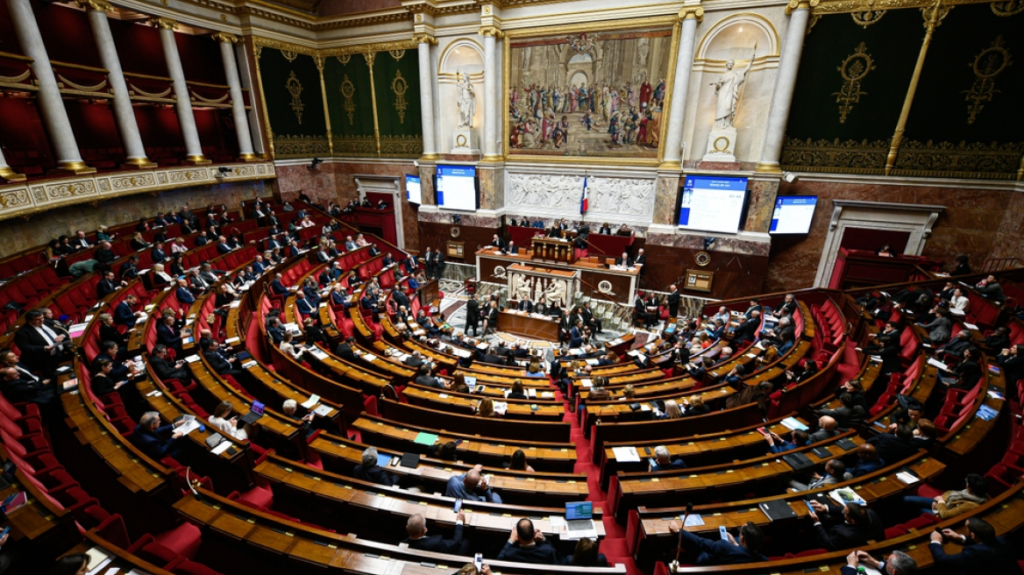
French MPs flatly rejected the 2027 state budget proposal at its first reading on Wednesday, prolonging the deadlock despite concerns over the country’s public finances, just months before the presidential election.
By 458 votes to none, with two abstentions, all political forces – including those supporting President Emmanuel Macron‘s government – voted against the revenue section of the draft budget, against a backdrop of a tense socio-economic climate.
After around ten days of at times incoherent debate, opposition MPs condemned the French government’s choices, while its supporters expressed regret that the text had been completely dismantled.
The latest episode highlighting the difficulty of adopting a budget in a parliament without a majority following the dissolution ordered by President Macron in 2024, the result means that the text will be sent back to the Senate in its original form to be reconsidered in the chamber from 20 November.
The time for compromise will come “later”, the office of Prime Minister Sébastien Lecornu sought to reassure, postponing until “December” a possible reconciliation between the government’s version and the forthcoming Senate version, after which the text will be sent back to the National Assembly for a further reading.
The French National Assembly has stripped down the final budget of Macron’s presidency, which was theoretically expected to reduce the deficit to 5% of GDP in 2027, from 5.4% this year; France’s debt and deficit are among the highest in Europe.
Spending-cut measures, notably the abolition of tax breaks for pensioners and organisations, were removed by MPs, along with a tax increase on large companies.
The talks are taking place amid poor economic performance, with GDP contracting again by 0.1% in the third quarter. According to Budget Minister David Amiel, the situation makes additional spending cuts necessary in France beyond those provided for in the original text (€43 billion) in order to achieve the target of reducing the deficit to 5%.
The French government’s borrowing costs have soared in recent weeks amid concerns over the sustainability of the country’s debt and political and social divisions.
Some parliamentarians suspect that Macron’s government is playing for time: from 18 December, it will be able to pass a budget by executive decree – an unprecedented move – without holding any vote in the French national legislature.
Ask me anything
Explore related questions




