





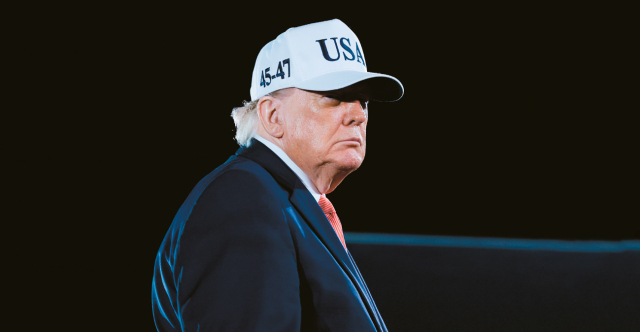
The 3 November midterm elections transformed the political balance of power in the United States overnight, but their consequences extend far beyond the Republicans’ loss of control of Congress.
The Democrats’ return to majority status in both the House of Representatives and the Senate has created an entirely different political landscape for the final two years of Donald Trump’s second – and, under the US Constitution, final – presidential term. At the same time, it has accelerated developments that, until just a few weeks ago, were regarded more as subjects of political speculation than as imminent events.
Within the Republican Party, the debate over Trump’s succession is now effectively under way, while the Democrats must demonstrate that they can turn a major electoral victory into a coherent plan for governing, with an eye on the 2028 presidential election. The scale of the Republican defeat illustrates just how significant the political shift has been.
The Democrats captured seven Senate seats previously held by Republicans, secured a majority in the House of Representatives and prevailed in states where Trump’s party had maintained strong political footholds for decades.
Texas, Kansas, Iowa and South Carolina were among the clearest examples of an election in which voters’ dissatisfaction with the cost of living, the White House’s economic policies and the war with Iran proved stronger than their party loyalties.
The most significant shift occurred among demographic groups that had played a decisive role in Trump’s return to the White House in 2024. Hispanic voters, younger people, those without university degrees and sections of the working class moved towards the Democrats, calling into question the resilience of the electoral coalition on which Trump had built his second presidential victory.
The loss of these voters represents a far more serious political problem than the defeat of individual candidates.
Republicans: Rubio, Vance and the MAGA Legacy
The debate over responsibility for the electoral defeat has already moved into the heart of the administration. Trump remains the most powerful figure in the Republican Party. However, for the first time during his second term, his ability to deliver electoral victories for the candidates he endorses is facing serious scrutiny.
His personal appeal proved difficult to transfer to a series of crucial states, while government policies on issues directly affecting Americans’ everyday lives became a central feature of the election campaign.
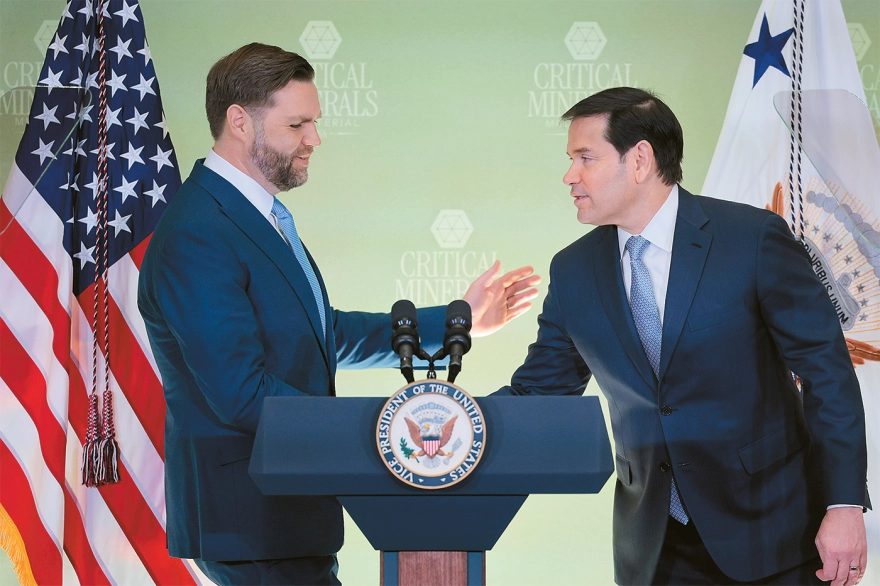
Against this backdrop, reports suggesting that Marco Rubio may leave his post as Secretary of State have taken on particular political significance. Media reports, which have not been officially confirmed, suggest that the head of US diplomacy is considering stepping down from the administration in order to prepare a bid for the Republican presidential nomination in 2028.
The White House and the State Department have categorically dismissed the reports. The significance, however, lies in the fact that such discussions are now taking place immediately after the governing party’s crushing electoral defeat.
Rubio has characteristics that distinguish him from most figures in the current Republican leadership. His lengthy tenure in the Senate, experience in foreign policy and current position at the centre of the national security apparatus give him a political profile that does not depend exclusively on his relationship with Trump.
At the same time, his participation in the administration ties him to the policies that voters punished at the ballot box, particularly the war with Iran. A possible departure could allow him to establish greater political independence, although it would not erase his involvement in the current administration’s decisions.
His potential rival is Vice-President JD Vance, who, until the midterm elections, was regarded as Trump’s most likely political heir. Vance has strong ties to the MAGA grassroots, embodies the movement’s nationalist and economically protectionist character, and has built his political standing around opposition to traditional US foreign policy.
The electoral defeat, however, has upset the balance. The Vice-President must now explain why an administration he has vigorously defended lost the support of millions of voters.
His response has already been revealing. In a public intervention following the elections, Vance linked the defeat to the war with Iran, rising prices and the administration’s departure from the principle of ‘America First’. His remarks amount to a cautious but unmistakable distancing from the White House’s policies.
He is attempting to present himself as the voice of voters disappointed with the administration, despite remaining its Vice-President. This is not an open break with Trump, but rather an initial attempt to redefine MAGA ahead of 2028.
The war with Iran lies at the heart of this confrontation. The traditional Republican wing continues to regard American military power and support for Israel as central pillars of US strategy. By contrast, a significant section of the MAGA movement believes that involvement in new foreign conflicts runs counter to Trump’s original commitments.
Vance is seeking to represent the latter position, while Rubio is more closely associated with the former, even if his own positions have been adapted to the political realities of the Trump administration.
Any potential confrontation between the two therefore has the makings of a much broader ideological struggle. The question facing Republicans will not simply be who succeeds the current president, but which elements of his political legacy will survive his departure.
Will they opt for a continuation of MAGA, placing greater emphasis on economic nationalism and limiting military intervention abroad, or return to more traditional conservative positions while retaining a hard line on immigration and domestic policy?
Trump’s stance so far has further complicated the situation. The US President has not officially anointed a successor, while his public statements leave the door open to more than one potential candidate.
He knows that his political influence within the party is also linked to his ability to determine who will lead it in the post-Trump era. For Rubio and Vance, the greatest challenge will be to retain the support of the Republican grassroots without becoming fully identified with the government policies that led to the defeat.
Democrats: Searching for a Leader and a Political Programme
The picture within the Democratic camp is almost the reverse. A party that suffered a painful presidential defeat just two years ago has made a remarkable comeback, winning control of both chambers of Congress. Yet this success has not been accompanied by the emergence of an undisputed leader or the triumph of any single political strategy.
Instead, the scale of the victory has allowed different factions within the party to claim ownership of its political message. Moderates argue that success came from attracting centrist and independent voters, while the progressive wing believes the election demonstrated that even radical proposals can secure majorities in states that, until recently, were considered difficult territory for the Democrats.
The central question is whether the result represents an endorsement of the Democrats’ political platform or a rejection of the Trump administration. The distinction will be crucial in the 2028 presidential election.
Dissatisfaction with the current president succeeded in bringing together diverse social groups, but this does not automatically guarantee that they will remain on the same side when voters are called upon to choose the next occupant of the White House.
The Democrats now have two years to decide whether to seek to rebuild a broader centrist coalition or invest in a more confrontational, economically progressive programme.
The Ossoff Factor
At the forefront of this debate is now 39-year-old Georgia Senator Jon Ossoff. His comfortable re-election, with nearly 59% of the vote, in a state Trump carried in 2024, makes him one of the most interesting figures of the Democrats’ new generation.
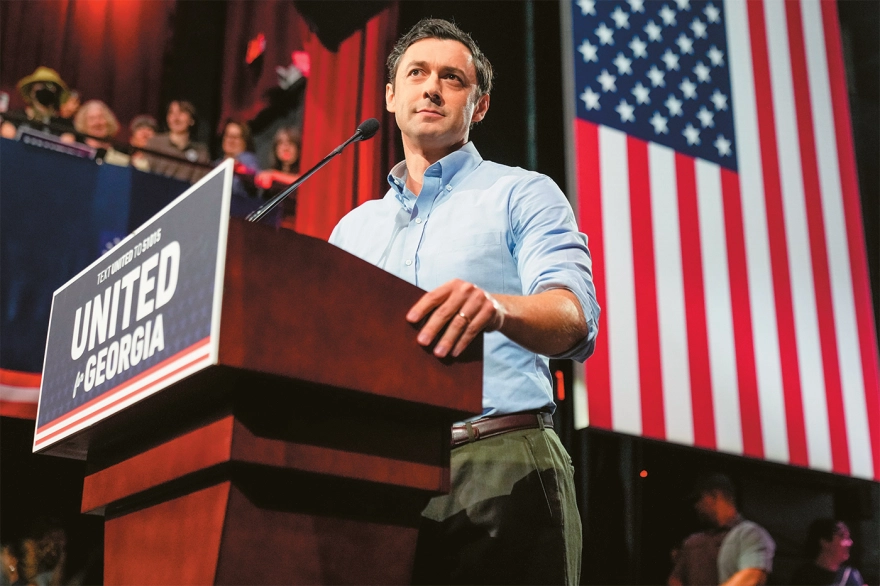
His victory over the candidate endorsed by the US President takes on added significance because it was achieved in one of the most important battlegrounds in recent electoral contests.
Ossoff represents a different approach from that of several of the best-known figures in the Democratic leadership. He has not built his political identity around a rigid ideological position. Instead, he has focused more heavily on exposing corruption, criticising major corporations and the financial interests that influence political life, and highlighting the everyday problems facing ordinary Americans.
During his election campaign, he managed to link allegations of corruption to the rising cost of living, healthcare expenses and the consequences of tariffs. His argument was that citizens’ economic difficulties are connected to a political system that operates in the interests of the most powerful.
His approach to communicating with voters is particularly significant. Ossoff made systematic use of social media, short-form interventions and high-profile televised confrontations in the Senate, building name recognition well beyond Georgia.
His ability to deliver forceful criticism of Trump without constantly resorting to an aggressive or denunciatory tone is regarded by sections of the Democratic Party as a significant advantage. He is a politician capable of appealing to progressive voters while retaining the ability to reach more moderate constituencies.
Any potential presidential bid nevertheless remains a matter of speculation. Ossoff has said that he is not interested in running for president in 2028 and that his priority is serving his term in the Senate. Moreover, he has yet to be tested in a nationwide election campaign, while his political positions do not, at present, amount to a fully developed presidential programme.
His electoral success, however, offers Democrats an example of how they can combine a youthful image, effective political communication and an economic agenda with broad social appeal.
El-Sayed’s Victory
If Ossoff represents one possible answer to the search for a new political figure, Abdul El-Sayed’s victory in Michigan is expected to spark a much more intense debate over the ideological direction of the Democratic Party.
El-Sayed defeated Republican Mike Rogers by approximately seven percentage points, capturing a highly competitive seat and making history as the first Muslim elected to the United States Senate.
The significance of his victory extends beyond its historic nature. El-Sayed was elected on a platform that included universal public healthcare coverage, restrictions on the influence of private money in politics and explicitly critical positions on Israeli policy.
These positions had provoked strong reactions even within the Democratic Party, with his campaign becoming a battleground between the traditional party leadership and its radical wing.
The support he received from Bernie Sanders and Alexandria Ocasio-Cortez was a decisive factor in his campaign.
Sanders viewed his candidacy as an opportunity to strengthen the political movement he had built through his 2016 and 2020 presidential campaigns, while Ocasio-Cortez invested considerable political capital in demonstrating that the progressive Left can win elections beyond traditional Democratic strongholds.
El-Sayed’s election now gives this wing a powerful argument against those who believe that radical proposals limit the party’s electoral appeal.
The Michigan contest also exposed the depth of the party’s internal divisions. The primary process was accompanied by particularly heavy spending by outside political organisations, while disagreements over Israel, Gaza and the influence of the pro-Israel lobby led to serious confrontations.
El-Sayed’s victory does not eliminate these divisions. On the contrary, it could bring them to the forefront of the Democratic Party’s national leadership, as the progressive wing seeks a greater say in shaping policy on healthcare, social justice and US foreign policy.
Sanders and Ocasio-Cortez: The Battle for the Party’s Political Identity
The progressive wing’s renewed momentum presents the Democrats with an additional dilemma. Despite his age, Sanders retains considerable political influence, particularly among younger voters and those who believe the party has moved away from the needs of the working and middle classes.
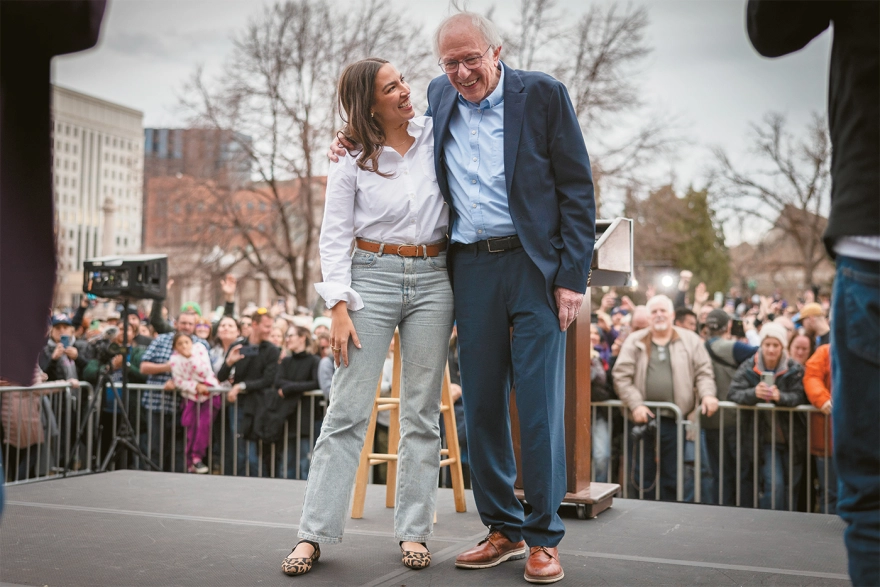
Ocasio-Cortez, meanwhile, has emerged as one of the most recognisable figures of the American progressive Left and is considered a potential presidential candidate in 2028. Their political alliance with El-Sayed creates the conditions for a new generation of party figures seeking to turn a radical social agenda into a majority political movement.
Disagreements with the moderate wing concern both economic policy and the way the party should conduct its opposition. Progressives are calling for greater government intervention in healthcare and the economy, higher taxes on top earners and a more decisive confrontation with major corporations.
They are also critical of the Democrats’ traditional foreign policy, particularly regarding US support for Israel. Moderates fear that such a shift could alienate centrist voters. The Left, by contrast, argues that the attempt to maintain an ill-defined centrist profile is part of the problem that led to the party’s defeat in 2024.
The election results do not yet allow either side to claim that it alone represents the source of the party’s success. In Michigan, El-Sayed prevailed with an unequivocally progressive programme. In Texas, however, James Talarico secured a historic victory with a different political style, placing greater emphasis on his religious faith and a message of social reconciliation.
In Pennsylvania, Josh Shapiro won by a substantial margin, campaigning on the effectiveness of his administration. The coexistence of these victories makes it extremely difficult to draw a single conclusion about the political model the Democrats should follow.
The 2028 Challenge
Paradoxically, the major electoral victory presents an additional risk for the Democrats. The absence of a figure who could currently establish himself or herself as the undisputed presidential candidate means that the 2028 primary season could develop into a particularly competitive contest.
Alongside Ossoff and Ocasio-Cortez, California Governor Gavin Newsom, Pennsylvania Governor Josh Shapiro, Pete Buttigieg and other party figures are already being discussed as potential contenders for the next presidential nomination. None, however, has secured political pre-eminence.
The Democrats must also decide how to use their congressional power from January 2027 onwards. Their ability to investigate government decisions, scrutinise the federal administration and block Trump’s legislative initiatives represents a significant political advantage.
However, choosing a strategy focused exclusively on confrontation with the President could undermine efforts to develop a positive political programme. Equally, an attempt to advance an extensive progressive agenda will encounter both internal party disagreements and Trump’s ability to exercise presidential veto powers.
Ossoff’s case becomes particularly interesting in this context. His success suggests that Democrats can craft an aggressive political message against Trump, linking it to citizens’ economic insecurity without necessarily adopting the entirety of the radical agenda.
El-Sayed’s victory, by contrast, demonstrates that even the most progressive candidates can attract broader support when they put forward a clear social programme. Whether these two approaches can coexist within a common presidential platform represents the party’s greatest challenge.
Ultimately, the 2026 midterm elections leave America’s two major political parties facing different versions of the same problem. The Republicans have an immensely powerful leader but do not know which political direction they will take after his departure.
The Democrats have secured the congressional strength they previously lacked, but are still searching for the candidate and political platform that will lead them into the next presidential election.
In Washington, the debate over 2028 has already begun, almost two years before the next presidential vote. The Republicans’ defeat has opened a difficult process of reassessing Trump’s political legacy.
The Democrats’ victory, meanwhile, has brought back to the forefront an unresolved struggle over the party’s political identity. The decisions taken over the coming months will determine not only who will seek the White House, but also the character of American politics after the end of Trump’s second presidency.
Ask me anything
Explore related questions




