





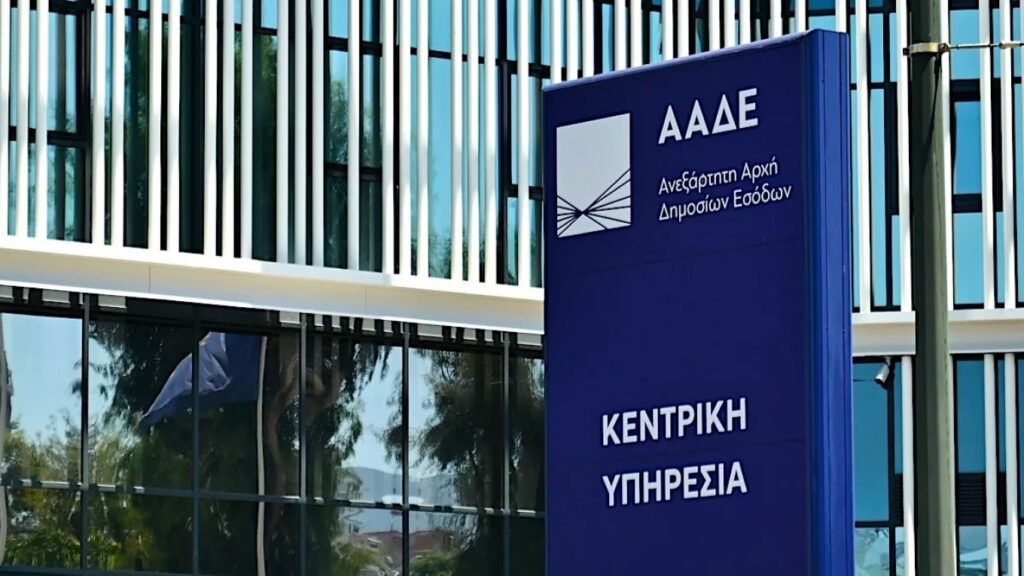
Inspectors from the Financial Transactions Control Forces (DEOS) of Greece’s Independent Authority for Public Revenue (AADE) have dismantled a network of shell companies that allegedly concealed taxable income through fictitious transactions and illegally collected €4.8 million in tax refunds. Fifteen people were arrested in connection with the case, including two bank executives and four accountants.
The DEOS inspectors dismantled an organised network of companies that used fictitious transactions to conceal taxable income and submit fraudulent claims for tax refunds.
The DEOS audits found that those involved had set up a system of systematic tax evasion by exchanging high-value fictitious invoices. Eight companies concealed more than €28 million in amounts subject to tax, including €13 million relating to income tax and €15 million relating to VAT, and claimed and received refunds totalling €4.8 million to which they were not entitled.
Following the DEOS audits, the €28 million has already been formally assessed. The operation has so far led to 15 arrests, including those of two bank executives and four accountants.
How the network operated
The companies appeared to operate across several business sectors. The people behind them often had backgrounds at odds with the roles assigned to them. Unemployed people, local café owners and others with no apparent business activity were listed as managers or sole partners. The companies conducted business on a scale that the financial and professional profiles of their managers could not account for.
How investigators uncovered the network
Data was central to the investigation. Inspectors used a specialised technique to analyse networks and correlations alongside the Jaccard similarity index, a measure of how much two sets of data overlap. This allowed them to map the complex links between companies, individuals, bank accounts and transactions.
The analysis revealed a network of companies with suspicious common features, including overlaps in management, transactions and bank accounts. The same individuals repeatedly appeared as managers or sole partners.
The role of the two bank employees
Those arrested include two managers of branches of the same bank in Western Greece and eastern Attica. They allegedly helped the company managers withdraw hundreds of thousands of euros in fraudulent refunds in cash in exchange for a “fee” of more than €100,000 per withdrawal. DEOS inspectors worked with the bank’s internal audit team to establish exactly how the two branch managers had helped the network.
Accountants filed tax returns through a café
Accountants are also alleged to have been involved, and four have already been arrested. The network used a café in central Athens that provided the technical support needed to file the tax returns.
Ownership of the café was transferred to a front man for the network as soon as the tax returns had been filed.
Alongside the 15 arrests, investigators searched business premises and homes. They seized documents, electronic storage devices and other evidence. The investigation continues as inspectors examine the findings and seek to identify any other individuals or companies involved.
Ask me anything
Explore related questions




