





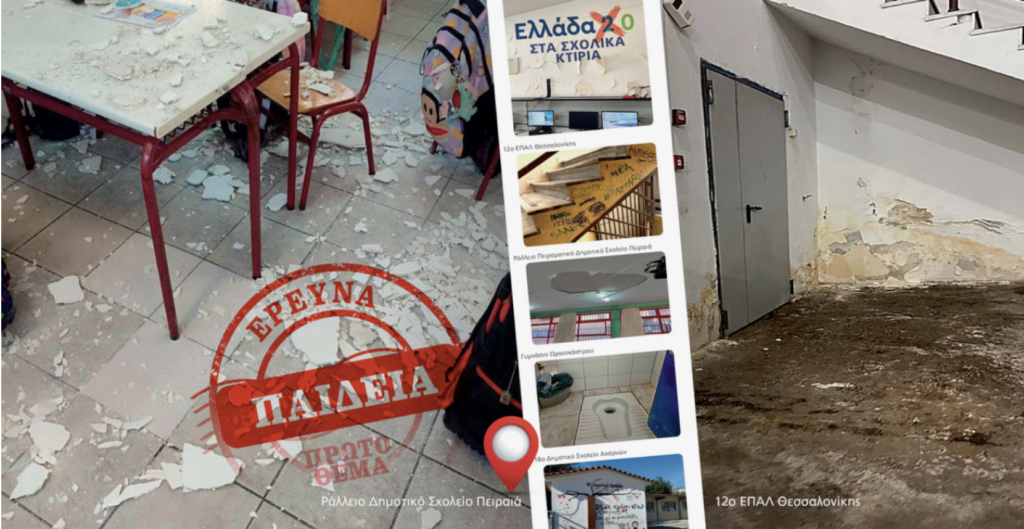
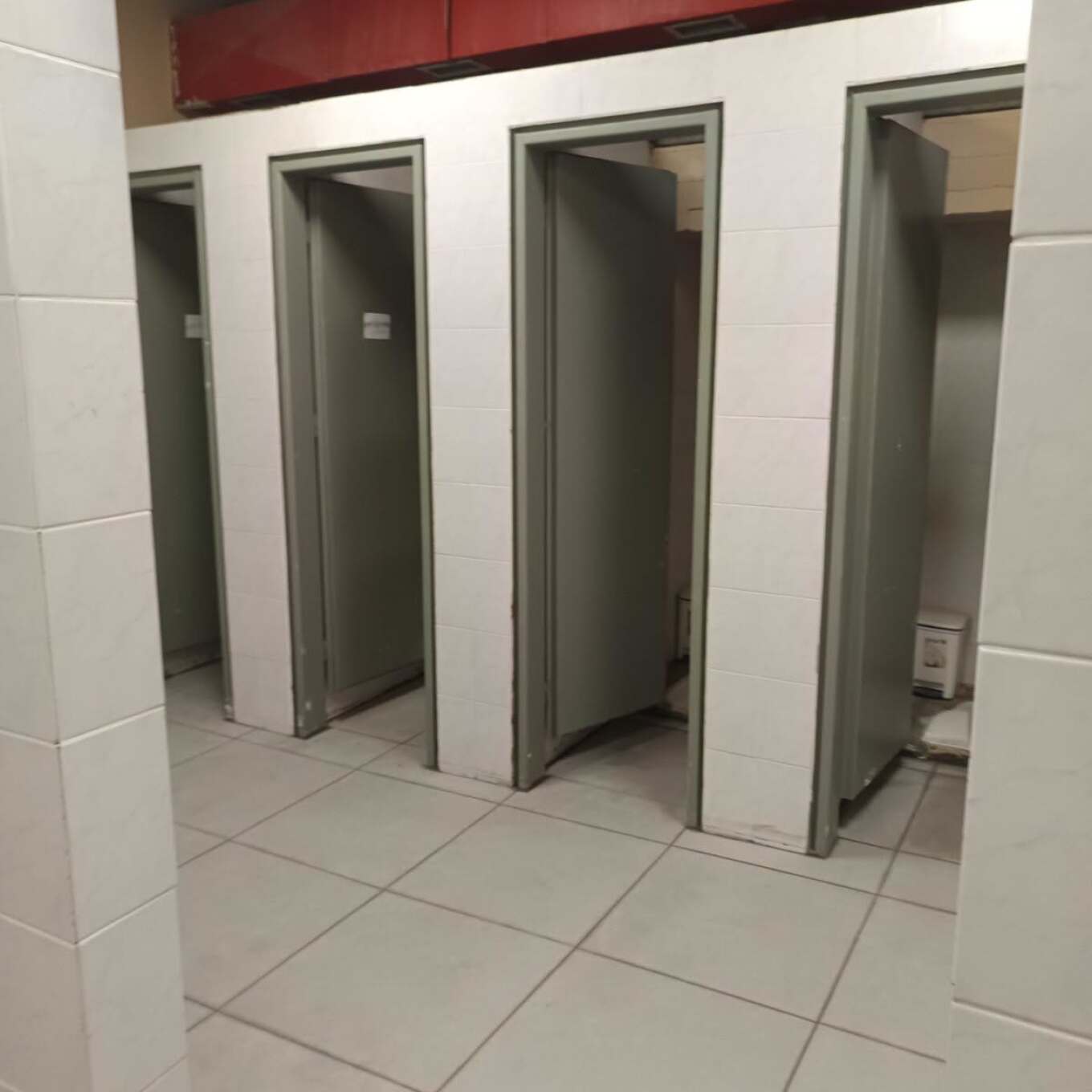
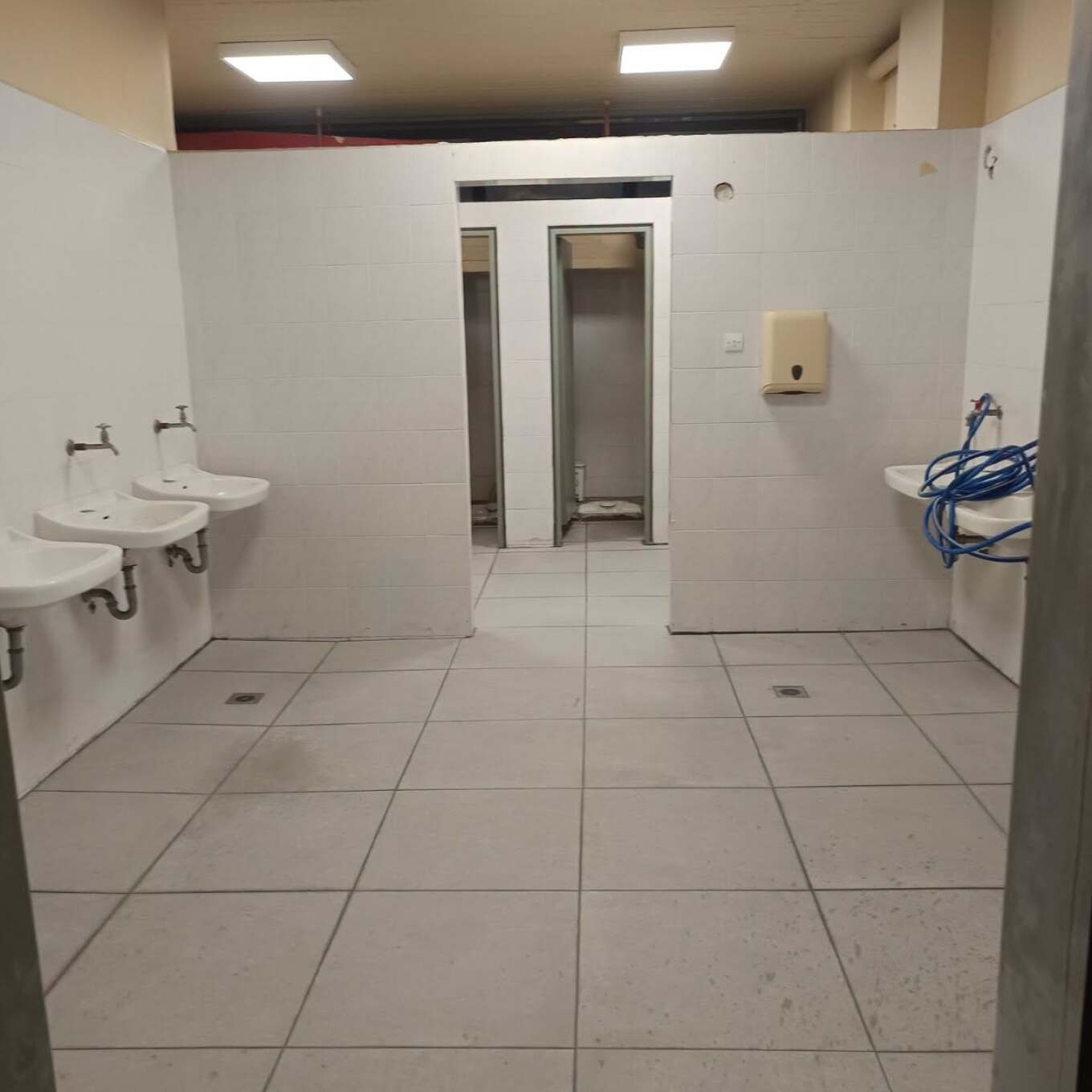
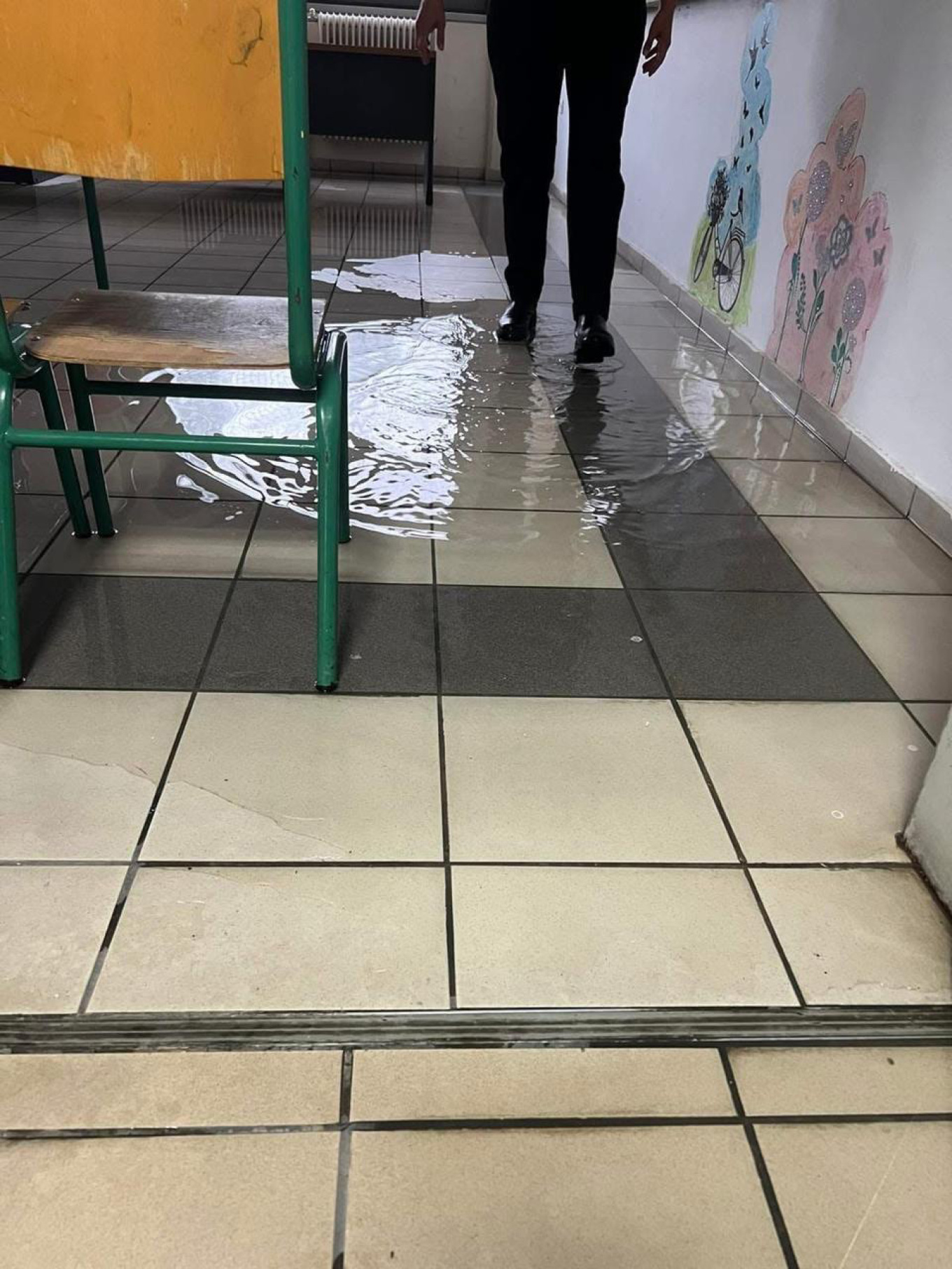
The 5th Junior High School of Ilioupoli is among the schools equipped with interactive teaching boards, for which the Ministry of Education allocated more than €148 million. Until just a few days ago, however, what it lacked was decent toilet facilities for its pupils. It took the publication of photographs and videos exposing the shameful condition of its toilets for repair work to be carried out.
This is far from an isolated case. Nearly eight in ten school buildings across Greece have problems with their facilities and infrastructure: broken toilets, falling plaster, classrooms that flood whenever it rains, lessons held in containers and schools that have been established and are operating but have never acquired a proper building of their own.
In Greece, with its high growth rates, €36 billion from the Recovery Fund, a gross domestic product (GDP) of €262 billion and €9.8 billion allocated through the Public Investment Programme, schools remain an open wound. While annual defence procurement spending has soared to almost €6 billion this year, up from approximately €1 billion in 2018, as the country seeks to strengthen its defences, the enormous and pressing needs of school buildings only came into focus two years ago.
Through the Marietta Giannakou programme, just 669 schools out of a total of 12,690 have been renovated – slightly more than 5%.
The Marietta Giannakou programme is funded by Greece’s four systemic banks. In January, the list of the next 500 schools due to undergo renovation assessments is expected to be announced.
By the end of the programme in 2028, with a total budget of €400 million, almost 2,000 schools are expected to have been renovated, representing approximately 15% of the total. At this rate, renovating every school will take at least 25 years – including those that do not currently have major needs but will inevitably develop them as time goes by.
It is estimated that renovating all school buildings requiring intervention would cost approximately €2.5 billion.
Final responsibility for selecting schools for the Marietta Giannakou programme rests with the Ministry of Education, in agreement with local authorities. The process is overseen by Ktirakes Ypodomes (KTYPO) S.A., the public body responsible for the construction and equipment of public buildings, which is supervised by the Ministry of Infrastructure.
Public spending on education, however, remains below the European Union average. According to the latest available figures, it stood at 3.8% of GDP in 2023, compared with the EU average of 4.7%. As a proportion of total public expenditure, it accounted for approximately 7.2%, “significantly lower than the European average of 9.5%”, according to the Ministry of Education’s Strategic Plan for Primary and Secondary Education 2025–2029.
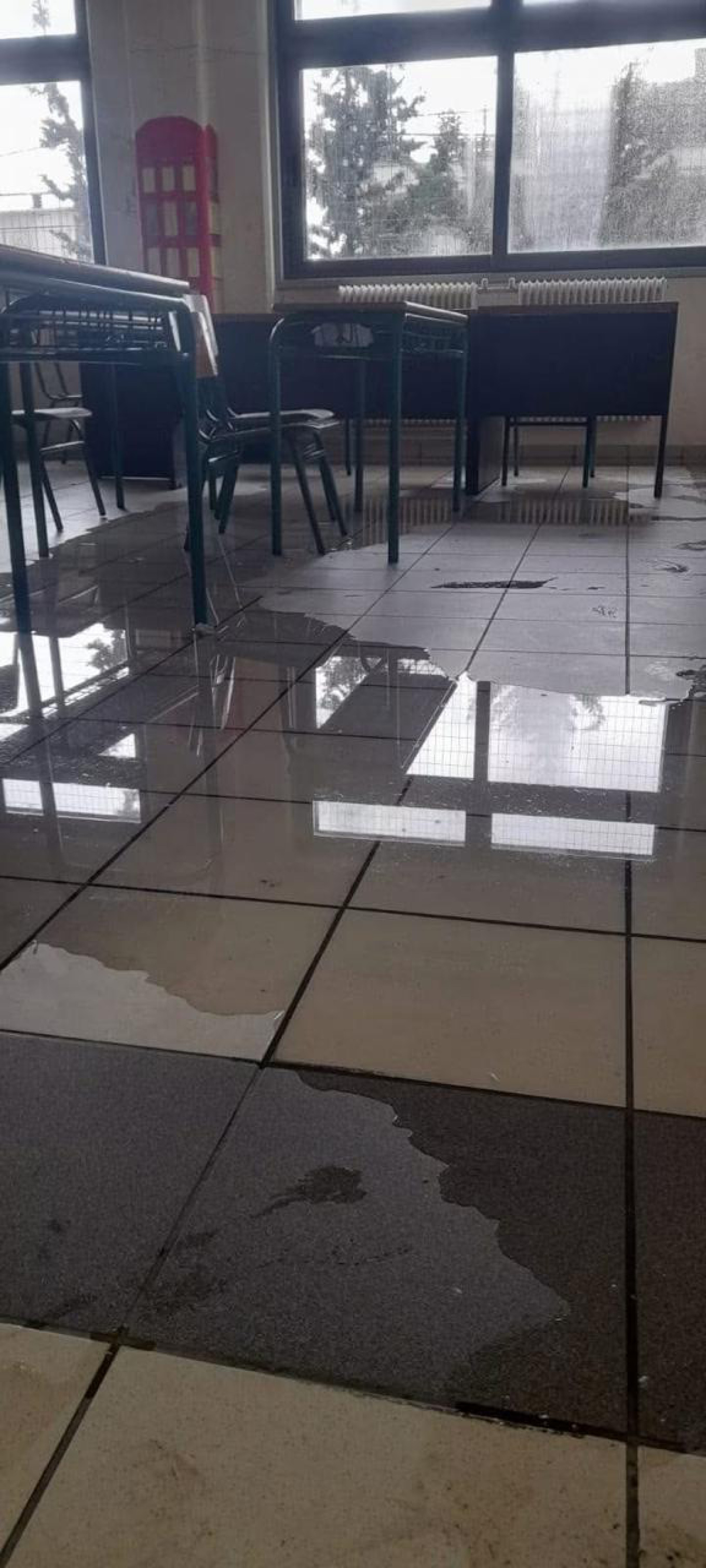
Rainwater pours in through the windows at the 23rd Primary School of Acharnes.
Responsibility for maintaining school buildings and addressing problems with their infrastructure lies with local authorities. However, responsibility for planning and meeting educational needs rests, by definition, with the Ministry of Education, although its Strategic Plan limits its role to “setting specifications for facilities in terms of their type, number and size, as reflected in each building programme”.
Send us your experiences and reports of problems with school facilities for publication at info@protothema.gr.
This is where the buck-passing begins. The Ministry of Education points to local authorities when asked about the appalling condition of most schools across the country, as happened recently with the 5th Junior High School of Ilioupoli.
Mayors, in turn, cite inadequate funding – a situation acknowledged by the government itself. Just days ago, at the conference of the Central Union of Municipalities of Greece (KEDE), the Prime Minister announced that state funding for the maintenance of schools would be doubled.
Even this, however, is considered insufficient. In one large municipality in the Attica region, for example, where the school population approaches 13,000, funding for school building maintenance amounts to approximately €240,000, while annual requirements exceed €1 million.
“Chronic underfunding has a significant impact on the condition of school infrastructure. Many schools operate in old buildings without adequate maintenance, with worn-out window frames, insufficient insulation and inadequate heating or air-conditioning systems. There is also a lack of appropriate adaptations for pupils with disabilities, such as ramps, lifts and suitable toilets,” the Ministry of Education acknowledges in its 2025–2029 Strategic Plan.
It goes on to note that “in some cases, dangerous deterioration can be observed, such as plaster coming away from walls and ceilings, while prefabricated classrooms that do not meet modern safety and comfort standards are frequently used.
“Despite low levels of funding, combined with reduced investment in fixed capital, which limit the education system’s ability to provide a safe, modern and high-quality learning environment, efforts are being made to upgrade school infrastructure.”
These carefully worded statements take on a nightmarish meaning in the everyday lives of pupils and teachers.
One example is the 23rd Primary School of Acharnes. During the October rains, desks had to be hurriedly moved around classrooms as water poured inside through poorly sealed windows. The water was cleared away and the gaps in the windows were sealed with silicone – a temporary fix that may last for one or two more downpours before the same situation returns.
At the special primary school and kindergarten in Acharnes, however, approximately 75 pupils were forced to leave the school’s celebration marking the anniversary of the Polytechnic uprising, and the school remained closed until Friday because the smell of dead mice that had nested inside the building was unbearable.
People and rodents had been living alongside one another for at least a month, with all the risks that entails – particularly for children with health problems.
“Rodents had made nests inside the school premises after entering from nearby plots of land that had not been cleared,” says Apostolos Papanagiannopoulos, president of the Socrates Primary Education Teachers’ Association.
“Municipal workers came and put down traps, but no systematic rodent extermination was carried out. Mice died inside plasterboard walls and in pipes, wherever they happened to be. The result was that the smell of decay made it impossible to remain inside the school. The authorities had been aware of the situation since the beginning of October.”
He says conditions in many schools are so bad that “even shame itself would be ashamed”, adding that the buildings are not merely poorly maintained but dangerous.
“Patches are made here and there, and the problem in the municipality of Acharnes is enormous. Do not look only at the condition of the toilets; often, there is not even any toilet paper,” he adds.
As for the mice, the claim that they were in the roof rather than the classrooms offers little comfort to anyone.
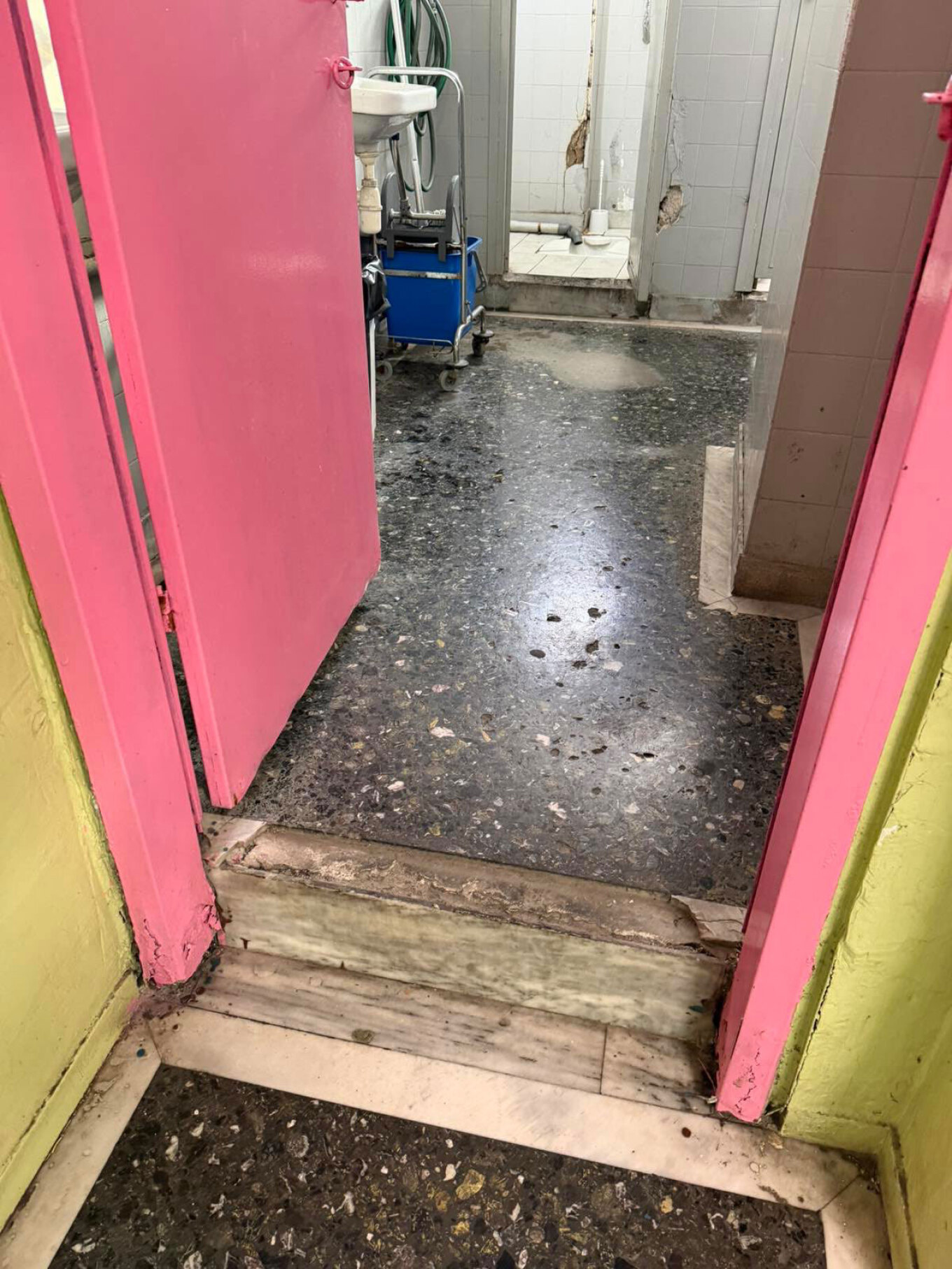
Toilets in school buildings – most of which were constructed before 1985 – are a particularly serious problem. Most still have the so-called squat toilets, which are not maintained, while the signs of decades of wear and tear are everywhere: broken tiles, rusty pipes and drains giving off foul smells.
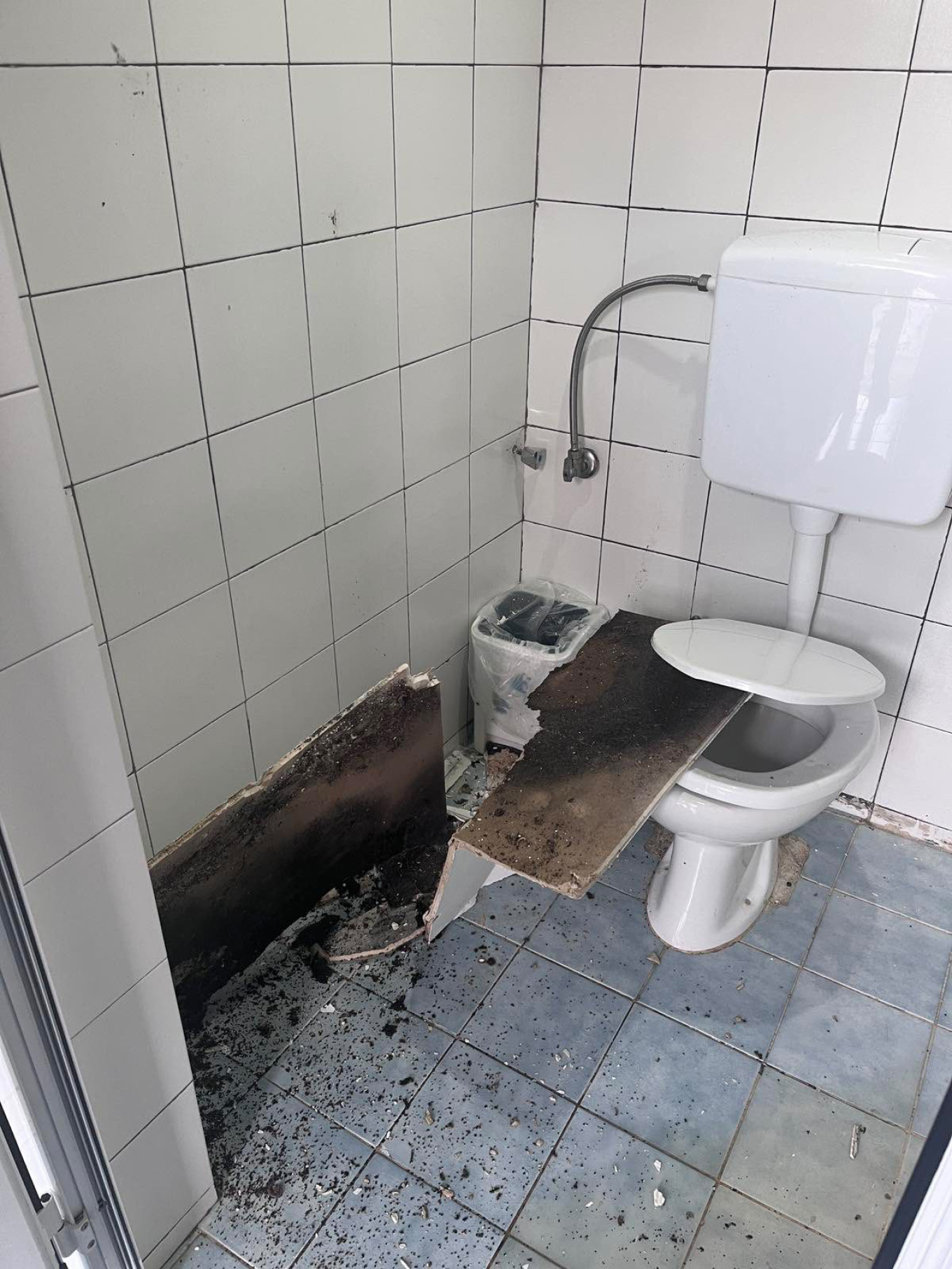
A disgraceful toilet at a junior high school in Oreokastro, Thessaloniki
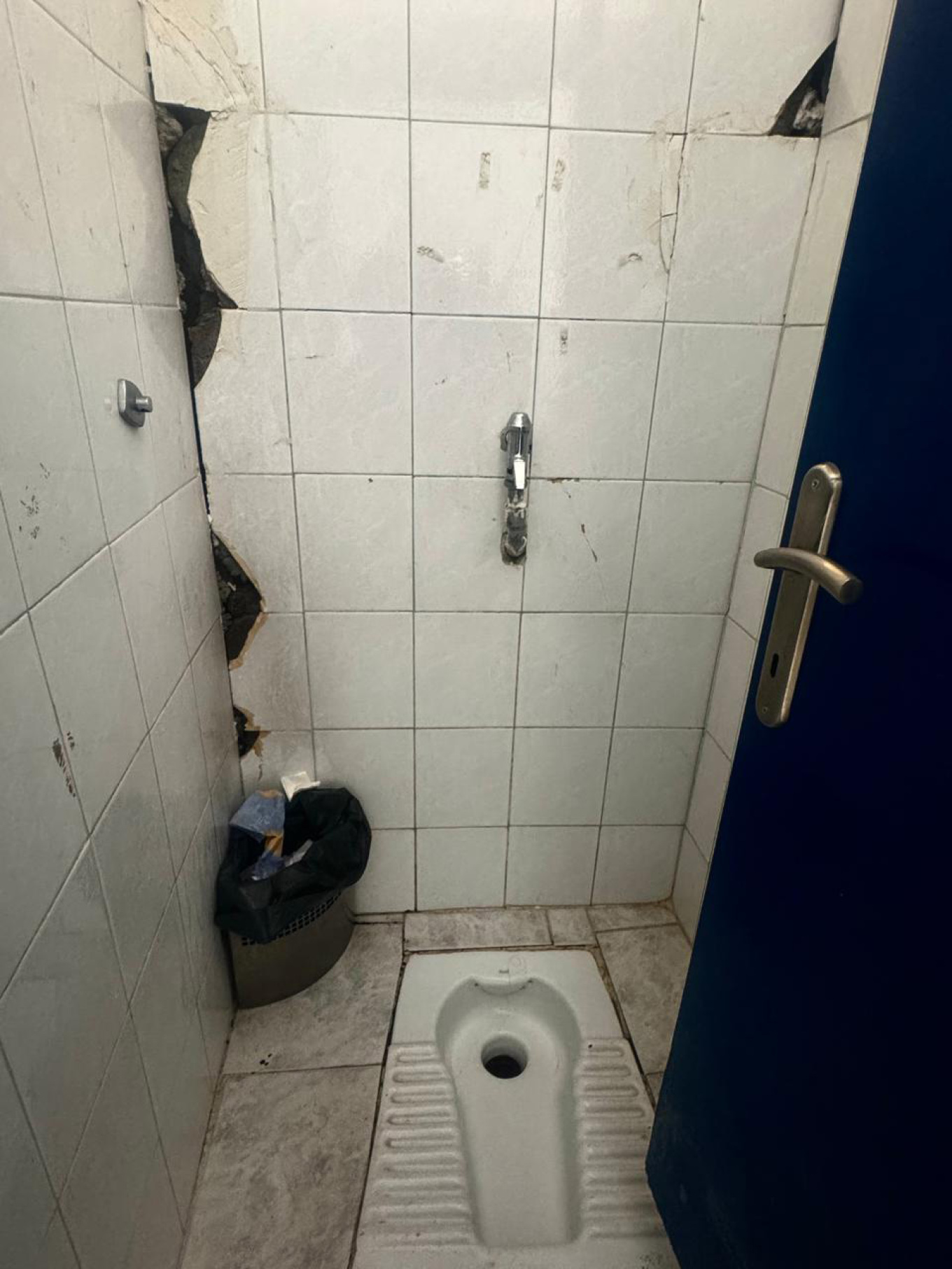
A school toilet in Greece in 2026: at the Vocational Upper Secondary School of Alexandroupoli
This is the kind of environment pupils encounter at the Vocational Upper Secondary School of Alexandroupoli and the 12th Vocational Upper Secondary School of Thessaloniki.
The latter, however, has two further unusual features: it has no school playground whatsoever, while its gymnasium is located in a basement.
See photographs from the 12th Vocational Upper Secondary School of Thessaloniki:
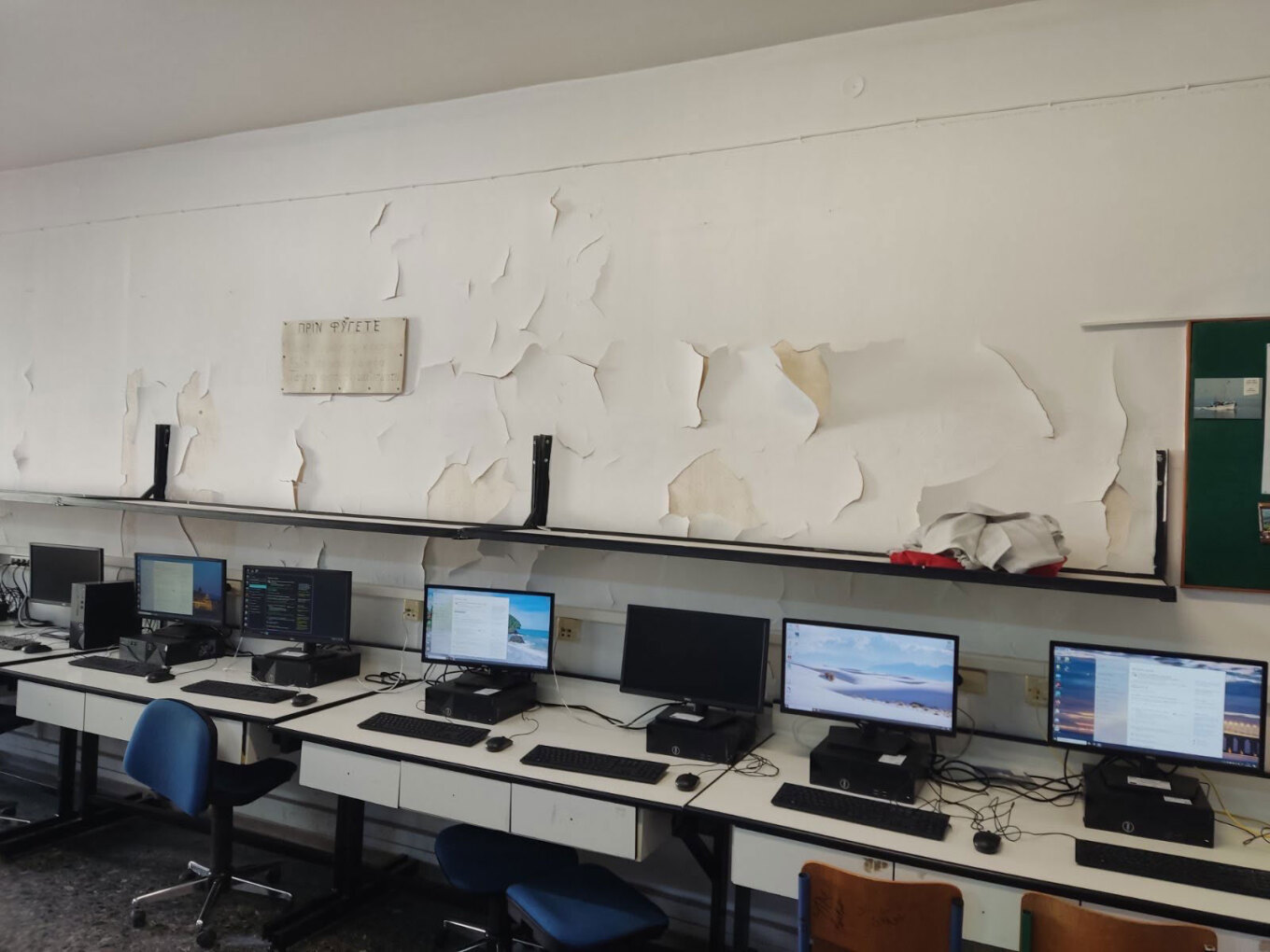
The computer room: Technology meets damp and peeling paint on the walls.
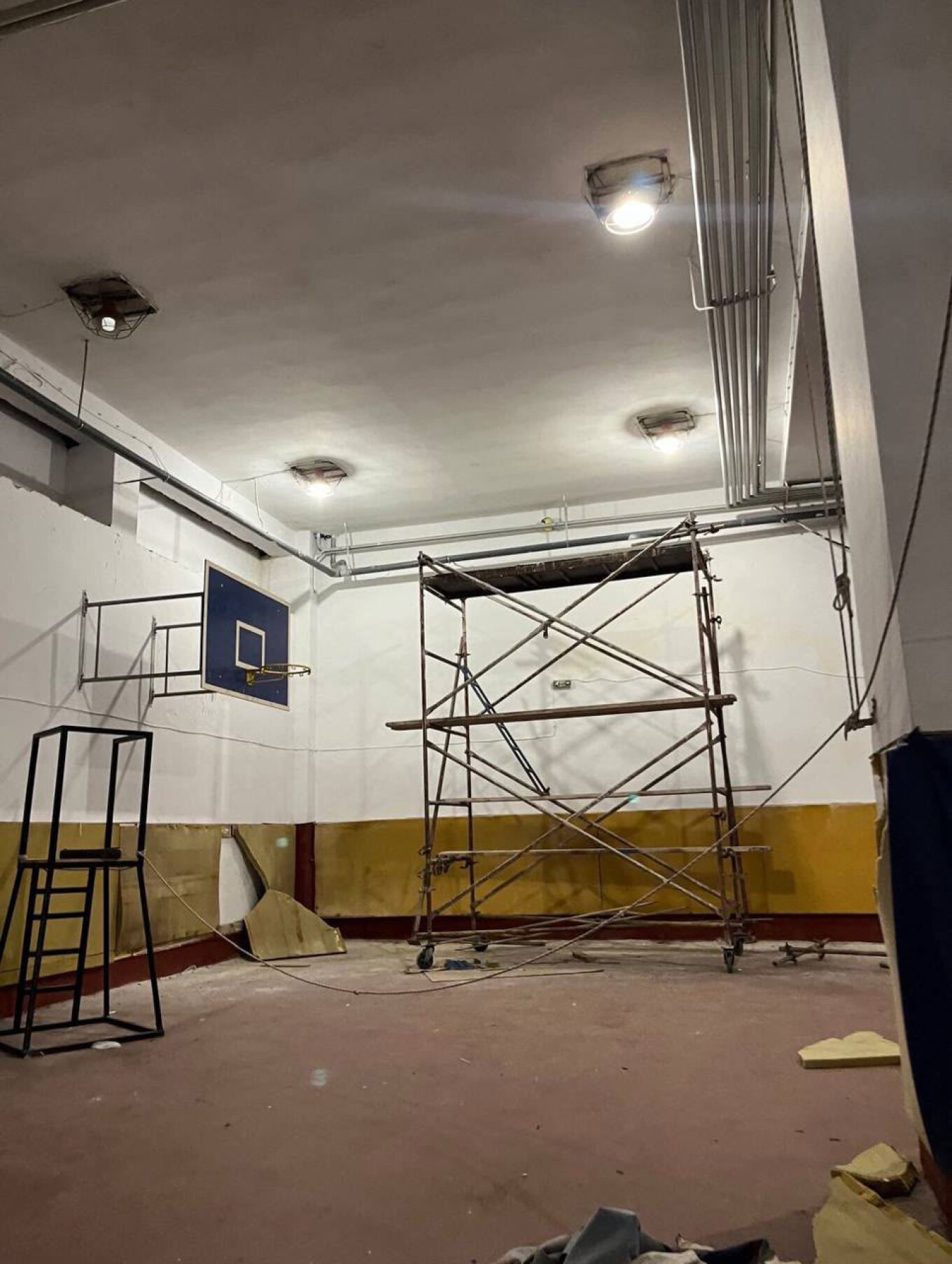
The gymnasium in the basement of the 12th Vocational Upper Secondary School.
Entrance to the toilets – these, too, are considered sanitary facilities.
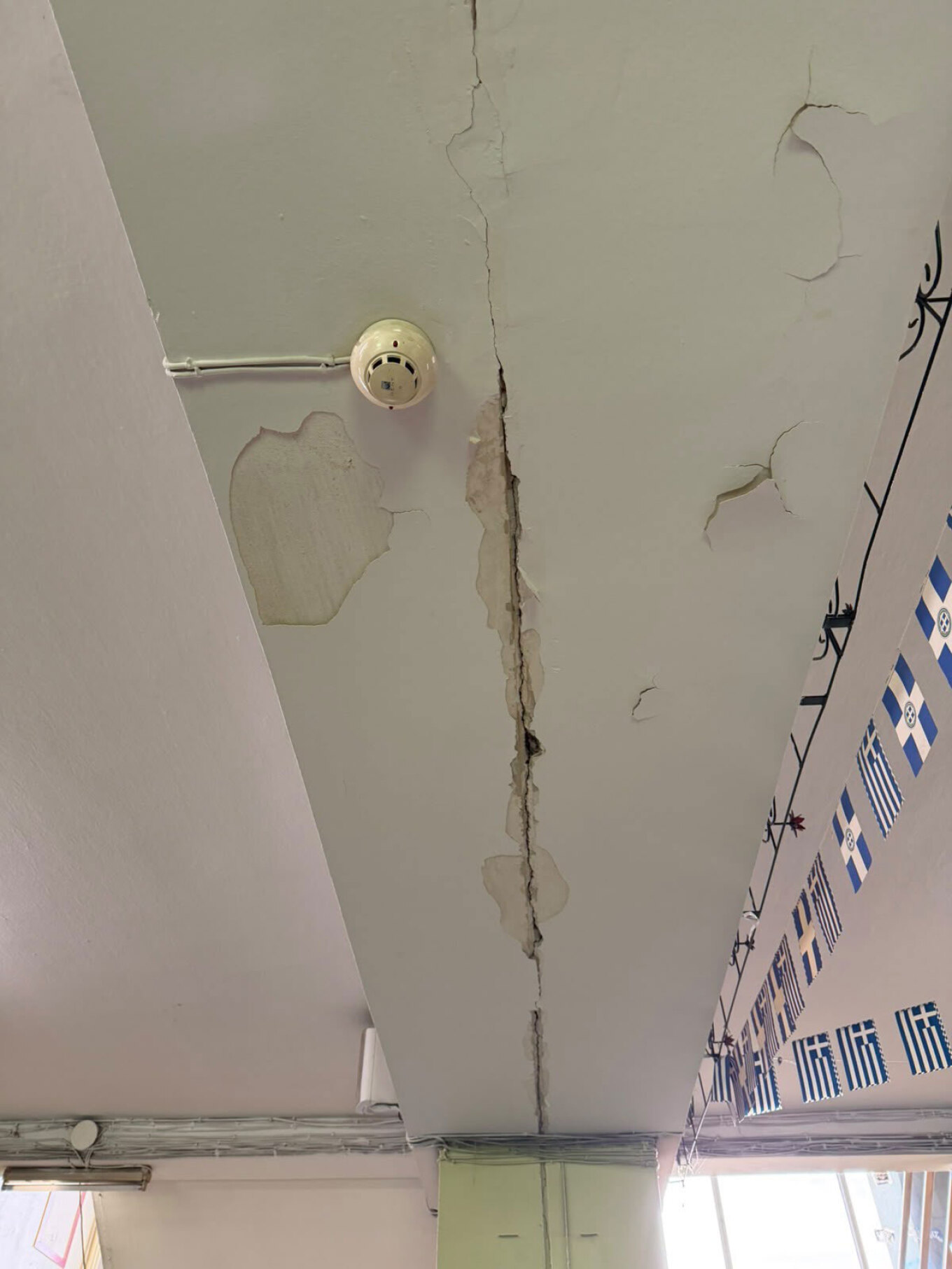
Ceilings leaking inside the school building.
At the 12th Vocational Upper Secondary School of Thessaloniki, there is no playground, while the gymnasium is located in the basement.
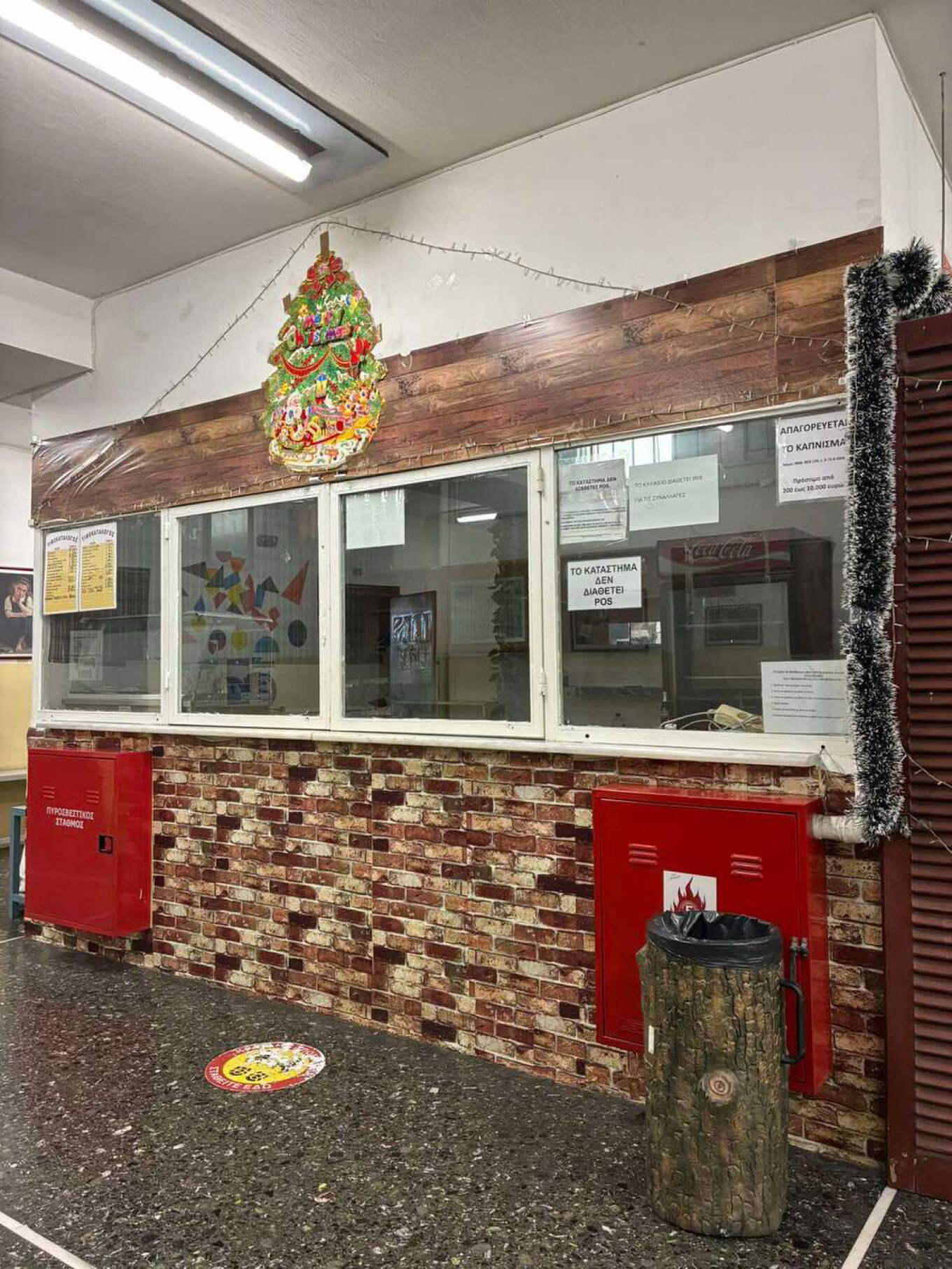
The school has no playground, only a few benches in the outdoor area.
It was sheer luck that no pupils or teachers were injured at the Ralleia Experimental Primary Schools in Piraeus when plaster fell inside a classroom a few days ago.
Such incidents are almost a daily occurrence. The children at the 6th Kindergarten of Kalamaria were also fortunate: plaster fell directly onto their desks, but thankfully this happened when the kindergarten was not operating. Otherwise, the building material would have landed on the children’s heads. The school was closed for three days.
At the 6th Kindergarten of Kalamaria, plaster fell while the school was fortunately closed.
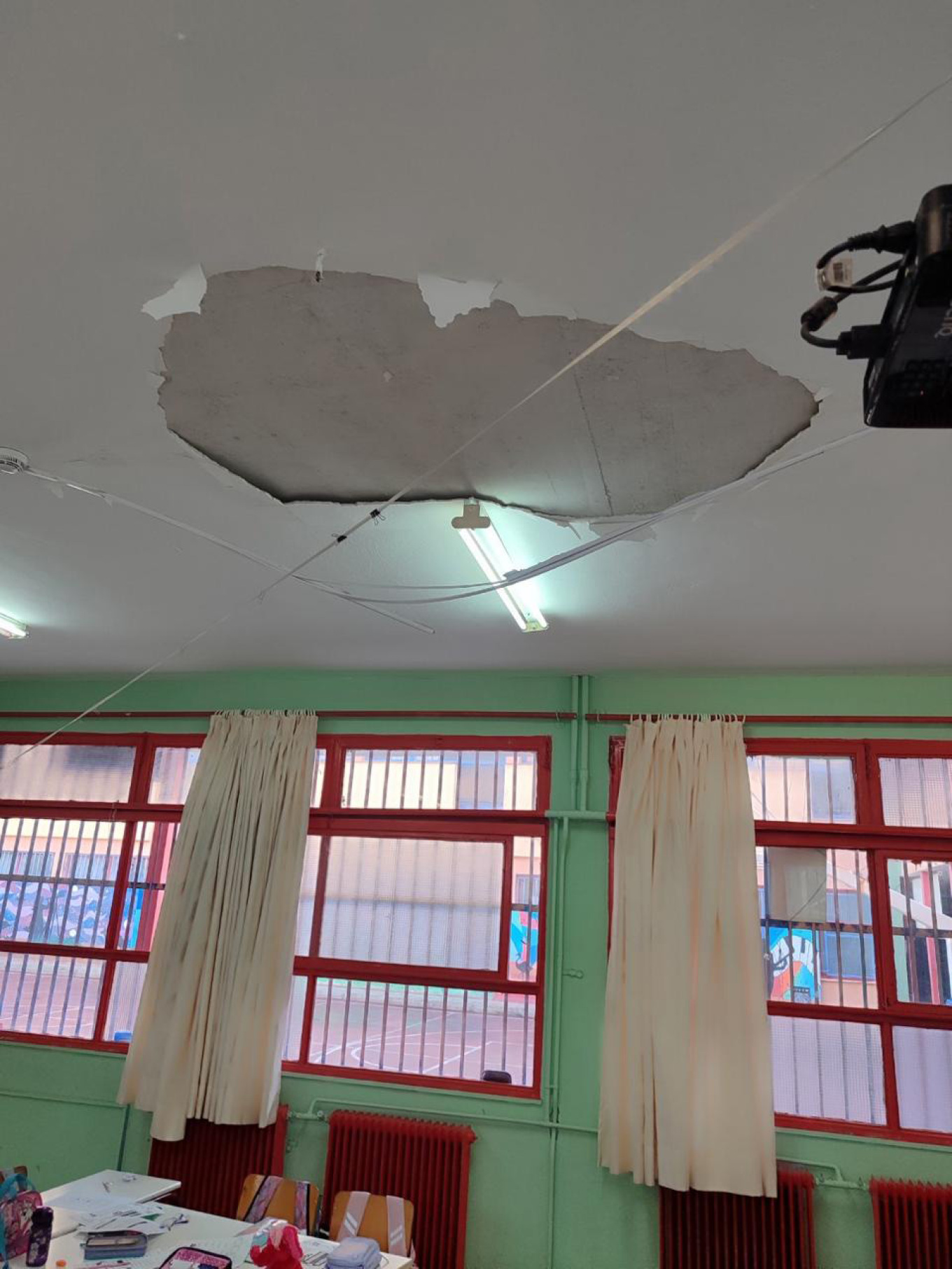
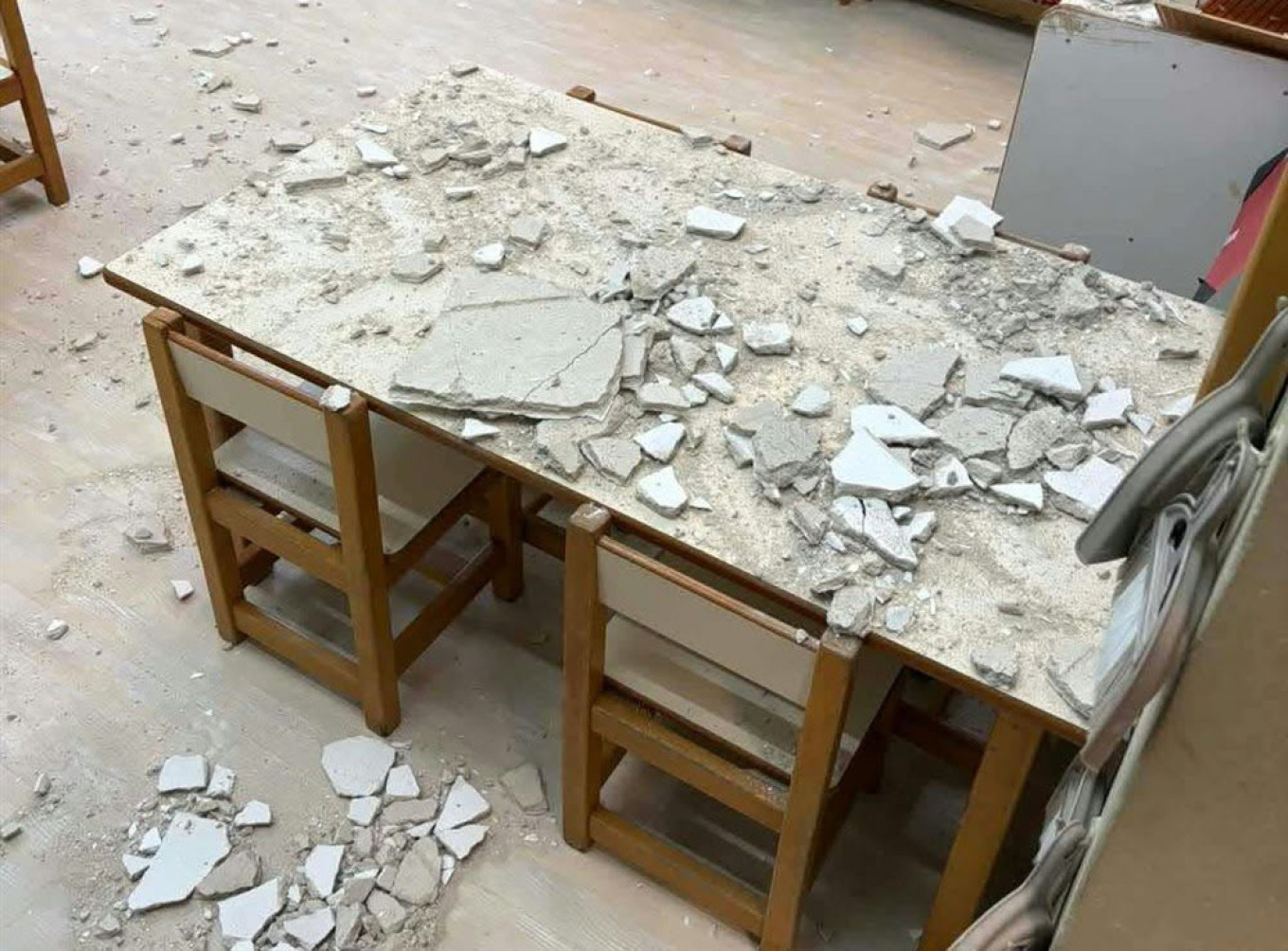
Plaster also fell in the canteen area of the 4th General Lyceum of Thessaloniki last Friday.
It should be noted, however, that when such incidents began to come to light, the response from the Ministry of Education’s services was to refer teachers who had exposed these disgraceful conditions to disciplinary proceedings.
A telling example is the 1st Primary School of Porto Rafti, where all 22 teachers face disciplinary action after photographs showing plaster falling inside a classroom were made public.
Parents, too, are often instructed not to take any photographs of problematic school facilities.
In the case of the 5th Junior High School of Ilioupoli, repairs only began after photographs exposing the appalling state of its facilities were published.
As the school’s Parents’ Association vice-president, Stamatis Varsakis, told THEMA, the work has still not been completed, as problems remain, although the municipality has promised that repairs will continue.
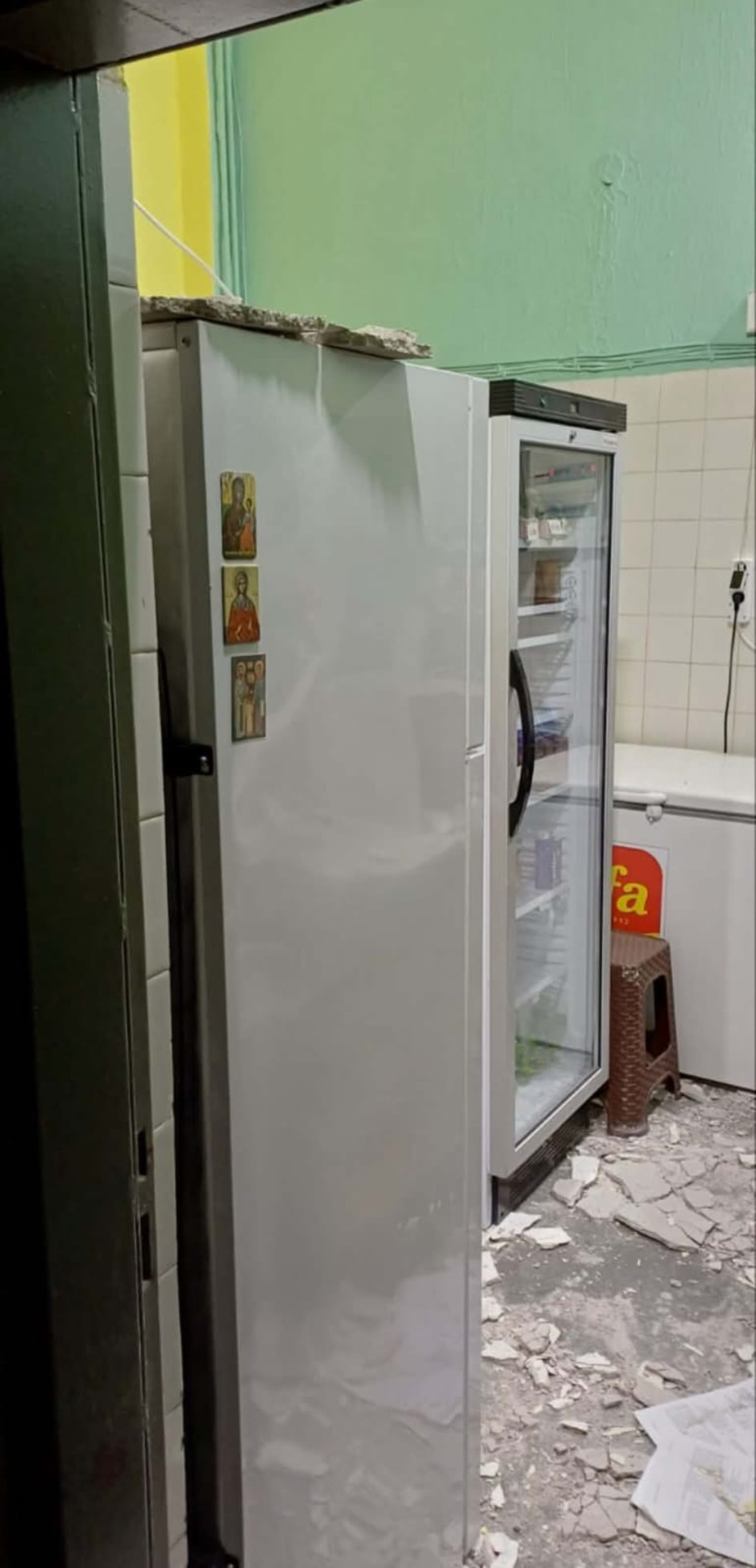
Plaster fallen in the canteen area of the 4th General Lyceum of Thessaloniki.
Run-down school buildings are only one side of the problem. In some areas, entire generations of pupils have never attended lessons in a conventional school building, having spent their school years in containers instead.
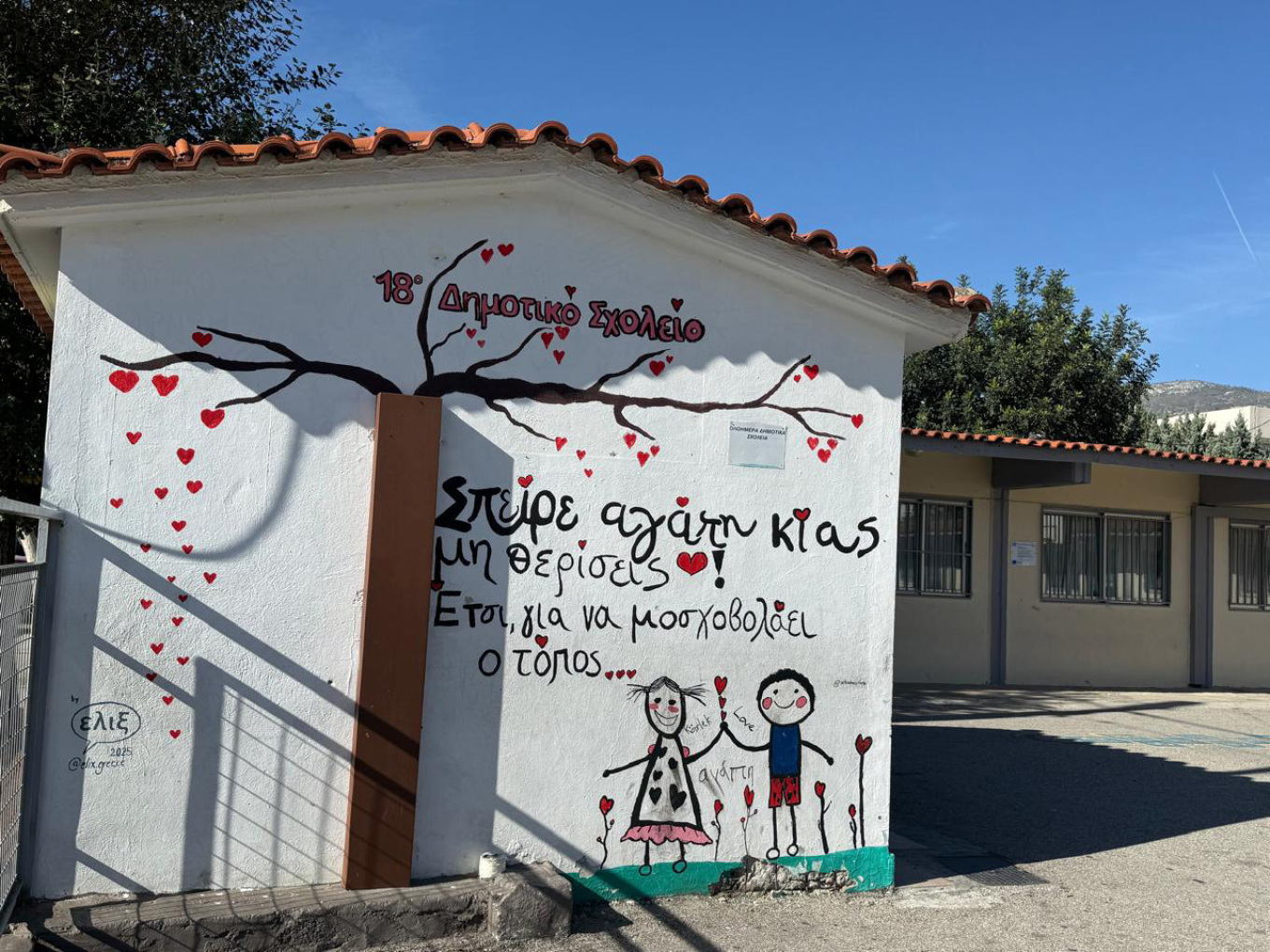
A striking example is the 18th Primary School of Acharnes, which has been operating in prefabricated classrooms for almost three decades.
“The school has never had a purpose-built building. From the day it was established, it has operated in a heavy-duty prefabricated classroom. As the number of pupils increased, additional portable classrooms were simply installed on the neighbouring plot. It is one of what I call ‘seasonal schools’,” says teacher Despina Chouta.
“Ideally suited to autumn and spring, when it is not too cold, when it does not rain and when it does not snow. There is not even a covered area where children can go when it rains. We are constantly worried that they might slip and fall. And, of course, we are talking about schools that are underfunded and cannot even meet basic needs.”
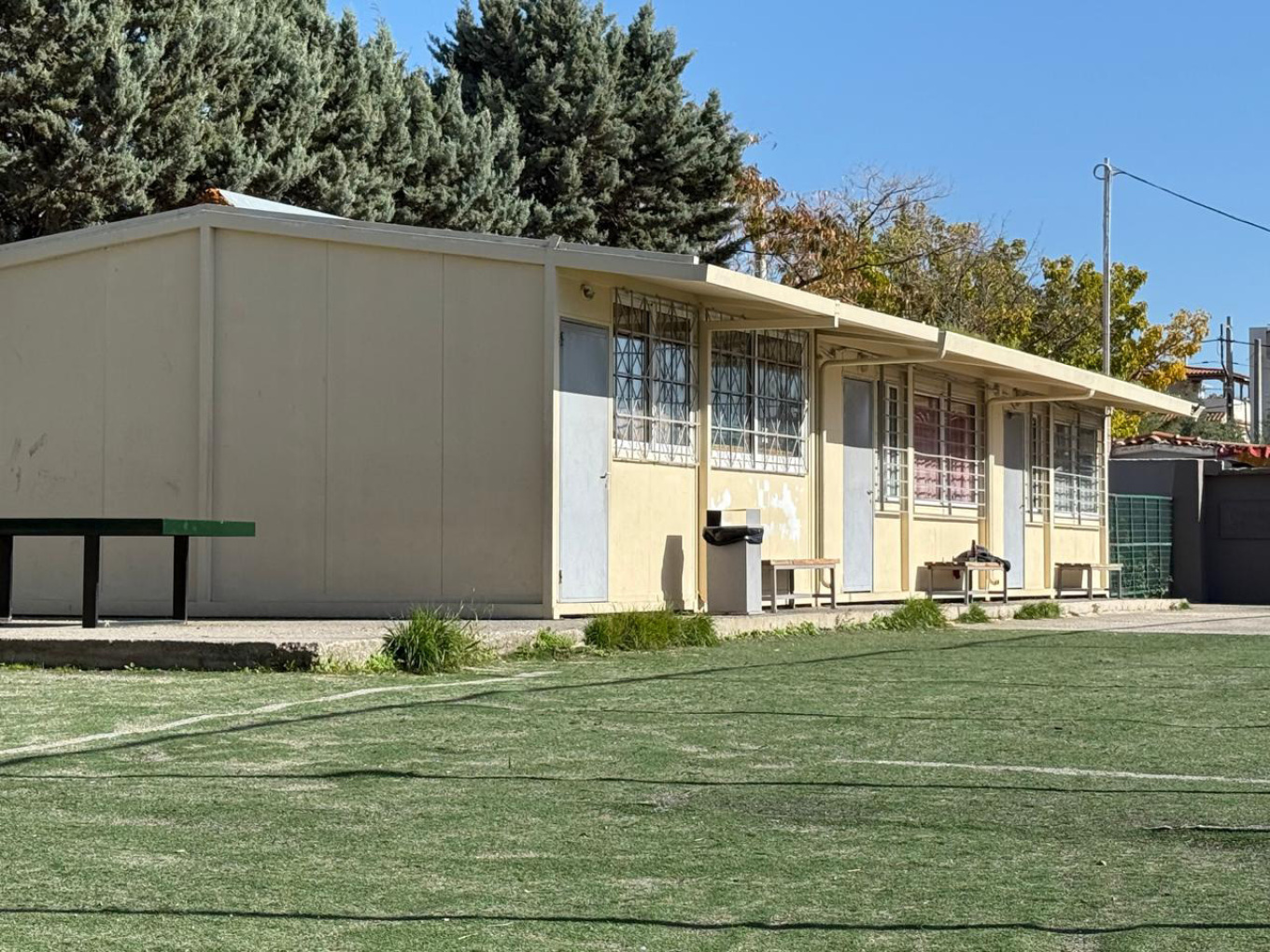
The 18th Primary School of Acharnes has been operating in portable classrooms for almost three decades and has never acquired a purpose-built school building. The photograph below shows the prefabricated building housing the toilets, where water leaks through the roof.
According to Violeta Galanopoulou, a member of the board of the Federation of Greek Primary School Teachers (DOE), who herself works at a school in central Athens, approximately 12% of school classrooms are housed in containers.
The problem became more pronounced when compulsory two-year pre-school education was introduced by law. However, although the measure addresses modern educational and social needs, it was implemented using infrastructure that was already inadequate.
As a result, school playgrounds filled up with containers housing four- and five-year-old children. To use the toilets, they have to cross the playground and enter the primary school buildings accompanied by their kindergarten teacher.
But containers are not the only solution being used. There is also the option of the pilotis – the open ground-floor area of a building.
The 21st Kindergarten of Acharnes, as Apostolos Papanagiannopoulos explained to THEMA, is effectively housed in the ground-floor pilotis of a building, which has been enclosed with glass panels.
The 21st Kindergarten of Acharnes: effectively housed in a building’s ground-floor pilotis, enclosed with glass panels.
“Eight in ten school buildings need work,” says Nikos Vourdoubas, president of the Federation of Greek Primary School Teachers, citing the findings of a nationwide survey conducted by the federation a few months ago.
The picture it revealed is particularly troubling: buildings constructed decades ago, with inadequate accessibility facilities and serious fire-safety deficiencies.
According to the federation’s survey, only 18% of public school buildings are considered satisfactory and do not require intervention. Some 40% need partial upgrades, while one in five schools requires large-scale renovation as a matter of urgency. One in ten school buildings is considered unsuitable for continued operation.
Accessibility for pupils with mobility impairments and other disabilities is another major issue emerging from the survey. Most schools do not even have toilets for people with disabilities, while classrooms on upper floors are inaccessible in one-third of schools.
Teachers, meanwhile, listen with scepticism to announcements about the digital school, given that in many cases they are forced to ask parents’ associations – or parents directly – to provide supplies such as photocopier paper.
The funds allocated are insufficient to purchase basic consumables and, in some cases, even cleaning products.
According to the Minister of Education’s remarks at the KEDE conference, however, 36,264 interactive whiteboards have already been installed in schools, with a further 7,900 planned for the 2026–2027 school year.
At the same time, plans include upgrading science laboratories in 1,500 junior high schools with €20 million in funding, providing sports equipment to 4,550 schools and making use of 117,121 robotics kits that have already been delivered…
Ask me anything
Explore related questions




