





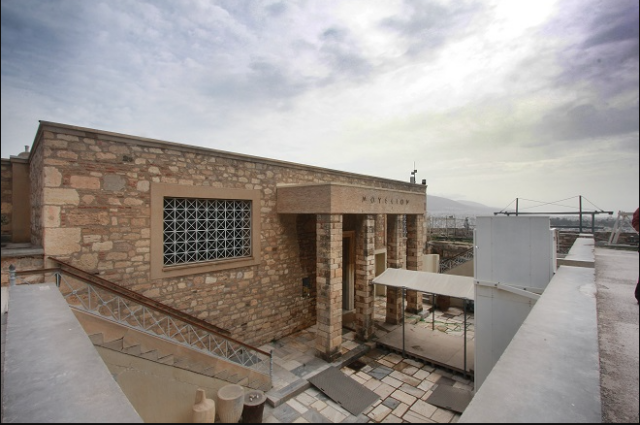
Prime Minister Kyriakos Mitsotakis is attending the inauguration ceremony of the Old Acropolis Museum, which is taking place at this hour. The historic building was the first in the modern Greek state to be purpose-built as a museum. Standing discreetly and almost unobtrusively to the south-east of the Parthenon, it had remained closed since 2008, when its priceless exhibits were transferred to the neighbouring New Acropolis Museum. After almost 19 years, it is reopening, significantly upgraded and ready to play a meaningful role in strengthening the dialogue between the past and the present.
The Old Museum had been closed since July 2007, following the completion of the demanding task of dismantling, packing and transferring its priceless exhibits. From then until a few years ago, when renovation works began, the building’s premises were used to store antiquities unearthed during excavations in the city of Athens.
In his speech, Attica Regional Governor Nikos Hardalias stressed that “a historic building on the sacred rock is acquiring new functions, supported by modern infrastructure. It was the first building constructed specifically for use as a museum. Today, it is being given a new outlook, combining its historic character with the contemporary needs of cultural promotion”.
The Old Museum is not simply being restored as a historic building, but is acquiring new functions that will enrich the experience of visiting the Acropolis, Mr Hardalias added. “Culture is a key component of our development policy,” the Attica regional governor said.
The four exhibitions
The aim of reopening the Old Acropolis Museum is not simply to give a new use to an iconic building on the Acropolis hill, but to establish a new exhibition programme that draws on the museum’s historic identity and highlights its potential to host different, complementary approaches to cultural heritage.
With this in mind, four separate exhibitions have been designed for the start of its new era. They are not merely parallel displays, but form a programme that connects archaeological finds with historical narratives, monuments with digital representations, and the experience of memory with contemporary art.
The first exhibition is entitled Athens: City and Idea and features impressive archaeological finds from Athens, most of which are being displayed for the first time. Through the exhibition, visitors will be able to follow the development of Athens, its natural and built environment, its institutions and religious practices, and its social and intellectual life.
The second exhibition, which will be permanent, features stone architectural elements and inscriptions originating from the Acropolis, shedding light on aspects of the sanctuary’s architectural history, as well as the public and private life of ancient Athens. Highlights include public documents, decrees issued by the Council and the Assembly, treaties with other cities, inscriptions relating to financial and legal matters, lists of officials, dedications by office-holders, honorary bases, as well as private inscriptions, among other items.
Technological innovation takes centre stage in the third exhibition, entitled Parthenon Alive, which was created with the contribution of the Technical University of Crete and uses modern technologies to explore and interpret the Parthenon.
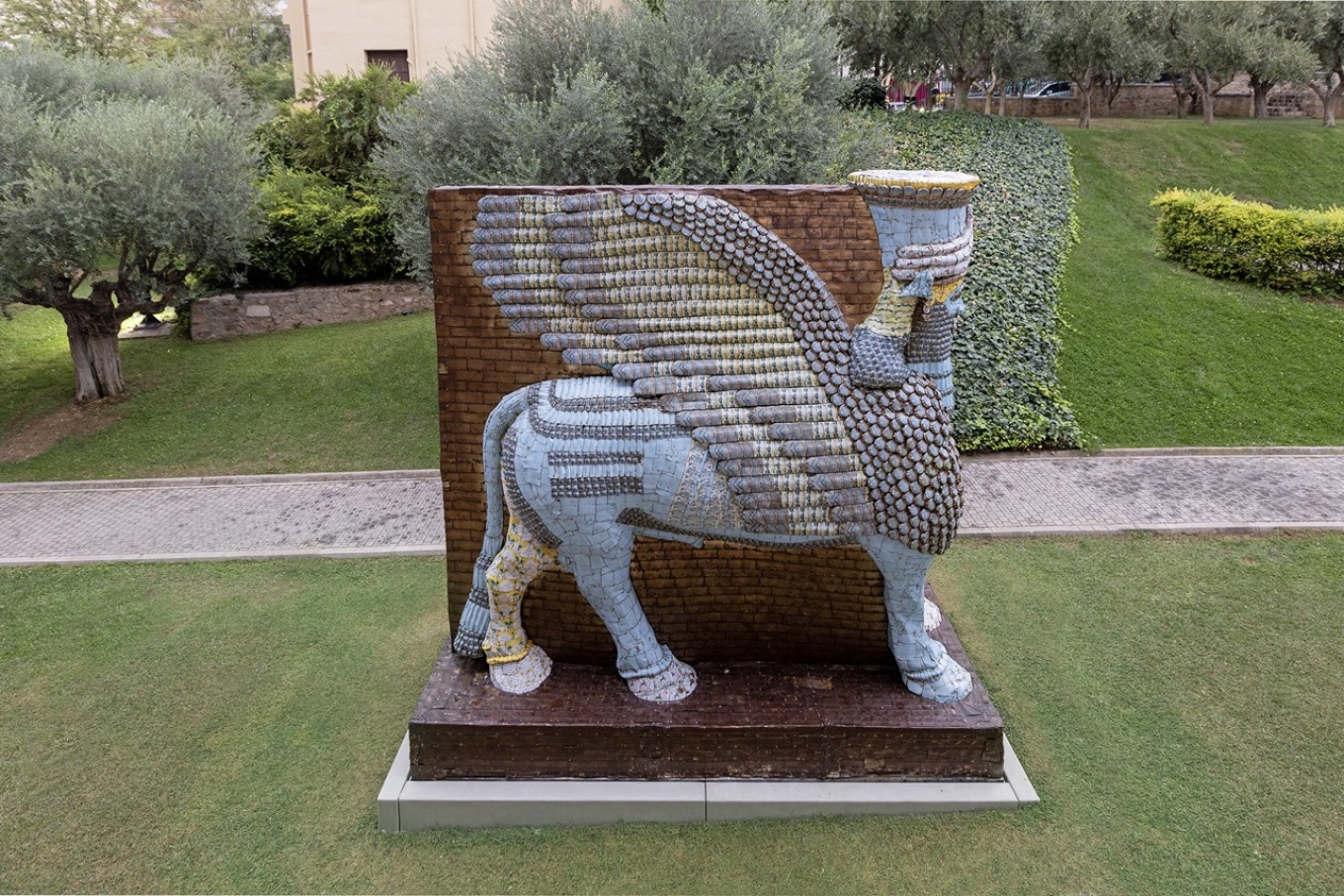
The work Lamassu of Nineveh, displayed in the outdoor area of the Acropolis Museum, is the second part of the trilogy “Ancient Civilisations and Contemporary Art” by American-Iraqi artist Michael Rakowitz.
The initial exhibition programme concludes with a contemporary art exhibition organised in collaboration with the NEON organisation, founded by Dimitris Daskalopoulos. It presents the final part of American-Iraqi artist Michael Rakowitz’s trilogy, Ancient Civilisations and Contemporary Art, which introduces a different way of interpreting history through contemporary artistic creation.
The exhibition’s central themes are stories of diaspora and the ways in which objects from different historical, geographical and archaeological contexts shape narratives that stem not only from geographical entities but also from historical ones. At its heart are the ancient mudbrick, or brick, and clay, as building materials used to construct not only structures but also stories and memories.
The exhibition spans three separate rooms in the museum and includes audiovisual material, a large-scale sculpture made of fired bricks, and a model of the Acropolis rock dating from the fourth millennium BC. The model will be surrounded by written testimonies from people from all corners of the world who were forced to leave their homelands and found themselves in Greece.
Ask me anything
Explore related questions




