





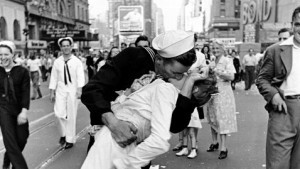
Japan marked the 70th anniversary of the end of World War II (and its unconditional surrender) on Saturday, Prime Minister Shinzo Abe avoiding a controversial visit to the Yasukuni shrine, which honors several war criminals along with the multitudes of other fallen Japanese.
According to AP, Abe instead prayed and laid flowers at a national cemetery for unnamed fallen soldiers.
That ceremony started with a moment of silence at noon, marking the late Emperor Hirohito’s radio announcement of Japan’s surrender on Aug.15, 1945. Hirohito was the revered emperor when the Japanese military began its wars of conquest in the 1930s, culminating with the sneak attack on Pearl Harbor on Dec. 7, 1941.
His son, Emperor Akihito, made his own speech in which he emphasized that Japan’s peace and prosperity stand on “the people’s tireless endeavors and their earnest desire for peace,” and renewed his “deep remorse” over the war.
Abe also spoke and thanked the spirits of the war dead for their sacrifice. Without it, Japan could not have achieved peace and prosperity today, he said.
On Friday, Abe issued a closely monitored statement on the eve of the anniversary, acknowledging damage and suffering on innocent people but falling short of apologizing in his own words to the victims of Japan’s aggression.
Photo: V-J Day in New York City’s Times Square, a photograph by Alfred Eisenstaedt. The image was published in Life Magazine in 1945 with the caption, “In New York’s Times Square a white-clad (nurse) girl clutches her purse and skirt as an uninhibited sailor plants his lips squarely on hers”
Ask me anything
Explore related questions




