×
GreekEnglish

×
  • Politics
  • Diaspora
  • World
  • Lifestyle
  • Travel
  • Culture
  • Sports
  • Cooking
Thursday
05
Mar 2026
weather symbol
Athens 14°C
  • Home
  • Politics
  • Economy
  • World
  • Diaspora
  • Lifestyle
  • Travel
  • Culture
  • Sports
  • Mediterranean Cooking
  • Weather
Contact follow Protothema:
Powered by Cloudevo
> Culture

What were the names of the months in Ancient Greece?

Each region had its own calendar

Newsroom November 25 10:33

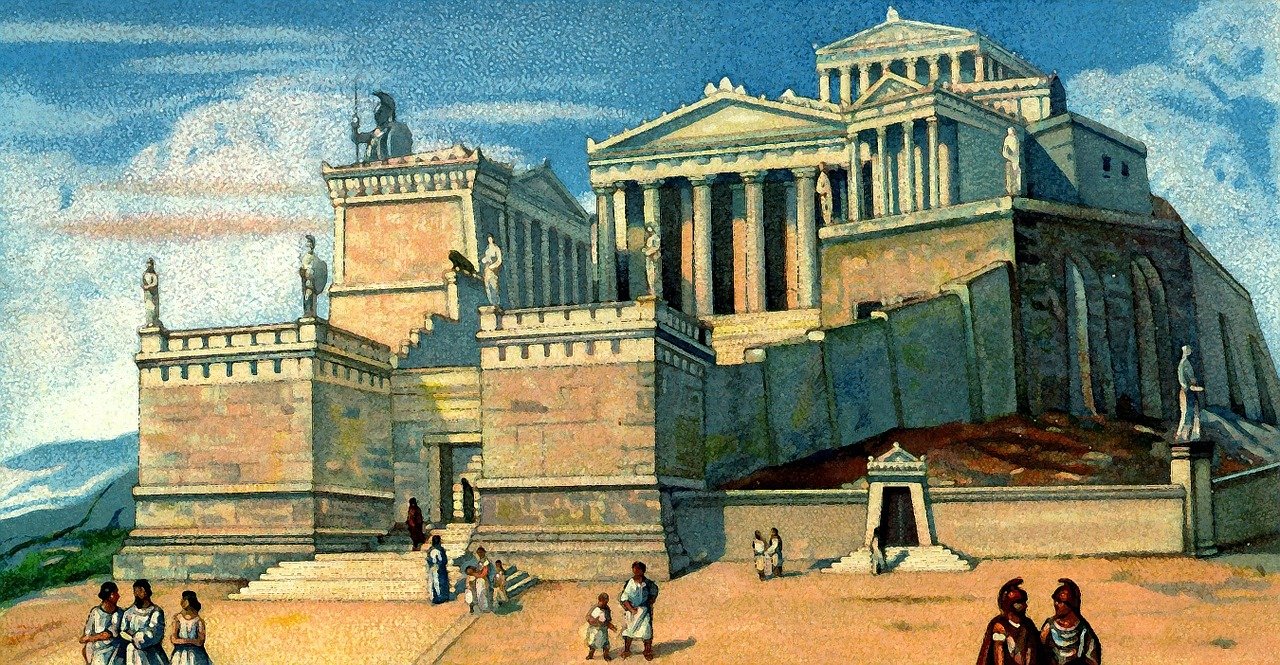
Many ancient civilisations had their own calendrical systems. Of these, the Greek calendar is most likely the most confusing. The Greek Calendar is much like ancient Greece itself. It shared a certain basic similarity from region to region, but each city-state kept its own version. All the Greek calendars were lunisolar (based on the sun and moon) and shared the same basic features of the other lunisolar calendars: twelve months, with a periodic intercalation of a thirteenth.
The Athenian calendar is the best known and most intensively studied. The Athenian months were named Hekatombion, Metageitnion, Boedromion, Pyanepsion, Maimakterion, Poseidon, Gamelion, Anthesterion, Elaphebolion, Munychion, Thargelion, and Skirophorion. The intercalary month usually came after Poseidon and was called the second Poseidon. Hekatombion, and hence the beginning of the year, fell in the summer. Other Greek regions started their year at different times (e.g., Sparta, Macedonia in fall, Delos in winter).

For the historian inclined towards tidy orderliness, the regrettable fact is that the Athenians were simply unwilling to stick to a completely regular calendar, which makes reconstruction difficult. Their irregularity was not from a lack of astronomical knowledge. In 432 BCE, the Athenian astronomer Meton instituted his 19-year cycle, fixing regular intercalations (whether Meton got this cycle from Babylonia or discovered it himself is not known). From that point, a small group of Greek astronomers used the Metonic cycle in their calculations, but this should be regarded as an astronomer’s ideal calendar. Abundant epigraphical evidence demonstrates that in the civil calendar, while the archons inserted approximately the correct number of intercalary months over the long term, the specific corrections were somewhat arbitrary, as the archons saw fit. This irregularity doesn’t really affect the long-term workings of the calendar, but it does make things very confusing when trying to establish a precise date for an event.

source polysyllabic.com

>Related articles

The Belharra “Kimon” sails into Cyprus, where the general who gave it his name was killed fighting the Persians – His story

How the tragedy unfolded at Eleftherios Venizelos Airport involving the 67-year-old woman with disabilities – Who “life fighter” Maria Lada was

Railway.gov.gr goes live, showing real-time images of all trains

also read

280 new vehicles added to the Greek police force (photos)

Shocking photo of old woman in Euboea fires on cover of Time magazine

Ask me anything

Explore related questions

#ancient greece#athens#calendar
> More Culture

Follow en.protothema.gr on Google News and be the first to know all the news

See all the latest News from Greece and the World, the moment they happen, at en.protothema.gr

> Latest Stories

“We warn that a similar incident must not be repeated,” says Erdogan on the missile launched from Iran

March 5, 2026

The Revolutionary Guards claim they struck the aircraft carrier USS Abraham Lincoln with drones

March 5, 2026

Between two homelands: “I’m afraid for my children,” says Israeli-Iranian Efrat

March 5, 2026

From the Hamas attack to the Iran war: The order from an underground tunnel in Gaza that changed the history of the Middle East and rewrote it in blood

March 5, 2026

Tehran’s war games: Are its missile stockpiles running out, or is it conserving them for a prolonged conflict? What experts say (videos)

March 5, 2026

C-130 lands in Elefsina with 91 Greeks repatriated from Abu Dhabi

March 5, 2026

Trump: I must personally get involved in choosing Iran’s next leader – Khamenei’s son is insignificant

March 5, 2026

Mitsotakis communicates with the President of Egypt regarding developments in the Middle East

March 5, 2026
All News

> Greece

Between two homelands: “I’m afraid for my children,” says Israeli-Iranian Efrat

Born in Israel with roots in Iran, Efrat spoke to protothema.gr reporters Giannis Charamidis and Marinos Aleiferis about her life after 2023, the insecurity she feels abroad, and the upcoming elections in the country

March 5, 2026

C-130 lands in Elefsina with 91 Greeks repatriated from Abu Dhabi

March 5, 2026

Police in the inner area of Fyli: 1,650 meters of cables for electricity theft, waste of tons of water, road occupation, 12 arrests (videos-photos)

March 5, 2026

Winter 2025–2026 among the warmest in recent decades, according to Meteo – See the map

March 5, 2026

Cyprus’ defense strengthened: Which countries are sending military forces after Greece

March 5, 2026
Homepage
PERSONAL DATA PROTECTION POLICY COOKIES POLICY TERM OF USE
Powered by Cloudevo
Copyright © 2026 Πρώτο Θέμα