





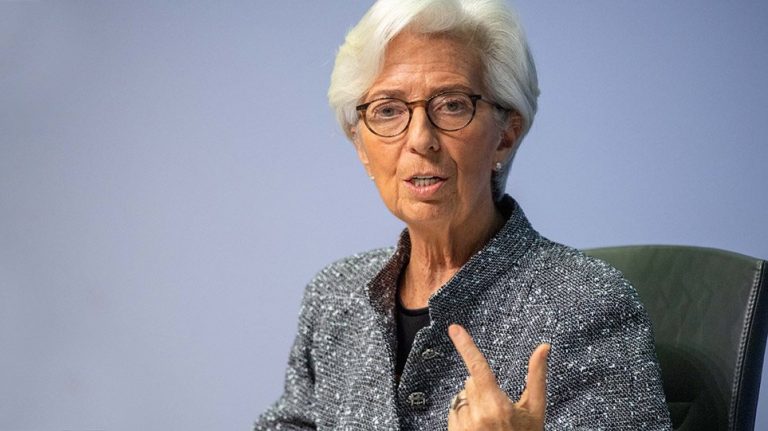
By Christine Lagarde, President of the European Central Bank
Published in major European media and on protothema.gr exclusively for Greece
Around the world, public authorities are mobilising to fight the coronavirus. COVID-19 represents a new form of economic shock that cannot be tackled using the textbooks of the past. We need policies targeted at those most exposed to this crisis.
Today, these are the firms and families facing a steep loss of income and rising anxiety about the future. The European Central Bank’s policies are designed precisely to reach these people. Within our mandate, we have calibrated our measures so that liquidity gets through to the citizens and sectors most in need of support.
To understand how our measures are working, we need to identify why this crisis is special. Its origins are unlike those of a financial crisis or a conventional recession. The sharp drop-off in economic activity is a consequence of the necessary decision to ask people to stay at home. This creates an imperative to prevent viable firms from folding and employees from losing their jobs because of a temporary crisis for which they bear no blame.
Employees are more at risk today than at any time since the 1930s. For example, in 2009 new unemployment claims in the United States peaked at 665,000 in one week. The last two weeks have seen such claims rise first to 3.3 million and then to 6.6 million. While in Europe unemployment is typically more sluggish and less volatile, we already see troubling signs: the Purchasing Managers’ Index for employment registered a record fall in March.
To avoid lasting damage, we need to “put the economy on hold”, keeping it as close as possible to its pre-outbreak state. Different tools can be used to achieve this end. One is to introduce government schemes that support employment in the short run. Another is to mobilise the banking system to provide firms with working capital to keep paying staff and bills. As the euro area is a bank-based economy, facilitating the flow of credit helps to get liquidity quickly into all the cracks of the economy.
Governments and central banks are taking complementary actions to put banks in a position to do this. Governments are providing loan guarantees that reduce banks’ credit risk: around 16 percent of GDP has already been committed to such schemes in the euro area. And the ECB is providing enough liquidity to remove banks’ liquidity risk, while ensuring that financing conditions remain supportive for the wider economy.
We have introduced two types of measures to achieve these goals.
First, targeted measures on a massive scale to make sure that liquidity gets through to those that need it the most. Our new targeted lending facility provides up to around €3 trillion in liquidity to banks at a negative rate, which can be as low as -0.75 percent, the lowest rate we have ever offered. We know from past experience that such measures can be powerful. We estimate that the two previous rounds of such targeted operations encouraged banks to lend about €125 billion more than they would have done if these facilities had not been in place.
To ensure that banks make full use of this new facility, we have also introduced a targeted collateral easing package, with a special focus on smaller businesses, the self-employed and private individuals. Loans to companies and the self-employed which benefit from coronavirus-related guarantee schemes may be accepted by Eurosystem national central banks as collateral in our lending operations, including smaller loans.
These measures will encourage banks to extend loans to micro-firms and sole traders – who typically have less access to credit – and refinance them by borrowing from us for up to three years at negative interest rates. In the euro area, around 22 million people are self-employed, representing 14 percent of total employment. So these measures will facilitate access to credit for a larger part of our workforce.
Second, we are buying public and private sector bonds in large volume to ensure that all sectors of the economy can benefit from easy financing conditions. Our pandemic emergency purchase programme, together with our other asset-buying programmes, allows us to purchase more than €1 trillion of bonds until the end of this year. And, within this programme, we can flexibly focus our purchases across asset classes and among jurisdictions. We have also extended our asset purchases to commercial paper, which is an important source of liquidity for firms. This provides them with additional support to manage their day-to-day cash flows and avoid unnecessary layoffs.
Collectively, these actions show that we will not tolerate any procyclical tightening of financing conditions amid one of the greatest macroeconomic cataclysms of modern times. But our response will be made more powerful if all policies reinforce each other. It is vital that the fiscal response to this crisis is undertaken with sufficient force in all parts of the euro area. Governments need to support each other, so that they can together deploy the optimal policy response against a common shock for which none is responsible.
Full alignment of fiscal and monetary policies – and a level playing field against the virus – is the best way to protect our productive capacity and employment, enabling us to return to sustainable growth and inflation rates once the coronavirus outbreak passes. If not all countries are cured, the others will suffer. Solidarity is in fact self-interest. The ECB will continue playing its part by delivering our price stability mandate and serving the European people.
Ask me anything
Explore related questions




