×
GreekEnglish

×
  • Politics
  • Diaspora
  • World
  • Lifestyle
  • Travel
  • Culture
  • Sports
  • Cooking
Friday
13
Mar 2026
weather symbol
Athens 12°C
  • Home
  • Politics
  • Economy
  • World
  • Diaspora
  • Lifestyle
  • Travel
  • Culture
  • Sports
  • Mediterranean Cooking
  • Weather
Contact follow Protothema:
Powered by Cloudevo
> World

Inside-out asteroids: A practical method for creating space habitats

Yet, one step closer to sci-fi

Newsroom December 21 07:01

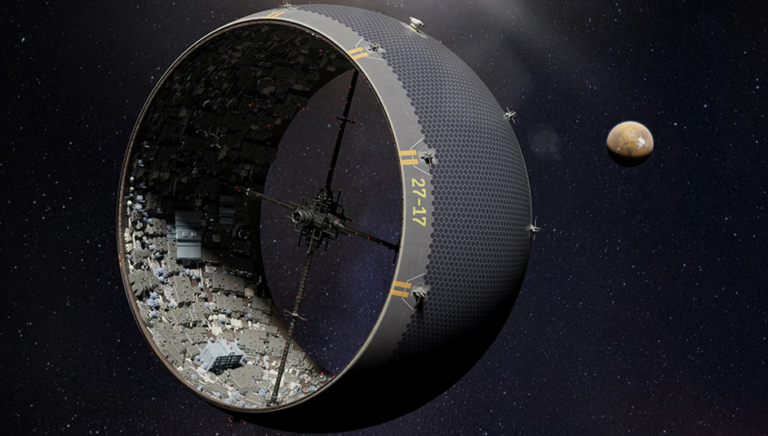
Some folk baked a lot of bread during lockdowns. Others assembled a team of scientists and figured out a practical way to turn asteroids into space habitats, by spinning them inside out and creating giant rotating, Manhattan-sized city-rings.

In the latter group are a team of University of Rochester scientists, who turned their attentions to a “wildly theoretical” paper now published in the journal Frontiers in Astronomy and Space. The challenge they set themselves: how to create a city-sized space habitat people could live on permanently, without the massive expense and challenge of launching all the materials into space from Earth.

See Also:

>Related articles

Pickaxe Mountain: Iran’s secret nuclear fortress is buried 100 meters deep and could “unlock” the war

US citizen of Lebanese descent the perpetrator Islamic terrorist attack on a synagogue in Michigan

US: Congressman Gregory Meeks reacts strongly to the deployment of Turkish F-16s in occupied Cyprus

“Ukraine is not an ally”, says Croatian President Milanovic who rejected training Ukrainian troops

Asteroids represent big piles of materials, decided the team: “all those flying mountains whirling around the sun might provide a faster, cheaper, and more effective path to space cities,” says co-author and Professor of Physics and Astronomy Adam Frank. The trouble is, they’re nowhere near big enough to provide a useful amount of gravity. That’s a big deal; extended periods in zero- or low-gravity cause a range of health issues in astronauts, so the team decided on a minimum of 0.3g – a third or so less than you’d get living on Mars.

Read more: New Atlas

Ask me anything

Explore related questions
#science#space#technology#world
> More World

Follow en.protothema.gr on Google News and be the first to know all the news

See all the latest News from Greece and the World, the moment they happen, at en.protothema.gr

> Latest Stories

Dubai turns into a ghost city: Camels and empty sunbeds on deserted beaches once full of billionaires and influencers, videos and photos

March 13, 2026

Putin plans measures to protect energy infrastructure from Ukrainian attacks

March 13, 2026

Caroline myss in Athens for a two-day workshop

March 13, 2026

New historic record for the Greek-owned fleet with 4,388 ships, up 3.8%

March 13, 2026

Kyriakos Pierrakakis: Europe must act in a coordinated way to address economic pressures, Greece remains resilient

March 13, 2026

Greek Parliament ratifies Greece–Chevron agreements for hydrocarbon exploration and exploitation

March 13, 2026

Pickaxe Mountain: Iran’s secret nuclear fortress is buried 100 meters deep and could “unlock” the war

March 13, 2026

Lenten lecture on the “Prayer of St. Ephrem” at the St. Nicholas Greek Orthodox Church and National Shrine

March 13, 2026
All News

> Diaspora

Lenten lecture on the “Prayer of St. Ephrem” at the St. Nicholas Greek Orthodox Church and National Shrine

Fr. Andreas Vithoulkas to lead worship, discussion, and lecture as part of the shrine’s Lenten Lecture Series

March 13, 2026

American Hellenic Institute publishes its 2025 Annual Report

March 12, 2026

International Women’s Day Luncheon celebrates women of the community

March 12, 2026

“King Otto Special Film Screening” almost Sold Out

March 12, 2026

Greek Community of Toronto appoints Georgia Papaspyrou as Chief Operating Officer

March 11, 2026
Homepage
PERSONAL DATA PROTECTION POLICY COOKIES POLICY TERM OF USE
Powered by Cloudevo
Copyright © 2026 Πρώτο Θέμα