×
GreekEnglish

×
  • Politics
  • Diaspora
  • World
  • Lifestyle
  • Travel
  • Culture
  • Sports
  • Cooking
Monday
05
Jan 2026
weather symbol
Athens 17°C
  • Home
  • Politics
  • Economy
  • World
  • Diaspora
  • Lifestyle
  • Travel
  • Culture
  • Sports
  • Mediterranean Cooking
  • Weather
Contact follow Protothema:
Powered by Cloudevo
> Culture

Magna Graecia’s Legacy: The stories of Italy’s ancient Greek colonies (video)

Today these Greek colonies are often forgotten, but their legacy can still be felt in the region’s cultural landscape

Newsroom February 15 09:48

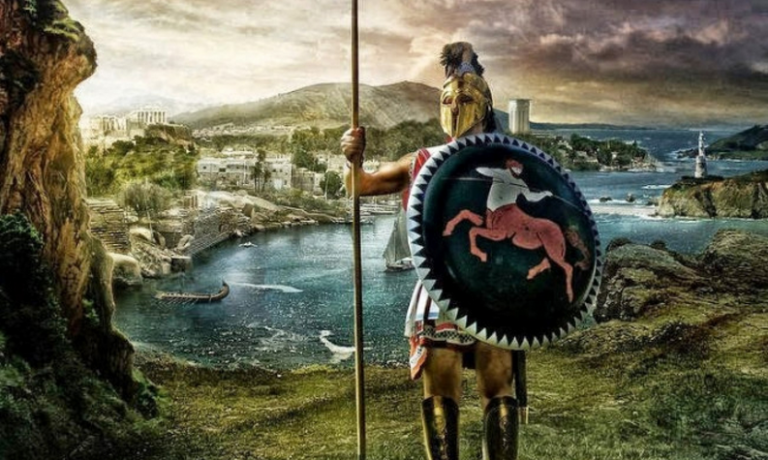
Long before the Roman Empire came along, the Ancient Greeks controlled much of southern Italy. From the 8th to the 5th centuries BC, intrepid Greek settlers transformed this region into a mosaic of independent city-states, fostering a unique blend of Hellenic and indigenous Italian influences. Amidst the fertile landscapes, colonies like Syracuse and Taranto thrived, becoming hubs of trade and innovation. Over time this series of colonies became known as Magna Graecia. This isn’t to say Magna Graecia was as idyllic. When the Greeks weren’t innovating, they were either fighting amongst themselves or battling outside threats. Over time Magna Graecia’s glory waned and eventually, it fell to a new power, the Roman Empire. Today these Greek colonies are often forgotten, but their legacy can still be felt in the region’s cultural landscape.

The Greeks Discover Colonization

When we think of empires establishing colonies, we normally associate it with trade and the spreading of power. Colonies are a fantastic way for nations to project their power from their borders and rule over faraway lands. Greek colonization was a little different, however. While power projection and increased trade were certainly bonuses, something else drove their colonization efforts – necessity.

During the Archaic period (800 to 480 BC) ancient Greece became too successful for its own good. Massive population growth (estimated to be ten-fold, with Greece’s population going from 800,000 to 7-10 million) meant the mainland quickly ran out of the arable land needed to feed so many mouths. The answer to this problem was to take other peoples’ land.

See Also:

Outrage as young Spanish girls dressed like “prostitutes” at LGBT-themed Carnival performance (video)

>Related articles

Dimas announces seven modernization measures after the blackout — But with many “wills” and open timelines

A 49-year-old man was arrested at the toll booths of Agia Triada with explosives and drugs

Mitsotakis says yes to Constitutional Changes — What about the opposition?

Colonies fixed this overpopulation and food shortage problem in two ways. Firstly, they expanded and strengthened Greece’s trade network. This meant Greece could import more food and feed all those hungry mouths. It also did wonders for the economy. Secondly, sending out settlers displaced some of Greece’s population growth and spread its population a little thinner.

Unlike Roman colonies, Greek ones weren’t dependent on their mother city. Instead, they acted as independent city-states. There were two main types of Greek colonies. The first were permanent settlements that largely acted independently but mostly remained loyal to their Greek heritage. The second, known as  emporia, was more akin to trading outposts. In these, Greeks and non-Greeks lived side by side and the population focused on manufacturing and selling goods to mainland Greece and other colonies.

Continue here: Ancient Origins

Ask me anything

Explore related questions

#ancient greece#colonies#colonization#culture#greece#history#italy#legacy#Magna Graecia#stories#video#world
> More Culture

Follow en.protothema.gr on Google News and be the first to know all the news

See all the latest News from Greece and the World, the moment they happen, at en.protothema.gr

> Latest Stories

The judge who said “No” to Trump will arraign Maduro: Who is 92-year-old Alvin Hellerstein

January 5, 2026

Dimas announces seven modernization measures after the blackout — But with many “wills” and open timelines

January 5, 2026

A 49-year-old man was arrested at the toll booths of Agia Triada with explosives and drugs

January 5, 2026

Mitsotakis says yes to Constitutional Changes — What about the opposition?

January 5, 2026

Prosecution investigation into the Athens FIR blackout that caused chaos at airports

January 5, 2026

Eva Sloss, Holocaust survivor and stepsister of Anna Frank, died at the age of 96

January 5, 2026

The Left’s tears for Maduro, the year’s first stumble with the Athens FIR, K.M.’s New Year’s Eve resolution, the Greek who paid the biggest tax

January 5, 2026

Weather: Storms and gale-force winds in Western Greece today, rainy Epiphany in several regions

January 5, 2026
All News

> World

The judge who said “No” to Trump will arraign Maduro: Who is 92-year-old Alvin Hellerstein

An Orthodox Jew and known for his meticulous adherence to federal procedure, Hellerstein is considered one of the most experienced active judges in the United States. He was appointed by Bill Clinton and has rejected requests by Trump in court

January 5, 2026

Eva Sloss, Holocaust survivor and stepsister of Anna Frank, died at the age of 96

January 5, 2026

Maduro before U.S. Justice: From cell to courtroom and Trump’s threats toward Colombia, Mexico, and Greenland

January 5, 2026

Tragic end for the missing Greek minor Alice Kallergis – She was identified among victims of deadly Crans-Montana fire

January 4, 2026

From Tesla to Disney, 4 companies are preparing humanoid robots for the market: What they can do, how much they will cost

January 4, 2026
Homepage
PERSONAL DATA PROTECTION POLICY COOKIES POLICY TERM OF USE
Powered by Cloudevo
Copyright © 2026 Πρώτο Θέμα