×
GreekEnglish

×
  • Politics
  • Diaspora
  • World
  • Lifestyle
  • Travel
  • Culture
  • Sports
  • Cooking
Wednesday
28
Jan 2026
weather symbol
Athens 14°C
  • Home
  • Politics
  • Economy
  • World
  • Diaspora
  • Lifestyle
  • Travel
  • Culture
  • Sports
  • Mediterranean Cooking
  • Weather
Contact follow Protothema:
Powered by Cloudevo
> World

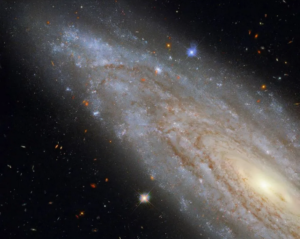
NASA: Hubble photographed an entire galaxy – See what Seifert NGC 3254 looks like

NGC 3254 was first spotted in March 1785 by astronomer William Herschel, about 118 million light-years from Earth

Newsroom June 22 10:02

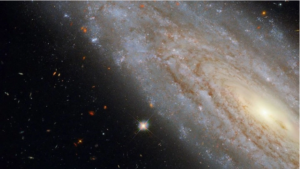
A stunning photograph of the galaxy named NGC 3254 was captured by NASA’s Hubble Space Telescope.

The Seifert Galaxies make up 10% of all galaxies and were named after the American astronomer Carl Seifert, who first studied them in the 1950s.

Seifert Galaxies are a type of galaxy, which includes an extremely bright small nucleus, which sometimes exceeds the brightness of the entire surrounding galaxy. According to NASA, these types of galaxies have “extremely active nuclei” and belong to the “active galaxies”.
>Related articles

Sick astronaut on mission – NASA considers early return of International Space Station crew

NASA published a new map of the universe; the “SPHEREx” space telescope changes the data landscape

Voyager 1 ready to make history again: in 2026 it will reach a distance of “one light-day” from Earth

The photo of NGC 3254 is a composition of infrared and visible images. On the one hand it refers to a typical spiral galaxy. However, it is actually a Seifert Galaxy, which can be best seen in light outside the visible spectrum, according to NASA.

Galaxies have oversized black holes at their center, which accumulate material which, according to NASA, emits huge amounts of radiation. Oversized black holes are defined as those that have a mass 1 or 2 billion times the typical black hole.

See Also:

Alco poll: New Democracy leads with 12.9 points

These celestial objects release gases, dust, stars and planets, which they pull and eventually destroy. NGC 3254 was first spotted in March 1785 by astronomer William Herschel, about 118 million light-years from Earth.

Ask me anything

Explore related questions

#galaxy#Hubble Space Telescope#nasa#space
> More World

Follow en.protothema.gr on Google News and be the first to know all the news

See all the latest News from Greece and the World, the moment they happen, at en.protothema.gr

> Latest Stories

Three flood protection and infrastructure projects in Penteli – Chardalias: Our priority is stronger safety and a better quality of life in Attica”

January 28, 2026

Athina Onassis makes rare public appearance at Paris Haute Couture week

January 28, 2026

“The steering locked during the overtake,” PAOK fan survivor tells Greek doctor at the scene of deadly crash

January 28, 2026

Greek food products: The Persian Gulf as the next major export growth bet

January 28, 2026

What changes in tax audits in 2026: Digital modernisation and AI in the fight against tax evasion

January 28, 2026

Blame Game over the “cementing” of Milos after the Council of State block – Municipality releases timeline of its actions

January 28, 2026

“They were happy they would be following PAOK”: Grief over the loss of seven fans in the road accident in Romania

January 28, 2026

Housing: €10,000 for relocation, two months’ rent refunded and a clampdown on Airbnb

January 28, 2026
All News

> Travel

Kimolos wins over International Media: “A hidden gem waiting to be discovered”

Despite its small size, Kimolos is full of character and charm — and now international media are urging travelers to put this Cycladic island on their bucket list

August 28, 2025

French Vogue discovers the exotic beauty of Skopelos

August 28, 2025

Naxos tops the list of Greek kitesurfing destinations for 2025

July 9, 2025

Holidays in Psara

June 20, 2025

Santorini filled with tourists again (photos)

April 12, 2025
Homepage
PERSONAL DATA PROTECTION POLICY COOKIES POLICY TERM OF USE
Powered by Cloudevo
Copyright © 2026 Πρώτο Θέμα