×
GreekEnglish

×
  • Politics
  • Diaspora
  • World
  • Lifestyle
  • Travel
  • Culture
  • Sports
  • Cooking
Sunday
15
Feb 2026
weather symbol
Athens 15°C
  • Home
  • Politics
  • Economy
  • World
  • Diaspora
  • Lifestyle
  • Travel
  • Culture
  • Sports
  • Mediterranean Cooking
  • Weather
Contact follow Protothema:
Powered by Cloudevo
> World

NASA’s James Webb Space Telescope finds set of huge galaxies that “shouldn’t exist”

The mass of the stars examined in the new research are as much as 100 times greater than researchers had previously thought

Newsroom February 22 09:02

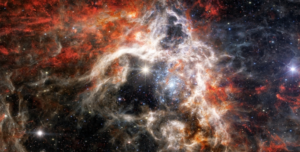
NASA’s James Webb Space Telescope has found a set of massive galaxies that should not exist.

The equipment was used to observe a set of massive galaxies that formed around 500-700 million years after the Big Bang, when the universe was only 3 per cent of its current age. Those galaxies have stellar masses as high as ten billion times that of our Sun, and one that could be as massive as 100 billion of our Sun.

In all, scientists found six galaxies, which together threaten to change what scientists know about the beginnings of galaxies in our universe. Researchers say they refer to the objects as “universe breakers” and that they are in tension with 99 per cent of existing models of the universe.

See Also:

>Related articles

Dr. Ioannis Papafloratos to Proto Thema: An assessment of the Mitsotakis – Erdogan meeting & the state of the Greek-Turkish relations

When scrolling becomes addiction: Internet addiction now affecting even primary school children

Munich Conference formalizes the rift: Rubio cancels last-minute Ukraine meeting – “We must free ourselves from dependence on the US,” say Merz & Macron

Spain decriminalizes sex acts with animals as long as no physical injury occurs

Such galaxies should not be expected to be so big so soon after the beginnings of the universe, the researchers say. The mass of the stars examined in the new research are as much as 100 times greater than researchers had previously thought.

Read more: Independent

Ask me anything

Explore related questions

#astronomy#astrophysics#galaxy#nasa#NASA’s James Webb Space Telescope (JWST)#physics#space#world
> More World

Follow en.protothema.gr on Google News and be the first to know all the news

See all the latest News from Greece and the World, the moment they happen, at en.protothema.gr

> Latest Stories

Traffic restrictions on Attiki Odos due to works – carriageway towards the Airport closed from Elefsina to Aigaleo

February 15, 2026

Stunning national record by Greek athlete Roussou in the 1,500 metres

February 15, 2026

Weather: storms, gusty winds and African dust – Where conditions will be most severe

February 15, 2026

Owner of Violanta arrested again after charges upgraded to felony – Video

February 14, 2026

Final “no” from the Council of State on the restoration of the 13th and 14th salaries

February 14, 2026

Dr. Ioannis Papafloratos to Proto Thema: An assessment of the Mitsotakis – Erdogan meeting & the state of the Greek-Turkish relations

February 14, 2026

Emergency weather bulletin from the EMY: Storms and gale-force winds expected in 5 regions – African dust to spread across the country

February 14, 2026

Countdown to tax returns: What taxpayers need to check in the pre-filled data

February 14, 2026
All News

> Culture

Do the Orthodox also have a Valentine’s Day? Who were Aquila and Priscilla

Saints Aquila and Priscilla: Their connection to the Day of the Lovers, they were "proposed" by Christodoulos as the "Saint Valentine" of the Orthodox

February 13, 2026

Mind the Greeks: Bringing Greek knowledge to the world stage

February 11, 2026

“Saint Paisios” tops the Greek Box Office, “Kapodistrias” in 2nd place

February 11, 2026

“Astoria”: The new major production of the Pallas Theatre on Greek migration to New York

February 10, 2026

Barbara Kruger: Renowned American artist creates works in Greek

February 9, 2026
Homepage
PERSONAL DATA PROTECTION POLICY COOKIES POLICY TERM OF USE
Powered by Cloudevo
Copyright © 2026 Πρώτο Θέμα