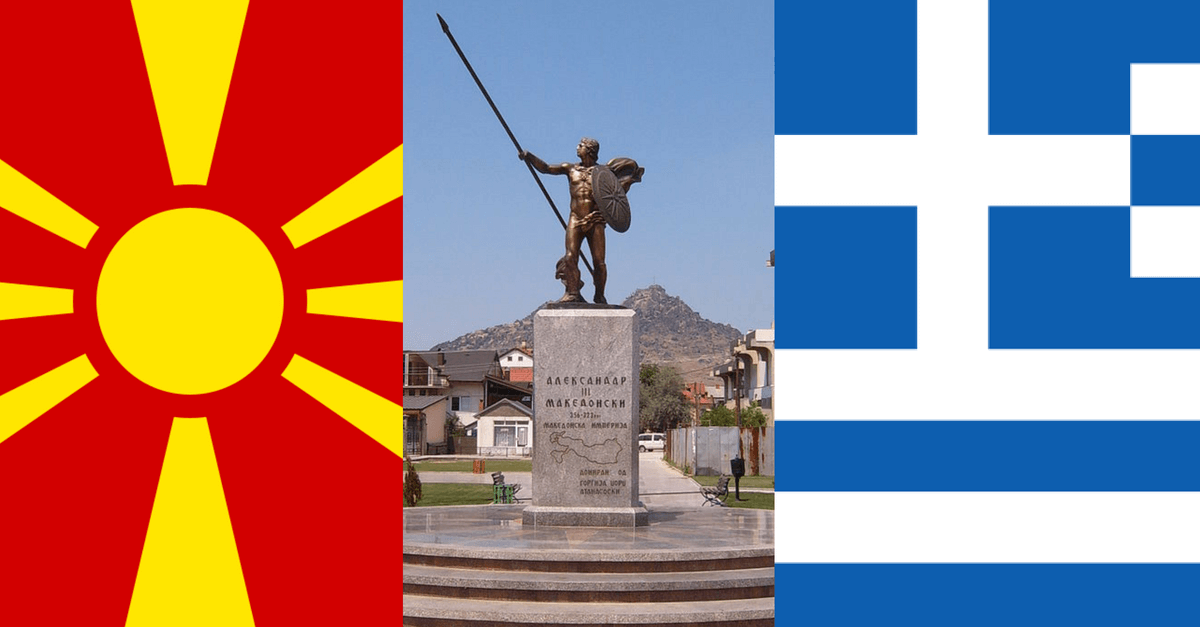
Right away this title is going to get a wide variety of reactions. Some people are already angry that anyone could say that Alexander wasn’t Greek or that he was only Macedonian, even saying that he was both could rile some people up. On the other hand, some people may have no idea how big an issue this has been in recent years and haven’t given a thought to the ethnicity of Alexander.
Well, the issue of Alexander’s national identity and ethnicity is quite a heated topic today. The modern nation of FYROM (trsl. note: “Macedonia” on the original article, from here on “FYROM”) takes great pride in claiming to be the descendants of Alexander the Great and the ancient Macedonians. Greece also takes pride in Alexander and his accomplishments, and the two modern states fight over the other’s stealing of their cultural history. The international airport which serves FYROM’s capital, Skopje, is known as Alexander the Great International Airport and sports an impressive equestrian statue of the iconic leader within the airport. Greece owns the territory of the ancient Macedonian capital of Pella.
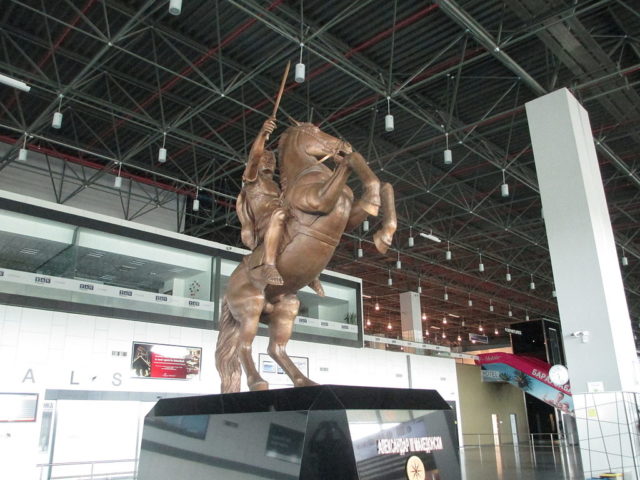
(The Statue of Alexander in the Skopje Airport)
So, what was Alexander? Well, the answer should go down as an educated opinion rather than straight fact as various historians still take different sides, but I would confidently say that Alexander was a Greek Macedonian. By that, I mean that Alexander was undeniably Greek, but with several cultural influences from Macedon. As to the question of who has more “claim” to Alexander, I believe that modern Greece has far more claim to Alexander than modern FYROM does. Not to rain on anybody’s parade, but as a historian, the truth matters, and Alexander has fewer ties to modern FYROM than the inhabitants of Istanbul have with Constantine.
To answer the question, we first need to establish if the Macedonians were Greek. In terms of geographical region, even persisting to today, yes, over half of ancient Macedon lies within modern Greece, but that is an overly simplistic view. Looking at how the ancient Greeks and Macedonians viewed each other we see that most sources have the Macedonians, specifically the Argead dynasty that contained Philip and Alexander, migrating up from the Greek city of Argos to found Macedon.
This is firm evidence that the Macedonians, at least the ruling class, hailed from the core of mainland Greece. We know that most mainland Greeks had a disapproving view of the Macedonians, however. They viewed them as primitive and uncultured, a viewpoint used by modern people of FYROM to point out how different the Macedonians were.
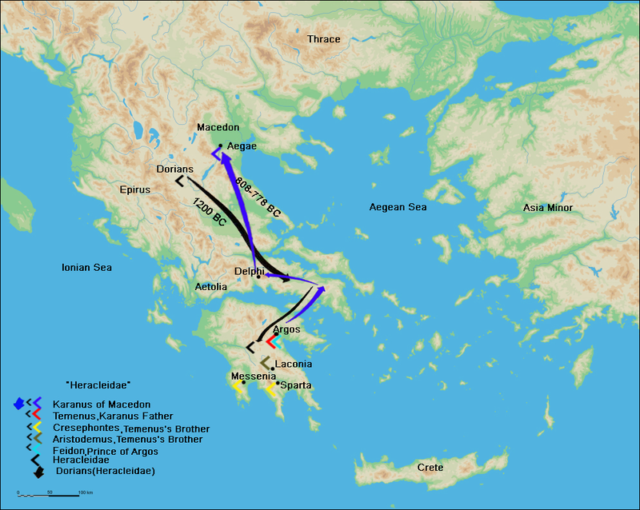
(The Argeads route out of central Greece to where they would found Macedonia)
Though they were different, the Macedonians were still Greeks, this they proved by participating at the Olympic Games, a privilege reserved only for Greeks. we know that Philip II participated in the Olympics and one could say that he bullied his way in, but the Macedonians had already been in the Olympics for generations. Some of the mainland Greeks protested this and petitioned to remove the Macedonians. The official judges of the Olympics, the Hellanodikai, reviewed the evidence and ruled the Macedonians Greeks. The Hellanodikai were renowned for their fairness and Macedonia at this time was a small and uninfluential region, unable to have to power to sway anyone in mainland Greece, let alone the Hellanodikai.
So, the Macedonians were Greek, but what did Alexander think of himself in regards to being Greek or Macedonian? Well, he seems to have thought of mainland Greece and Macedon as unified Greeks. His favorite piece of writing was the Greek Iliad, his heroes were Achilles and Heracles, and he was said to be a descendant of Zeus, a Greek god. The Macedonians had regional dialects and languages, (as did plenty of other thoroughly Greek areas such as Ionia) but Philip and Alexander spoke Greek.
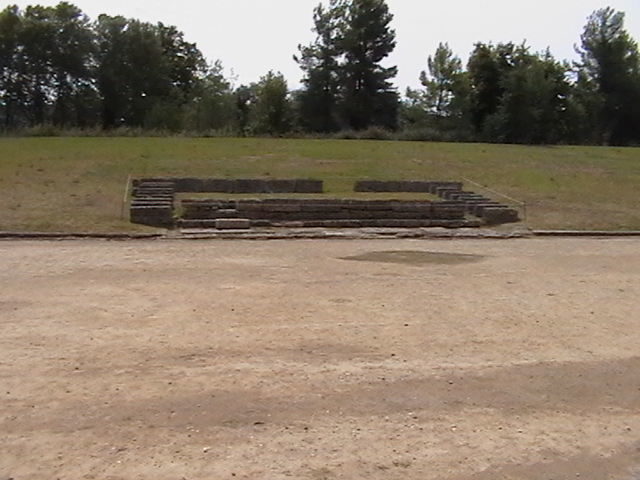
(The Judges’ box on The Olympic track. the Judges had only one known incident of corruption in their hundreds of years of existence, and they certainly thought the Macedonians qualified as Greeks)
Alexander maintained that his achievements were on behalf of all the Greeks, though sometimes excluding Sparta as they did their own thing in the time of Philip and Alexander. Huge sums of money from conquests were sent back to Macedonia and mainland Greek cities.
Various sources reference that Alexander considered himself a Macedonian Greek representing all Greeks. In a letter to Darius Alexander says “Your ancestors came into Macedonia and the rest of Greece and treated us ill…”. “the rest of” shows that Alexander considered Macedonia and the rest of Greece as two parts of a whole Greek region.
When his generals protested Alexander’s decision to burn down the palace and temples of Persepolis “Alexander said that he wished to take vengeance on the Persians, in retaliation for their deeds in the invasion of Greece, when they razed Athens to the ground and burnt down the temples” though this may have been a political statement and not the real reason Alexander destroyed Persepolis, he said it as though the Persian destruction of Athens was a personal matter to him, an oddity if Alexander did not consider himself Greek.
Of course, there is nothing but circumstantial evidence in quotes and other sources mainly because it wasn’t really seen as an issue in the time of Alexander the Great and wasn’t in a discussion that was worthy of being written down.
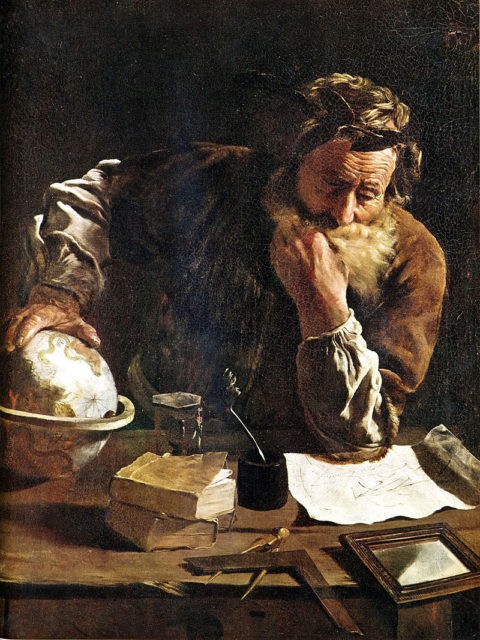
(Archimedes was from Syracuse, but he is unquestionably referred to as Greek)
The situation can best be explained and understood by looking at other Greek locations. The Sicilian city of Syracuse was founded as a Greek colony. The Syracusians had a distinctive culture that was unique to Syracuse, but they were also undeniably Greek. They spoke Greek; they worshiped similar gods, and they fought in a Greek style. They had an undeniably Greek culture. The same is true of Massalia, modern Marseille, which was a bastion of Greek culture in southern Gaul. They kept their Greek culture all the way to the time of Caesar.
The Ionian Greeks in Western Turkey were Greeks. Alexander’s fractured empire included Bactria, Seleucia, Egypt, and Macedon. All of these factions were known as Hellenic factions because of the overwhelming Hellenic influence of Alexander and his conquests.
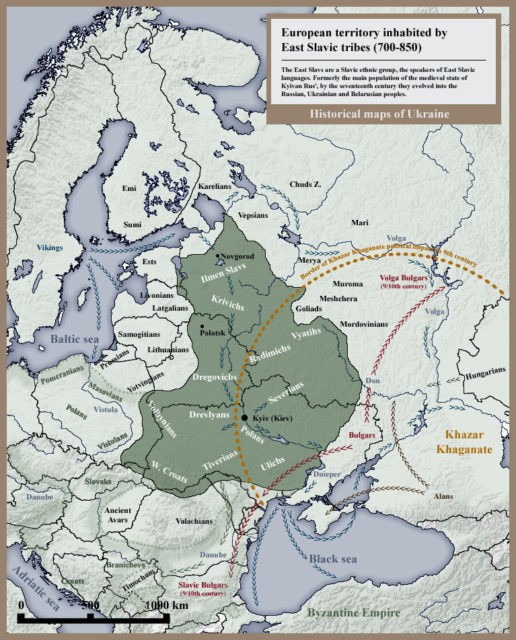
(The migration of Slavic peoples occurred many centuries after Alexander the Great’s time)
Lastly, Alexander was ethnically Greek, and the modern inhabitants of FYROM are overwhelmingly Slavic. The Slavic people have a rich history, but that history did not begin in the region of Macedonia until about 1,000 years after Alexander’s death. The Slavic people originated far more to the north, in Eastern Europe and Russia, and only migrated to modern-day Macedonia in the middle ages.
The debate may seem academic to some, but for the peoples of Greece and FYROM, it is still a live issue and one which raises strong emotions on both sides. No doubt the debates, claims, and counter-claims will continue unabated. Alexander, a giant of the ancient world, still has a massive effect even to this day.
Ask me anything
Explore related questions