





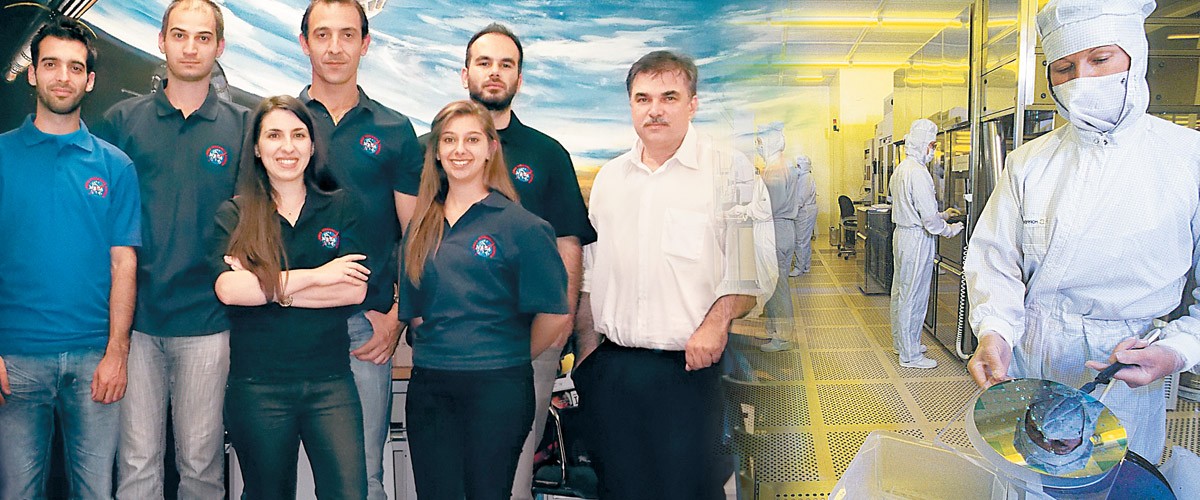
A group of Greek scientists will send Greece to space by building the first Greek satellite which is scheduled to be launched on June 17 from NASA’s Mid-Atlantic Regional Spaceport at Virginia, USA.
It is a low cost satellite, particularly small in size, the construction of which not only sets new standards in the field of space technology, but also enables our country to become from scratch an innovative force in the field of Aerospace! The name chosen for the satellite,“Λ-Sat”, refers directly to the Greek alphabet letter (Λ – lamda) reminding of Greece.
Despite the fact that more than 15 Greeks researchers and employees in universities and institutions around the world worked for the construction of the satellite, the man who is behind of the whole project is the astrophysicist, Professor of Aerospace Engineering at the San Jose University in Silicon Valley, California, Periklis Papadopoulos. “I named the team that worked on this project “Greek Minds in Action” since only Greek origin scientists worked for the construction of the satellite. Among them is a group of 6 children who came from Greece and stayed in California for about eight months until the project was completed, while our collaboration with the University of Aegean and Professor Nikitas Nikitakos was very valuable” Mr Papadopoulos said on Proto Thema.
The Greek scientist aims to put Greece on the world map of Aerospace technology and emphasized that not only cutting-edge technology used to build the satellite but also all the electronic systems were constructed from scratch, gaining thus an extremely valuable knowledge for our country, in case it wants to takes advantage of it.
The construction of the Greek satellite cost about $ 100,000, while the project was funded by Greek and Greek-American entrepreneurs. After excluding those who wished to help financially seeking to get personally advertised via the satellite project, the biggest amount of money was given by a Greek expatriate. “He is an expatriate, not very rich one, who deeply loves Greece. Since he has requested to remain anonymous, I can only say that he comes from Messinia,” Mr Papadopoulos said.
The “Λ-sat» will be in orbit around the Earth for about a year aiming firstly at the telecommunication field, showing in real time the movement of all Greek merchant ships, particularly those sailing in the Indian Ocean and off the African coast and thus helping to protect them from piracy through the AIS and secondly at scientific level since the first graphene test will be conducted in space.
Ask me anything
Explore related questions




