






Members of an alleged criminal organisation involved in illegal gambling in Thessaloniki are believed to have made more than €1 million by using specialist software to manipulate games and determine which players would win.
Twenty people were arrested in connection with the case, including individuals believed to have held leadership roles, among them a business owner, his wife and two close associates. Another 14 people are included in the case file.
The arrests followed a major operation by the Northern Greece Organised Crime Directorate, involving more than 100 police officers and personnel from the Northern Greece Forensic Investigations Directorate.
The organisation allegedly operated for years through at least four establishments in Thessaloniki and Kavala, primarily internet cafés where illegal online gambling activities took place.
Investigators believe members installed software that allowed them to control payouts, while also using surveillance systems, lookouts and emergency buttons to conceal their activities from police.
Prosecutors brought serious criminal charges against 18 of those arrested, including forming, joining or directing a criminal organisation, illegal online gambling, aiding and abetting, fraud involving financial gains exceeding €120,000, and money laundering, depending on their alleged involvement.
The 18 defendants were referred to an investigating magistrate to give their statements. The remaining two individuals, believed to have been gamblers, were released on the prosecutor’s verbal instructions.
How the gambling operation worked
According to an extensive investigation by the Financial Crimes Division, two suspected leaders, aged 55 and 51, established a structured, hierarchical criminal organisation as early as 2013, gradually recruiting additional members and assigning specific responsibilities.
The group operated businesses, mainly internet cafés, where customers could participate in illegal gambling through specially configured computer systems.
To avoid detection, the establishments reportedly featured restricted-access gambling areas and individuals acting as lookouts. Members had also installed an electronic emergency button, or “panic button”, which could instantly change what appeared on computer screens when police officers were spotted nearby, concealing the illegal gambling activities.
The most significant element of the alleged operation was the specialist software used to manipulate gambling outcomes. Investigators found that senior members could adjust payout rates and select specific players to receive winnings, effectively overriding the games’ random outcome mechanisms.
As a result, customers were allegedly deceived about their actual chances of winning, allowing the organisation to generate substantial illegal profits.
The roles of the suspected leaders
Police identified a detailed hierarchy within the alleged criminal organisation.
The 55-year-old suspected ringleader reportedly coordinated the entire operation, determining how the establishments operated, recruiting members, assigning responsibilities and managing the profits. He also issued instructions to associates and monitored their implementation through video surveillance systems installed at the businesses.
A 68-year-old alleged deputy leader and trusted associate was responsible for supervising staff, managing financial transactions, collecting daily takings, providing technical support and overseeing the establishments. The 51-year-old woman allegedly helped manage and conceal the flow of money by making her bank accounts available for transactions involving proceeds from illegal activities.
Another suspected deputy leader, aged 40, allegedly managed the illegal gambling software remotely, resolved technical problems and trained employees in its use. He also monitored the businesses through surveillance cameras, instructed staff and, together with the 68-year-old, managed cash hidden inside the premises.
According to investigators, the 40-year-old could also select particular gamblers to receive winnings following instructions from the suspected ringleader.
Other members allegedly acted as lookouts, collected money from customers, credited gambling points and operated the computer systems and emergency alert mechanisms.
Front owners and suspected money laundering
Investigators also identified individuals allegedly used as front owners to conceal the true ownership of the establishments. Ten people reportedly acted as nominal business owners, although they did not actually control or manage the operations.
The arrangement allegedly helped distance the organisation’s leaders from the illegal activities while allowing them to avoid financial obligations, including tax liabilities and employer contributions.
A parallel financial investigation found that two senior members had expenses disproportionate to their declared income.
Investigators also discovered that money generated through the illegal gambling operation was allegedly transferred through specific individuals, bank accounts and gambling accounts to disguise its criminal origin and make it appear legitimate.
Authorities estimate that the organisation’s total illegal profits exceeded €1 million during its alleged operation since 2013. Greece’s Anti-Money Laundering Authority was informed of the findings and proceeded, where applicable, to freeze bank and betting accounts associated with the suspected leaders.

Cash, vehicles and electronic equipment seized
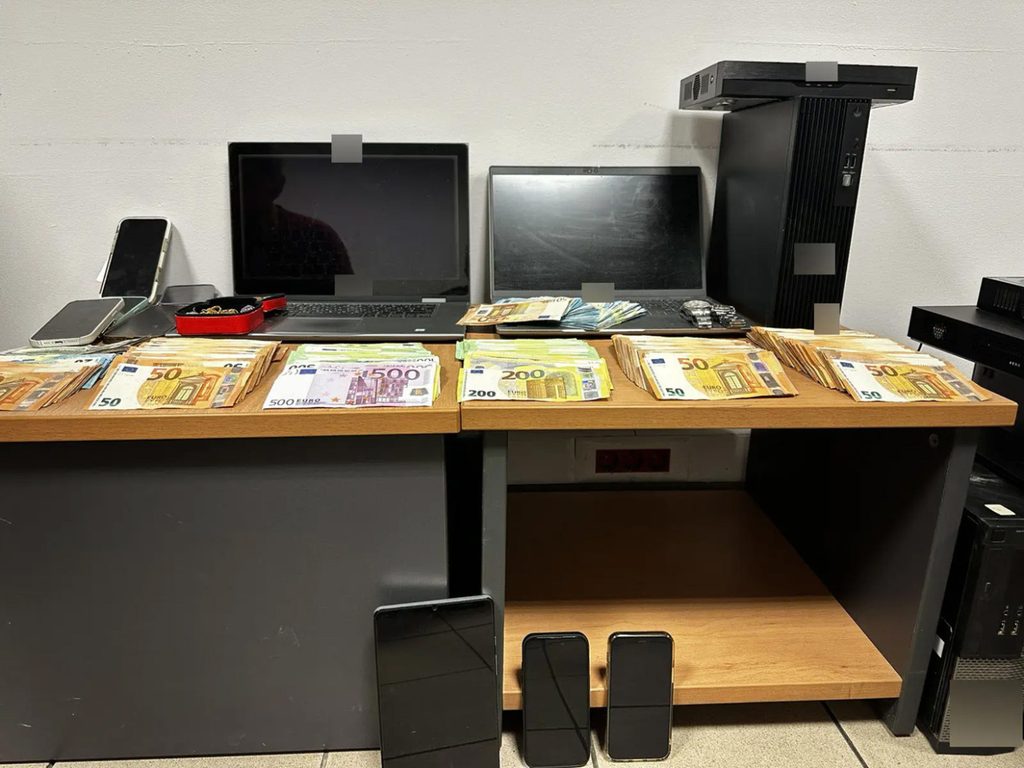
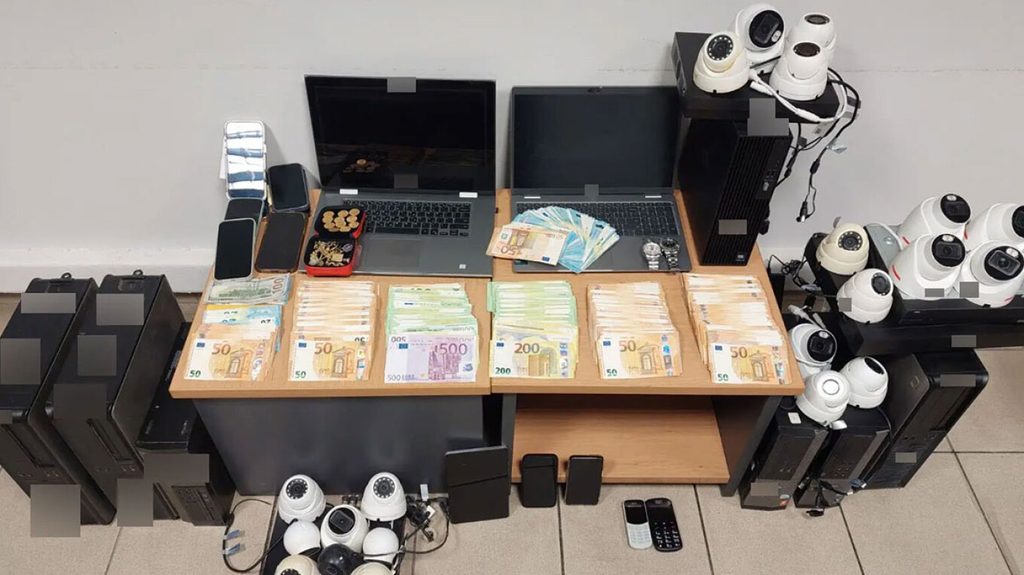
During searches of homes, businesses, vehicles and suspects, police seized a substantial amount of cash and equipment believed to be connected to the operation.
The confiscated items included:
- €61,460 in cash and $700
- 11 gold sovereigns
- Four passenger cars, one allegedly used to commit offences and three suspected of being purchased with laundered proceeds
- 28 mobile phones and numerous SIM cards
- Jewellery
- 21 surveillance cameras and four recording systems
- 22 computer hard drives and 61 desktop computer units
- 22 monitors, 22 keyboards and 22 computer mice
- Three laptops and tablet devices
- A bank passbook, portable digital storage devices, handwritten notes and financial documents
The seized material forms part of the evidence gathered during the investigation.
Ask me anything
Explore related questions




