





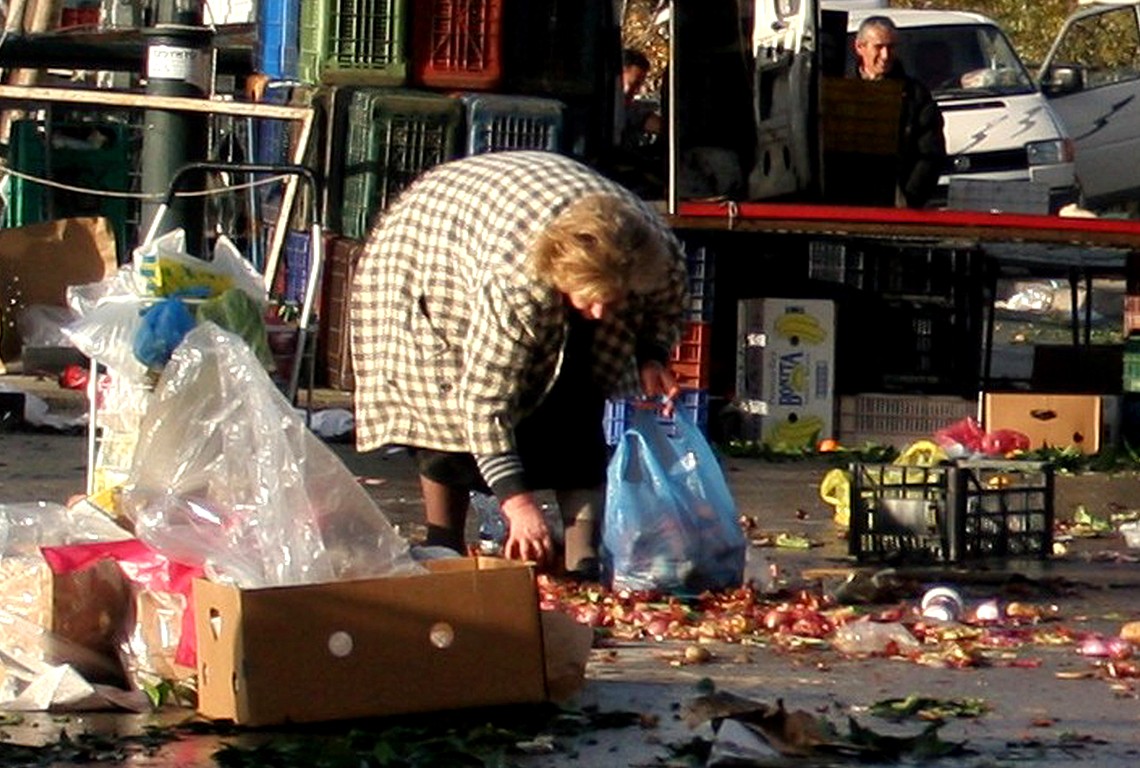
In 2013, 122.6 million people, or 24.5% of the population, in the EU were at risk of poverty or social exclusion. This means that these people were in at least one of the following three conditions: at-risk-of-poverty after social transfers (income poverty), severely materially deprived or living in households with very low work intensity. The
proportion of persons at risk of poverty or social exclusion in the EU28 in 2013 (24.5%) has slightly decreased compared with 2012 (24.8%), but is higher than in 2008 (23.8%). The reduction of the number of persons at risk of poverty or social exclusion in the EU is one of the key targets of the Europe 2020 strategy.
Highest at risk of poverty or social exclusion rate in Bulgaria, lowest in the Czech Republic
In 2013, more than a third of the population was at risk of poverty or social exclusion in five Member States: Bulgaria (48.0%), Romania (40.4%), Greece (35.7%), Latvia (35.1%) and Hungary (33.5%). On the contrary, the lowest shares of persons being at risk of poverty or social exclusion were recorded in the Czech Republic (14.6%), the Netherlands (15.9%), Finland (16.0%) and Sweden (16.4%). Among Member States for which data are available, the at-risk-of-poverty or social exclusion rate has increased from 2008 to 2013 in most of the Member States, the only decreases being recorded in Poland (from 30.5% in 2008 to 25.8% in 2013), Romania (from 44.2% to 40.4%), Austria (from 20.6% to 18.8%), Finland (from 17.4% to 16.0%), Slovakia (from 20.6% to 19.8%), the Czech Republic (from 15.3% to 14.6%) and France (from 18.5% to 18.1%), while the share remained stable in Belgium.
17% of the population in the EU28 at risk of income poverty…
Looking at each of the three elements contributing to being at risk of poverty or social exclusion, 16.7% of the EU28 population in 2013 were at risk of poverty after social transfers, meaning that their disposable income was below their national at-risk-of-poverty threshold. The proportion of persons at risk of income poverty in the EU28 in 2013 (16.7%) has decreased compared with 2012 (16.9%) but is slightly higher than in 2008 (16.6%). It is important to note that the at-risk-of-income-poverty rate is a relative measure of poverty and that the threshold varies greatly between Member States. It also varies over time: in a number of Member States the threshold has
fallen in recent years due to the economic crisis. In 2013, more than 20% of the population were at risk of income poverty in Greece (23.1%), Romania (22.4%), Bulgaria (21.0%), Lithuania (20.6%) and Spain (20.4%). The lowest rates were observed in the Czech Republic (8.6%) and the Netherlands (10.4%). Compared with 2008, the proportion of persons at risk of income poverty has increased (based on EU-SILC data) in sixteen Member States and decreased in ten.
11% living in households with very low work intensity
For low work intensity, 10.7% of the population aged 0-59 in the EU28 lived in households where the adults worked less than 20% of their total work potential during the past year. This proportion has constantly increased in the EU28 since 2008. In 2013, Greece (18.2%), Croatia (15.9%), Spain (15.7%), Belgium (14.0%) and the United
Kingdom (13.2%) had the highest proportions of those living in very low work intensity households, and Romania (6.4%), Luxembourg (6.6%), the Czech Republic (6.9%), Sweden (7.1%) and Poland (7.2%) the lowest. Compared with 2008, the share of persons aged 0-59 living in households with very low work intensity has increased in nearly all Member States, except in Romania (from 8.3% in 2008 to 6.4% in 2013), Germany (from 11.7% to 9.9%), France (from 8.8% to 7.9%), Poland (from 8.0% to 7.2%) and the Czech Republic (from 7.2% to 6.9%).
Ask me anything
Explore related questions




