

×
GreekEnglish

×
  • Politics
  • Diaspora
  • World
  • Lifestyle
  • Travel
  • Culture
  • Sports
  • Cooking
Saturday
16
May 2026
weather symbol
Athens 22°C
  • Home
  • Politics
  • Economy
  • World
  • Diaspora
  • Lifestyle
  • Travel
  • Culture
  • Sports
  • Mediterranean Cooking
  • Weather
Contact follow Protothema:
Powered by Cloudevo
> technology

NASA launched Voyager crafts nearly 40 years ago, they’re still transmitting data

Even though the crafts were built in the 1970s they were built to last with systems that can adjust when necessary

Newsroom August 4 10:44

Δείτε περισσότερα άρθρα μας στα αποτελέσματα αναζήτησης

Add Protothema.gr on Google

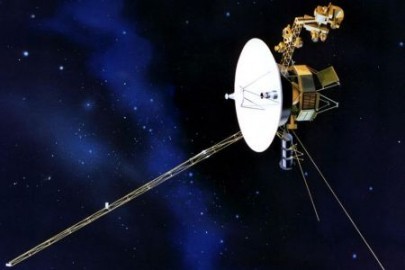
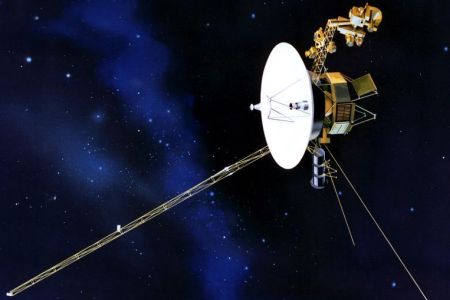
NASA’s Voyager spacecraft 1 and 2 are billions of miles away from Earth and getting further away by the second — all the while returning information back to us. They’re the longest-lived spacecraft NASA has and are coming up on their 40-year anniversaries of operation.

Not only have the crafts broken the record for longest missions but they’ve also set space exploration milestones. The Voyager 1 was the first craft to enter interstellar space, which it reached in 2012, 35 years after its initial launch. And the Voyager 2 is the only craft to have flown by the outer planets Jupiter, Saturn, Uranus and Neptune, according to NASA.
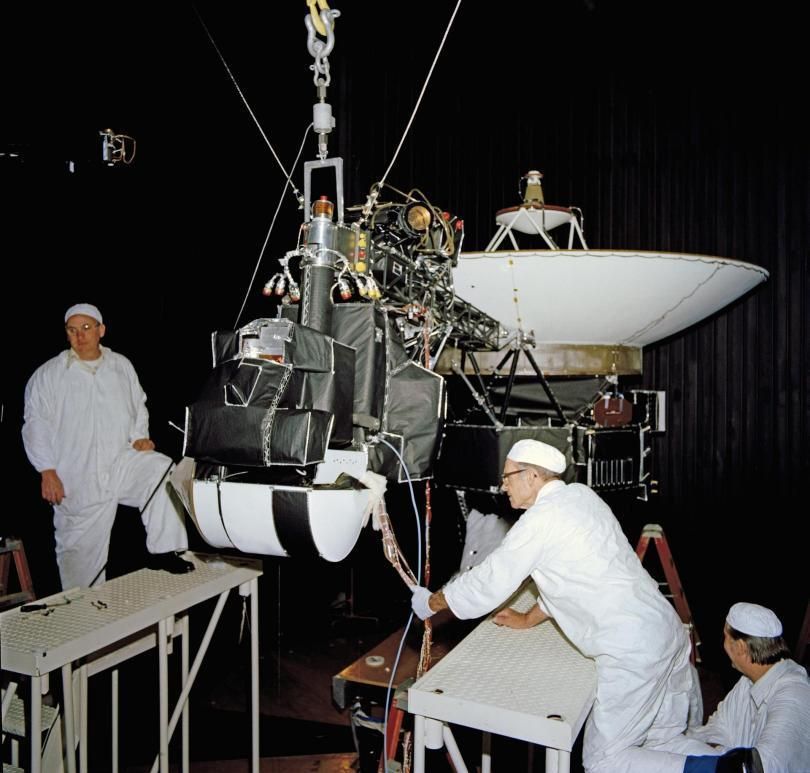
v

(One of the Voyagers can be seen in this photo from April, 1977, just a few months before it launched to space)

The spacecraft are equipped with decades old technology but that doesn’t stop them from making observations. They’re so far out in space that they’re pushing the limits of the sun’s sphere of influence. Something a craft has never done before. The two are in search of the heliopause boundary in addition to the outer limits of the sun’s magnetic field and the outward flow of solar wind, according to NASA. Once the craft achieve this the two will be able to measure the interstellar fields, particles and waves without the solar wind playing a part.

The Voyager 1 craft already found that the cosmic rays in interstellar space are four times more abundant there than they are closer to Earth meaning the heliosphere helps shield everything within it like the planets of the solar system, from radiation. It’s traveled almost 13 billion miles from Earth since its Aug 20, 1977, launch.
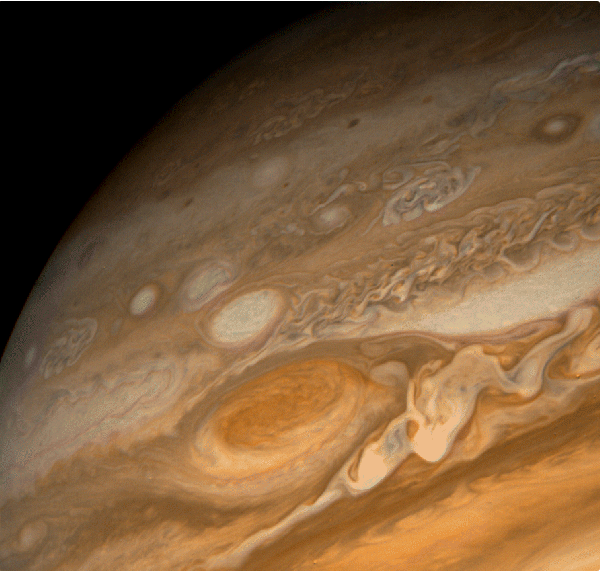
v1

(Voyager 1 was launched in 1977 and this is an image taken by it)

Voyager 2 has yet to reach interstellar space as it’s only about 10.5 billion miles away from Earth, but once it does reach interstellar space it will be in a different part of that space than its counterpart. This will allow researchers to compare what each craft finds and determine the variations in interstellar space.

Anyone can track the two craft and watch the miles tick away as they travel further and further from Earth. They’ve been able to travel so far because they each have three radioisotope thermoelectric generators on board. These essentially use heat emitted by decaying plutonium-238 for energy. Even though the crafts were built in the 1970s they were built to last with systems that can adjust when necessary.
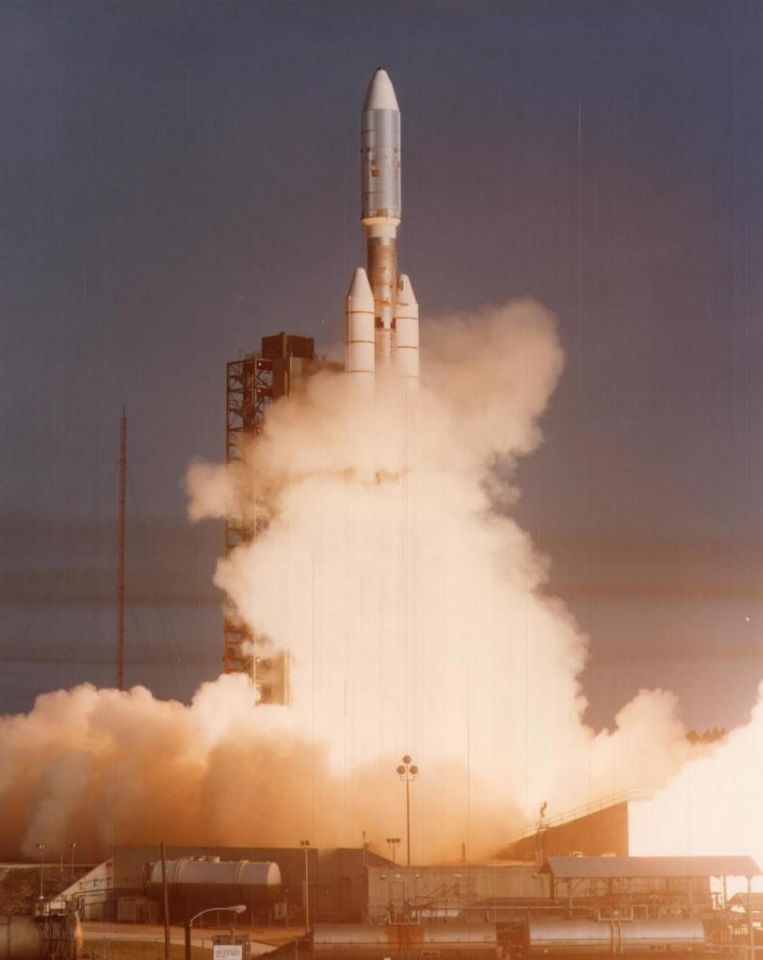
v2

(The Voyager 1 launched on top of the Titan/Centaur-6 from Kennedy Space Center in 1977)

>Related articles

Trump’s “digital lockdown” in Beijing: Why he was forced to leave his phone on Air Force One for two days

Scientists decode the body of a woman who lived to 117: The telomere paradox and the “youthful” gut

NASA launches new mission to discover the origin of the mysterious energy ring around Earth

But the longer the crafts are in space the more the power decreases to run all of the instruments on board that measure the charge of particles, magnetic fields, radio waves and solar wind plasma. To best guide the craft and run them as efficiently as possible current engineers work with those who helped build the craft back in the 70s. The craft are estimated to go silent, or be turned off, before 2030 after a long career relaying information on deep space to researchers.
vo

Source

Ask me anything

Explore related questions

#Deep Space#earth#exoplanets#mission#nasa#science#space#space exploration#technology#Voyager
> More technology

Follow en.protothema.gr on Google News and be the first to know all the news

See all the latest News from Greece and the World, the moment they happen, at en.protothema.gr

> Latest Stories

An international criminal network was selling fake medicines to seriously ill patients in Greece as well: turnover reached €240 million – Arrests and investigations in six countries

May 16, 2026

Intervention by Mitsotakis at the ND Conference: In 2027 Greeks will choose who they want to represent them in the Presidency of the EU

May 16, 2026

Everything is changing for electric scooters: Full ban for minors and speed limiters to become mandatory

May 16, 2026

Unsettled weather today with African dust, where it will rain

May 16, 2026

AADE targets €3.2 billion in overdue debts – Artificial intelligence and digital tools deployed in the fight

May 16, 2026

The scenarios police are examining in the case of the 24-year-old woman who fell from the 7th floor in Piraeus – Her partner’s testimony

May 16, 2026

ND Conference: Mitsotakis’ dilemmas and the… three-digit phone call – The side conversations, vouchers and late-night gatherings

May 16, 2026

13th AGON International Archaeological and Cultural Documentary Festival: Coming with 62 films from around the world

May 16, 2026
All News

> Greece

In reverence, the emotional deposition in Jerusalem, see photos & video

The Holy Temple of the Resurrection opened after many days due to the war between Israel and Iran

April 10, 2026

In the final stretch for the accreditation of joint master’s degrees: Aiming for their launch in the coming academic year

April 10, 2026

Schedule for Epitaph Procession today (10/4)

April 10, 2026

Perfect weather for Easter excursions, according to Tsatrafyllia’s forecast

April 10, 2026

Easter in Greece: The customs that continue in Greek tradition – From Nafpaktos to Corfu

April 10, 2026
Homepage
PERSONAL DATA PROTECTION POLICY COOKIES POLICY TERM OF USE
Powered by Cloudevo
Copyright © 2026 Πρώτο Θέμα



