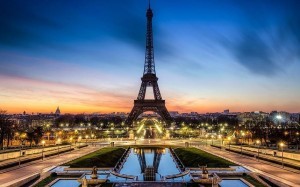
Paris has one hell of a legacy to live up to.
We’ve always placed the “City of Love and Lights” on a pedestal in popular culture, with romantic comedies from An American In Paris to Before Sunset to the Sex And The City finale all centred around its quaint allure.
But for some tourists, the reality is so far out from these Hollywood-driven expectations that there’s a literal affliction named after it.
“Paris Syndrome” is the name given to a psychological illness that almost exclusively affects Japanese travellers in the French capital.
Extreme cases may include hallucinations, panic attacks and convulsions, which can lead to those afflicted being hospitalised or sent home.
Every year, the Japanese embassy sends at least a dozen tourists home to recover from the extreme culture shock. It even runs a 24-hour helpline specifically to help them cope with the illness.
But is “Paris Syndrome” a real thing – and why does it seem to only affect certain people?
Homelessness remains a major social issue, having risen 50 per cent in the decade following 2001, according to French statistics. Middle-aged men sleep on cold benches and hard floors in stations that smell of urine.
On major street corners, small families in dirty clothes hold up cardboard signs and empty coffee cups begging for spare change. Some are part of the city’s one-in-10 unemployed. Some are drug addicts. Others may be refugees, or Eastern European migrants posing as refugees.
Some waiters and hotel staff will be short and snappy, particularly if you force them to speak English.
Avoiding eye contact with strangers is standard practice.
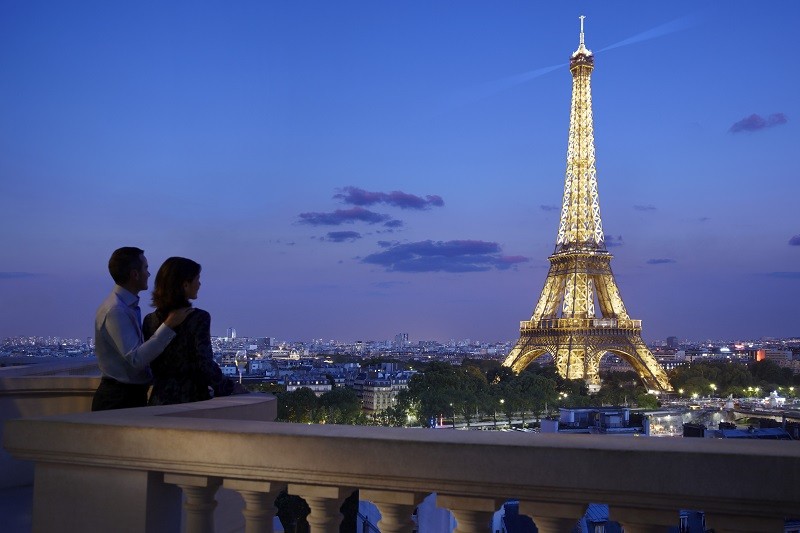
Practically every Hollywood film set in Paris features a balcony with a view of the Eiffel Tower. In reality, expect to pay hundreds of dollars for an old-fashioned room the size of a matchbox, which – if you’re lucky – will come with a view of a dozen other identical terraces.
Sure, you could walk to the Eiffel Tower – just watch out for those big groups of men dominating the entrance, attempting to scam you with cheap bracelets or draw you into rigged street contests.
Oh, and keep a firm hold on your belongings – Paris is one of the world’s pickpocketing capitals. If your phone, wallet or passport are hanging loosely from your pocket in tourist-heavy Montmartre, expect to experience a panic attack when you finally reach for them.
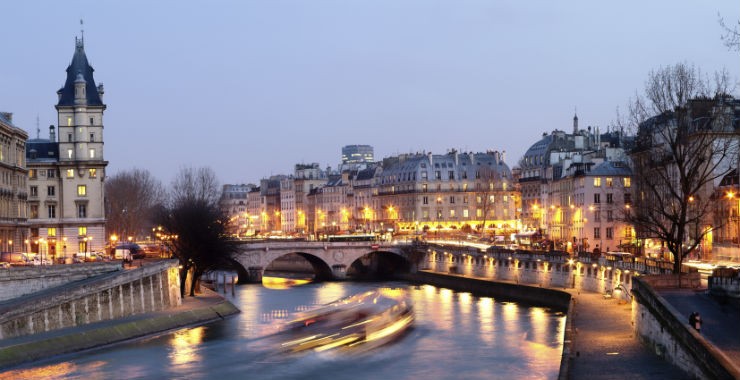
Of course, these negative traits aren’t Paris-specific. But Paris is a big city, and – like New York, London and even Sydney – comes with all the downsides of major metropolitan areas.
IS “PARIS SYNDROME” A LEGITIMATE ILLNESS?
All things considered, is “Paris Syndrome” really as crazy as it sounds?
I put this question to Deborah Swallow, an intercultural communication specialist who has spent almost 20 years teaching cultural awareness to global business leaders.
Speaking over Skype, Deborah confirmed that illness-inducing culture shock in Paris is indeed real, tracing the trend back to the wives of Japanese diplomats in the 1970s.
“The wives were typically not well-educated at the time, and they’d come to Paris knowing only what they’d seen in the movies,” she told news.com.au.

“Back then, at least, Paris was one of the rudest places on earth, and they experienced this huge culture shock.”
This shift in cultures was so intense that depression and suicide were not unheard of among these women.
But why specifically Paris? And why were the Japanese mostly affected?
Deborah explained that culturally, Japan and France are as far apart as it can get – tourists go from one extreme to the other.
“People in Japanese culture are extremely polite, they’re extremely gracious, and they’re extremely concerned with not losing ‘face’,” she said, adding that there’s a lot less directness and a lot more reading between the lines when it comes to social interactions in Japan.
“Now you imagine this elegant Japanese lady – the wife of a diplomat – in a car with a loud, screaming Parisian taxi driver. They couldn’t be more different.”
This, combined with the built-up expectations of the “City of Love”, is what leads to such extreme consequences for some tourists.
Deborah said that for individualistic societies like Australia, Britain and the United States, the streets of Paris aren’t quite so shocking as they are in countries like Japan and China, where there’s more of a “group” mentality, and people adjust their actions according to their surroundings.
Over the past decade, since they began travelling in wider numbers, Chinese tourists have reported experiencing the same symptoms of shock in Paris.
A growing number are now targeted for robberies in France. Last year, a group of thieves sprayed teargas on Chinese tourists outside a hotel near the Charles de Gaulle Airport, before stealing their luggage.
Chinese and Japanese tourists are often viewed as carrying large amounts of cash on them, and spending freely on luxury products.
It may seem surprising that extreme culture shock still exists in the 21st century.
How – when one can simply Google “What’s Paris like?” and read articles in preparation for their trip – do some tourists still struggle to cope with their new surroundings?
But culture shock is more complex than this. Travelling is ultimately a sensual experience, and no amount of online reading can prepare you for the scents, sights and sounds that assault you on arrival.
The logical voice in your brain that says “You knew it would be like this!” will get drowned out by your feelings when you’re in the thick of it.
“You may know in your head what to expect, but when you actually see and feel it, it hits you on a really emotional level,” Deborah said.
She stressed the importance of learning to be able to “slip between” cultures; to gain the flexibility to adapt to a world that’s completely different to your own.
This requires empathy, curiosity and an open mind – and some people don’t find this as easy as others.
“You need to start by learning more about your own culture,” she said.
“See how your own world has impacted how you think, feel and behave; then you can start to look out to why other cultures live the way they do.”
So does this mean you should skip Paris? Not by any means. The cliches exist for a reason – it’s easily one of Europe’s most stunning cities.
Just don’t expect an Amélie experience.
Ask me anything
Explore related questions