

×
GreekEnglish

×
  • Politics
  • Diaspora
  • World
  • Lifestyle
  • Travel
  • Culture
  • Sports
  • Cooking
Friday
17
Jul 2026
weather symbol
Athens 33°C
  • Home
  • Politics
  • Economy
  • World
  • Diaspora
  • Lifestyle
  • Travel
  • Culture
  • Sports
  • Mediterranean Cooking
  • Weather
Contact follow Protothema:
Powered by Cloudevo
> World

Scientists discover the most distant body ever seen in our Solar System

It is 150 million km from the Sun

Newsroom February 27 05:32

Δείτε περισσότερα άρθρα μας στα αποτελέσματα αναζήτησης

Add Protothema.gr on Google

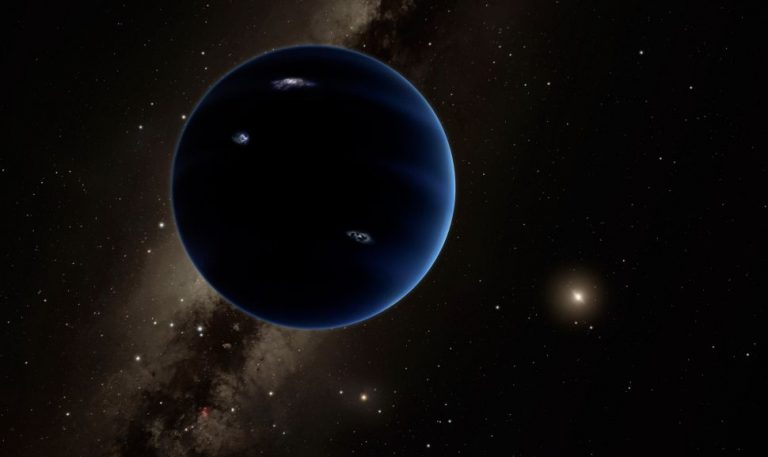
The solar system has a new distance champ.

Astronomers just found an object that lies 140 astronomical units (AU) from the sun. That’s 140 times the Earth-sun distance, which is about 150 million kilometres. In case you want some more perspective: Pluto orbits the sun at an average distance of about 39.5 AU.

“This is hot off the presses,” Scott Sheppard, of the Carnegie Institution for Science in Washington, D.C., said during a public lecture last Thursday (Feb. 21) at his home institution.

Sheppard and his team don’t know much about FarFarOut. They just spotted it, after all, and haven’t gathered enough data to work out its orbit or calculate a size estimate. They plan to keep observing FarFarOut to collect such information, but doing so may be tough.

>Related articles

After the Moon and Mars, scientists set their sights on Titan: The ambitious plan for a human mission to Saturn’s largest moon

Elon Musk & SpaceX: How the “failed idea” and the Russians’ “NO” led to the launch of a $2 trillion company

Temperatures up to 35°C today; How the weather will develop over the next few days

“It’s very faint,” Sheppard said. “It’s on the edge of our ability to detect it.”

The newfound body’s nickname is a nod to Farout, the previous distance record holder, whose discovery Sheppard and his colleagues announced in December. Farout, officially known as 2018 VG18, currently lies about 120 AU from the sun. The object is thought to be a dwarf planet that takes about 1,000 years to complete one lap around our star.

read more at space.com

Ask me anything

Explore related questions

#farthest away from Sun#solar system#space#sun
> More World

Follow en.protothema.gr on Google News and be the first to know all the news

See all the latest News from Greece and the World, the moment they happen, at en.protothema.gr

> Latest Stories

Former senior Greek official reflect on the importance of the Diaspora

July 17, 2026

Maro Kontou: Last farewell to the great lady of Greek cinema (video-photos)

July 17, 2026

First heatwave of the summer with temperatures reaching 42°C: When it will hit Attica

July 17, 2026

Latinopoulou: Mitsotakis is the most woke Prime Minister of all time, he has turned New Democracy into a kind of Potami-PASOK

July 17, 2026

Olga Gerovasili breaks away from SYRIZA

July 17, 2026

The OPEKEPE saga and the European prosecutors (who are not finished yet…), Aperol and wine, but no more hard liquor at the Presidency, Piraeus Bank…denies while confirming regarding IASO

July 17, 2026

Marco Rubio on the murder of Vagia Nestora: “A woman was executed because her daughter dared to run for office” (video)

July 17, 2026

OPEKEPE: Maximos Mansion questions European Public Prosecutor’s Office handling as four MPs remain on New Democracy election lists

July 17, 2026
All News

> Greece

In reverence, the emotional deposition in Jerusalem, see photos & video

The Holy Temple of the Resurrection opened after many days due to the war between Israel and Iran

April 10, 2026

In the final stretch for the accreditation of joint master’s degrees: Aiming for their launch in the coming academic year

April 10, 2026

Schedule for Epitaph Procession today (10/4)

April 10, 2026

Perfect weather for Easter excursions, according to Tsatrafyllia’s forecast

April 10, 2026

Easter in Greece: The customs that continue in Greek tradition – From Nafpaktos to Corfu

April 10, 2026
Homepage
PERSONAL DATA PROTECTION POLICY COOKIES POLICY TERM OF USE
Powered by Cloudevo
Copyright © 2026 Πρώτο Θέμα



